Urinary tract discomfort, such as cystitis, is extremely common and affects women in particular, with a ratio of 5:1 compared with men[6]!
Cystitis has a very precise profile and, when the first symptoms appear, we can easily recognise it. In fact, we have:
- a frequent need to pee,
- pain when urinating,
- a feeling of heaviness in the lower abdomen,
- sometimes traces of blood in the urine,
- fever.
But why is cystitis so fond of women?
The reason is mainly anatomical [7]. One of the bacteria that most commonly trigger cystitis is Escherichia coli, which mainly “lives” in the gut.
At specific times, such as after sexual intercourse, during periods of stress or when you’re not eating well, these bacteria can move from the anus and reach the vagina and then begin their ascent towards the bladder. And once they get there, they attach themselves to the bladder walls and begin to proliferate.
In women, the anus and vagina are very close together, which is why this “migration” can easily happen.
Many people are convinced that the only way to get rid of cystitis for good is antibiotics.
However, antibiotic therapy must be used with caution and only on medical advice, because it has 3 major drawbacks:
- it can lead to antibiotic resistance [8], because the bacteria become increasingly resistant to the drug and, in the long run, you’ll be forced to use ever stronger antibiotics;
- it lowers the immune defences;
- it alters the gut bacterial flora [9].
All this results in discomfort that comes back more and more often, particularly when you stop taking the drug, setting off a real vicious circle.
Over the years, phytotherapy has increasingly studied this kind of discomfort, and there are several studies that testify to the importance of a natural approach too, especially as a preventive measure.
In the next section we look at some of them and find out how and why plant active ingredients can be useful for urinary tract wellbeing.
Experimental Phytotherapy
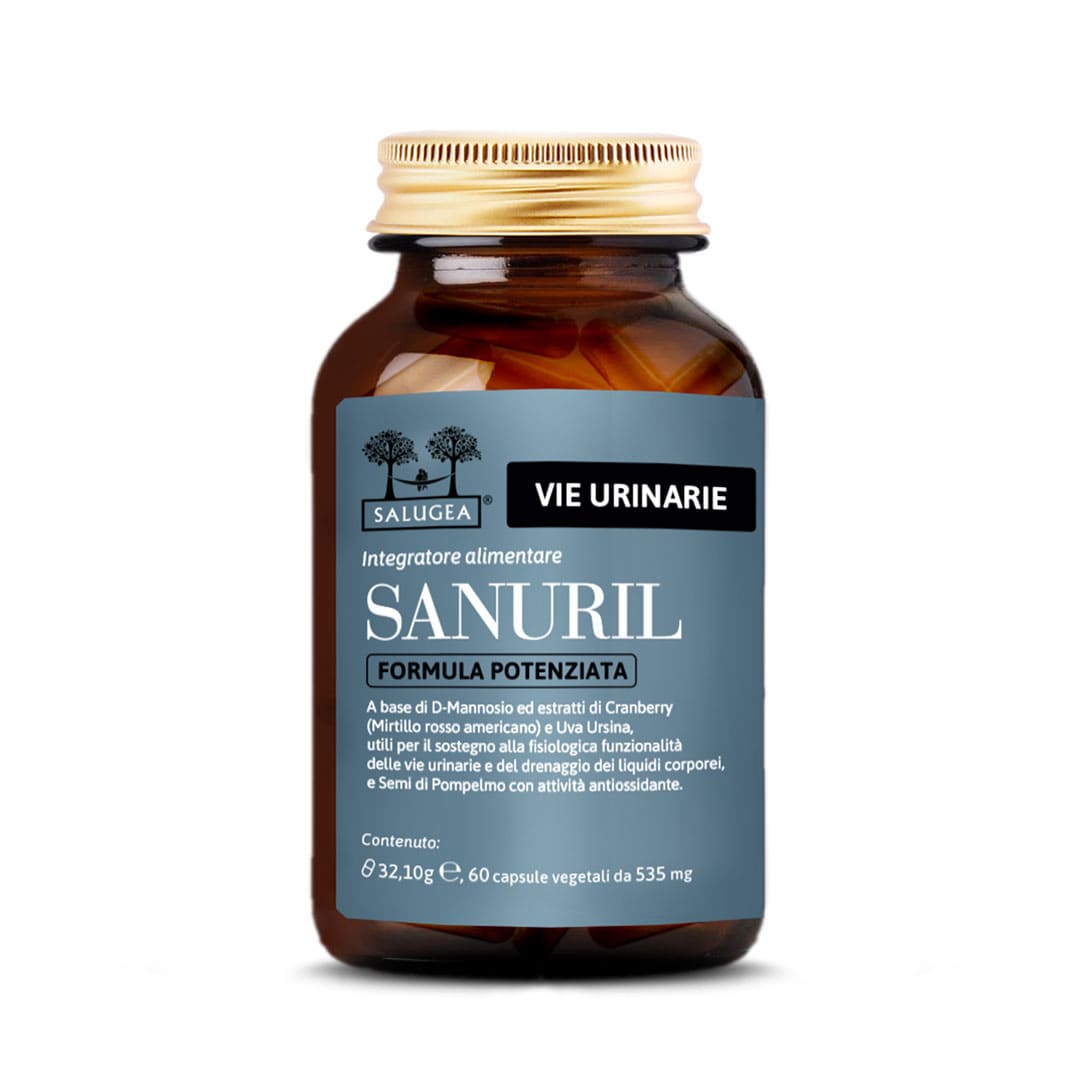
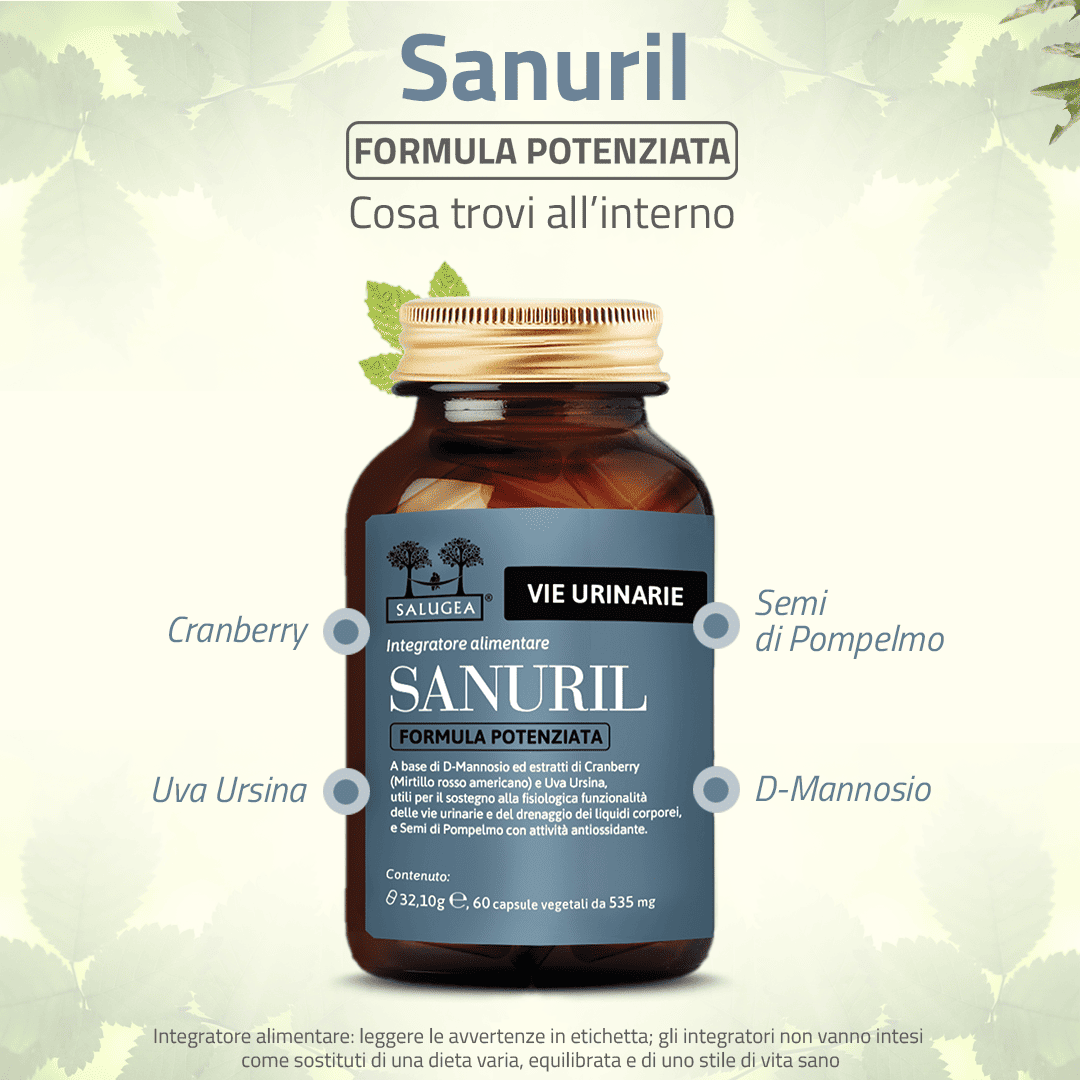
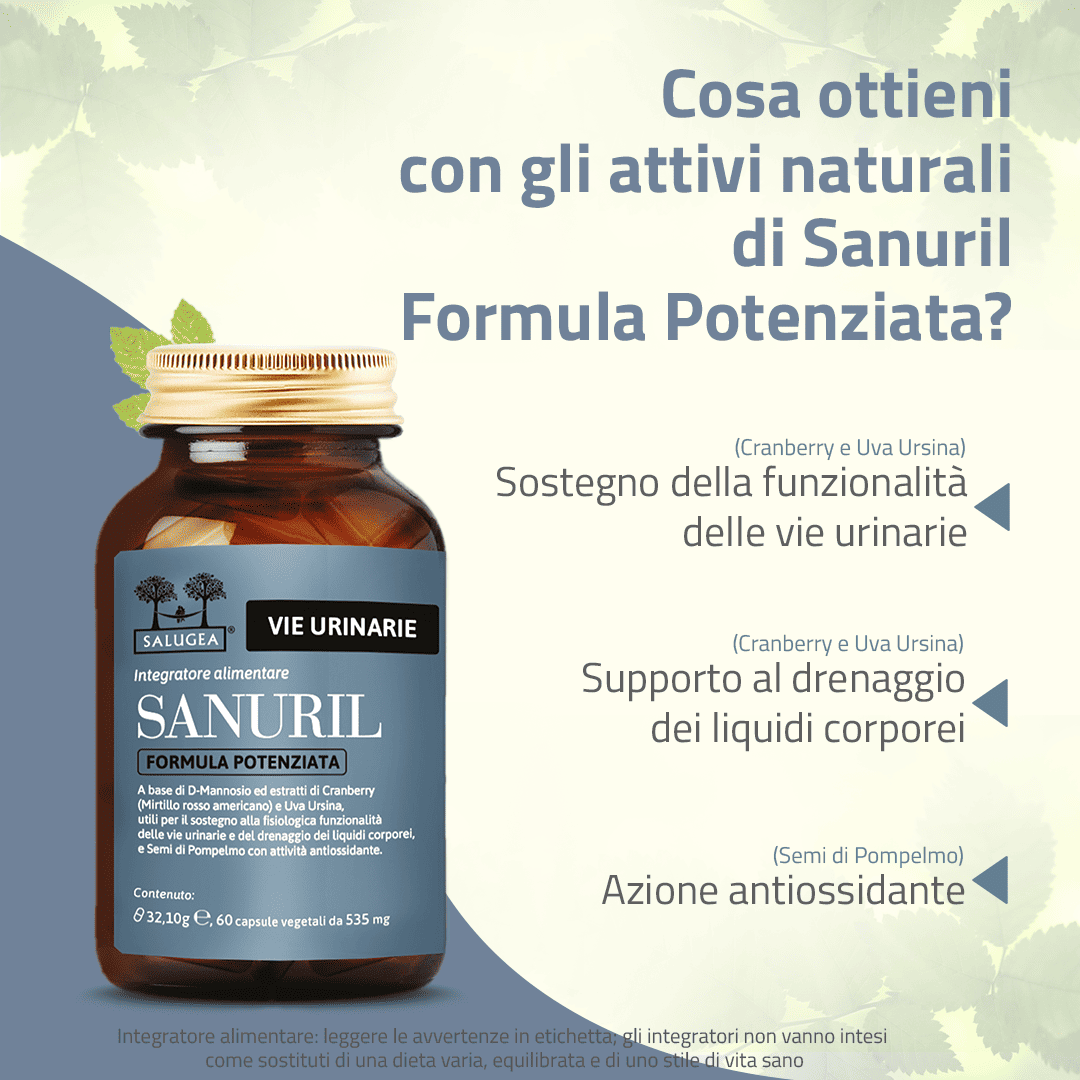
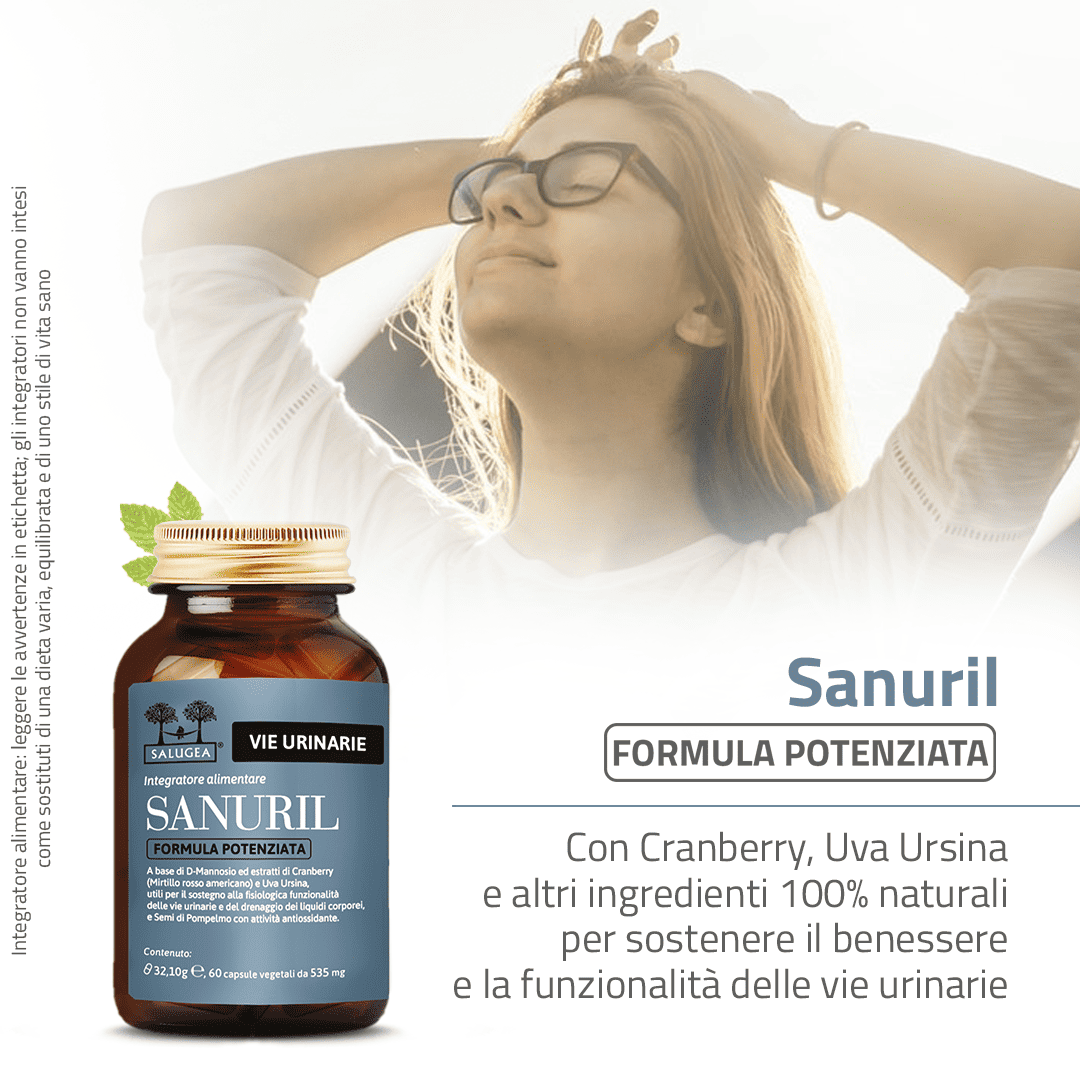
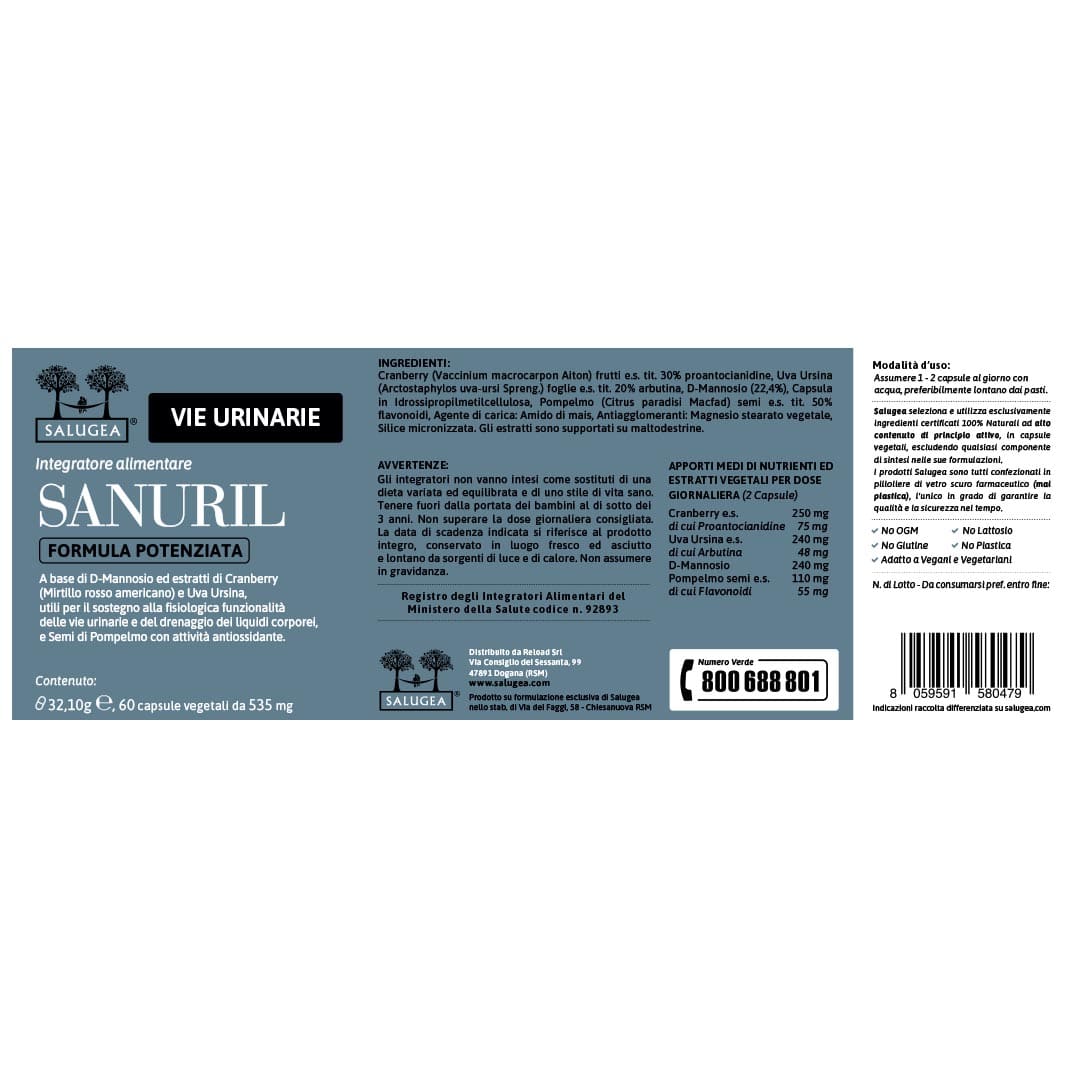
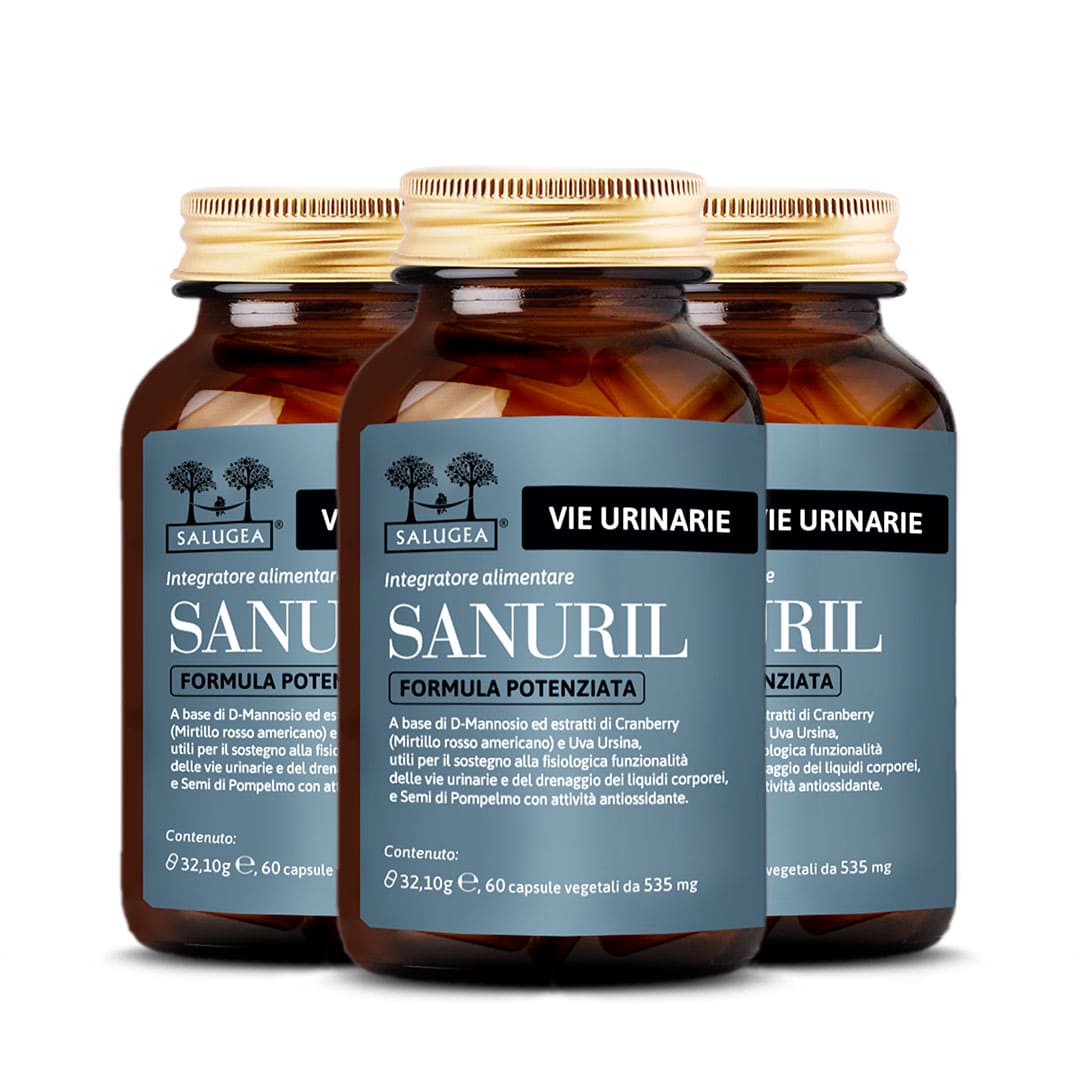
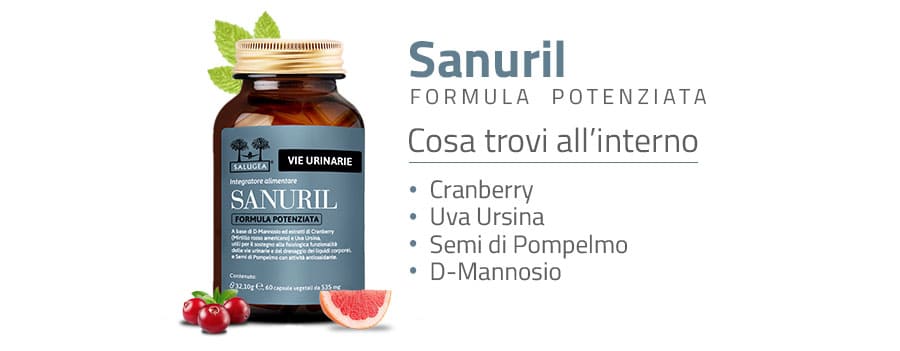
The formulation of Sanuril Enhanced Formula contains: Cranberry, D-Mannose, Uva ursi and Grapefruit Seeds.
Let’s now look at some of the in-depth studies carried out on these active ingredients.
Cranberry
- Nat Prod Commun. 2015 Jul;10(7):1215-8. Comparison of the Anti-Adhesion Activity of Three Different Cranberry. World J Urol. 2014 Feb;32(1):79-84. doi: 10.1007/s00345-013-1091-6. Epub. 2013 Apr 30.
Research suggests that cranberry (Vaccinium macrocarpon) helps maintain urinary tract wellbeing because it prevents bacteria from adhering to the bladder walls.
- 2014;2014:698758. doi: 10.1155/2014/698758. Epub 2014 Dec 21. Efficient and cost-effective alternative treatment for recurrent urinary tract infections and interstitial cystitis in women: a two-case report. Anthony Mansour 1, Essa Hariri 1, Samar Shelh 2, Ralph Irani 3, Mohamad Mroueh 4
Another very interesting piece of research. In this study, a combination of parsley and garlic, L-arginine, probiotics and American cranberry tablets was administered. This regimen showed a significant improvement in health and relief from symptoms, with no recurrence for more than 12 months.
D-Mannose
- Role of D-Mannose in the Prevention of Recurrent Urinary Tract Infections: Evidence from a Systematic Review of the Literature. Rena Kyriakides 1, Patrick Jones 1, Bhaskar K Somani 2. 2020 Sep 21;S2405-4569(20)30263-7. doi: 10.1016/j.euf.2020.09.004.
In this study, the researchers set out to evaluate the effect of D-mannose in preventing recurrent urinary tract infections. D-Mannose improved quality of life by significantly reducing recurrent urinary tract infections in both catheter users and non-users. D-Mannose was effective in reducing the incidence of recurrent UTIs (Urinary Tract Infections) and in prolonging UTI-free periods, thereby improving quality of life. The researchers therefore concluded that D-Mannose can be used as a supplementary treatment for recurrent urinary tract infections.
- Effectiveness of an association of a cranberry dry extract, D-mannose, and the two microorganisms Lactobacillus plantarum LP01 and Lactobacillus paracasei LPC09 in women affected by cystitis: a pilot study. Nov-Dec 2014;48 Suppl 1:S96-101. doi: 10.1097/MCG.0000000000000224. Franco Vicariotto
This study analysed the combination of Cranberry and D-Mannose for urinary tract discomfort. What emerged is that this combination is effective in significantly improving the bothersome symptoms reported by women with acute cystitis.
Uva ursi
Uva ursi has been studied in particular for its role in relation to antibiotic resistance.
- 2018 Jul 3;18(1):203. doi: 10.1186/s12906-018-2266-x. Reducing antibiotic use for uncomplicated urinary tract infection in general practice by treatment with uva-ursi (REGATTA) - a double-blind, randomized, controlled comparative effectiveness trial
Kambiz Afshar, Nina Fleischmann, Guido Schmiemann, Jutta Bleidorn, Eva Hummers-Pradier, Tim Friede, Karl Wegscheider, Michael Moore, Ildikó Gágyor
This study aims to assess whether initial treatment with Uva ursi in women with UTIs can reduce antibiotic use without significantly increasing the symptom burden or the rate of complications.
Grapefruit seeds
- J Altern Complement Med. 2002 Jun;8(3):333-40. The effectiveness of processed grapefruit-seed extract as an antibacterial agent: II. Mechanism of action and in vitro toxicity. Heggers JP, Cottingham J, Gusman J, Reagor L, McCoy L, Carino E, Cox R, Zhao JG.
In this study, the researchers showed that GSE has antimicrobial properties against a wide range of organisms. GSE destroys the bacterial membrane and releases the cytoplasmic contents within 15 minutes of contact, even at more dilute concentrations.
- Acta Pharm. 2004 Sep;54(3):243-50. Antimicrobial activity of grapefruit seed and pulp ethanolic extract. Cvetnić Z, Vladimir-Knezević S.
This other study narrowed the field of observation, and found that the presence of the flavanones naringin and hesperidin is effective against 20 different bacterial strains and 10 yeasts.
N.B. Our texts are for informational purposes only. They should not be taken as guidance on the diagnosis or treatment of medical conditions and are in no way intended to replace the advice of a doctor.
[1] Howell A, Souza D, Roller M, Fromentin E. Comparison of the Anti-Adhesion Activity of Three Different Cranberry Extracts on Uropathogenic P-fimbriated Escherichia coli: a Randomized, Double-blind, Placebo Controlled, Ex Vivo, Acute Study. Nat Prod Commun. 2015 Jul;10(7):1215-8. PMID: 26411014.
[2] Kyriakides R, Jones P, Somani BK. Role of D-Mannose in the Prevention of Recurrent Urinary Tract Infections: Evidence from a Systematic Review of the Literature. Eur Urol Focus. 2021 Sep;7(5):1166-1169. doi: 10.1016/j.euf.2020.09.004. Epub 2020 Sep 22. PMID: 32972899.
[3] Vicariotto F. Effectiveness of an association of a cranberry dry extract, D-mannose, and the two microorganisms Lactobacillus plantarum LP01 and Lactobacillus paracasei LPC09 in women affected by cystitis: a pilot study. J Clin Gastroenterol. 2014 Nov-Dec;48 Suppl 1:S96-101. doi: 10.1097/MCG.0000000000000224. PMID: 25291140.
[4] Afshar K, Fleischmann N, Schmiemann G, Bleidorn J, Hummers-Pradier E, Friede T, Wegscheider K, Moore M, Gágyor I. Reducing antibiotic use for uncomplicated urinary tract infection in general practice by treatment with uva-ursi (REGATTA) - a double-blind, randomized, controlled comparative effectiveness trial. BMC Complement Altern Med. 2018 Jul 3;18(1):203. doi: 10.1186/s12906-018-2266-x. PMID: 29970072; PMCID: PMC6029138.
[5] Heggers JP, Cottingham J, Gusman J, Reagor L, McCoy L, Carino E, Cox R, Zhao JG. The effectiveness of processed grapefruit-seed extract as an antibacterial agent: II. Mechanism of action and in vitro toxicity. J Altern Complement Med. 2002 Jun;8(3):333-40. doi: 10.1089/10755530260128023. Erratum in: J Altern Complement Med 2002 Aug;8(4):521. Reagor Lana [corrected to Reagor Lee]. PMID: 12165191.
[6] Urologia Grosseto: Cistite [Cystitis]
[7] Humanitas Mater Domini - Cistite [Cystitis]
[8] Waller TA, Pantin SAL, Yenior AL, Pujalte GGA. Urinary Tract Infection Antibiotic Resistance in the United States. Prim Care. 2018 Sep;45(3):455-466. doi: 10.1016/j.pop.2018.05.005. Epub 2018 Jul 9. PMID: 30115334.
[9] LaRepubblica.it > Salute > Cistite: meno antibiotici, più fibre, fermenti e acqua per fare prevenzione [Cystitis: fewer antibiotics, more fibre, probiotics and water for prevention] - Irma D'Aria
Our texts are for information purposes only; they are not to be understood as an indication for the diagnosis and treatment of medical conditions and are in no way intended to replace the advice of a doctor.