Water retention is not just the tendency of the body to hold on to excess fluids. More precisely, we can define it as the tendency of cells to hold on to fluids, toxins and salts [4].
When cells are unable to get rid of the waste they produce – for example toxins, salts and uric acids – the concentration of the latter increases.
This stagnation of toxins leads to an increase in interstitial fluids between one cell and the next. And this is how water retention comes about, showing itself as that connective swelling that in medical terms is called oedema [5].
Unlike cellulite, water retention is not a problem for women only. Men can suffer from it too. But even if (for once) a complaint that is also aesthetic can affect men as well, it is still women who report it more [6].
The causes that can lead to these complaints are varied. For example5:
- a sedentary life or, on the contrary, too much time spent standing,
- a diet rich in sugars, salt and alcohol,
- dehydration,
- hormonal imbalances or specific moments in a woman’s life such as pregnancy and the menopause,
- high blood pressure,
- taking medicines.
Over the years, herbal medicine has studied these conditions more and more, and the studies attesting to the importance of a natural approach as well are numerous.
In the next section we will look at some of them and understand how and why plant actives can be helpful to support diuresis and help you get rid of excess fluids and toxins.
Experimental phytotherapy
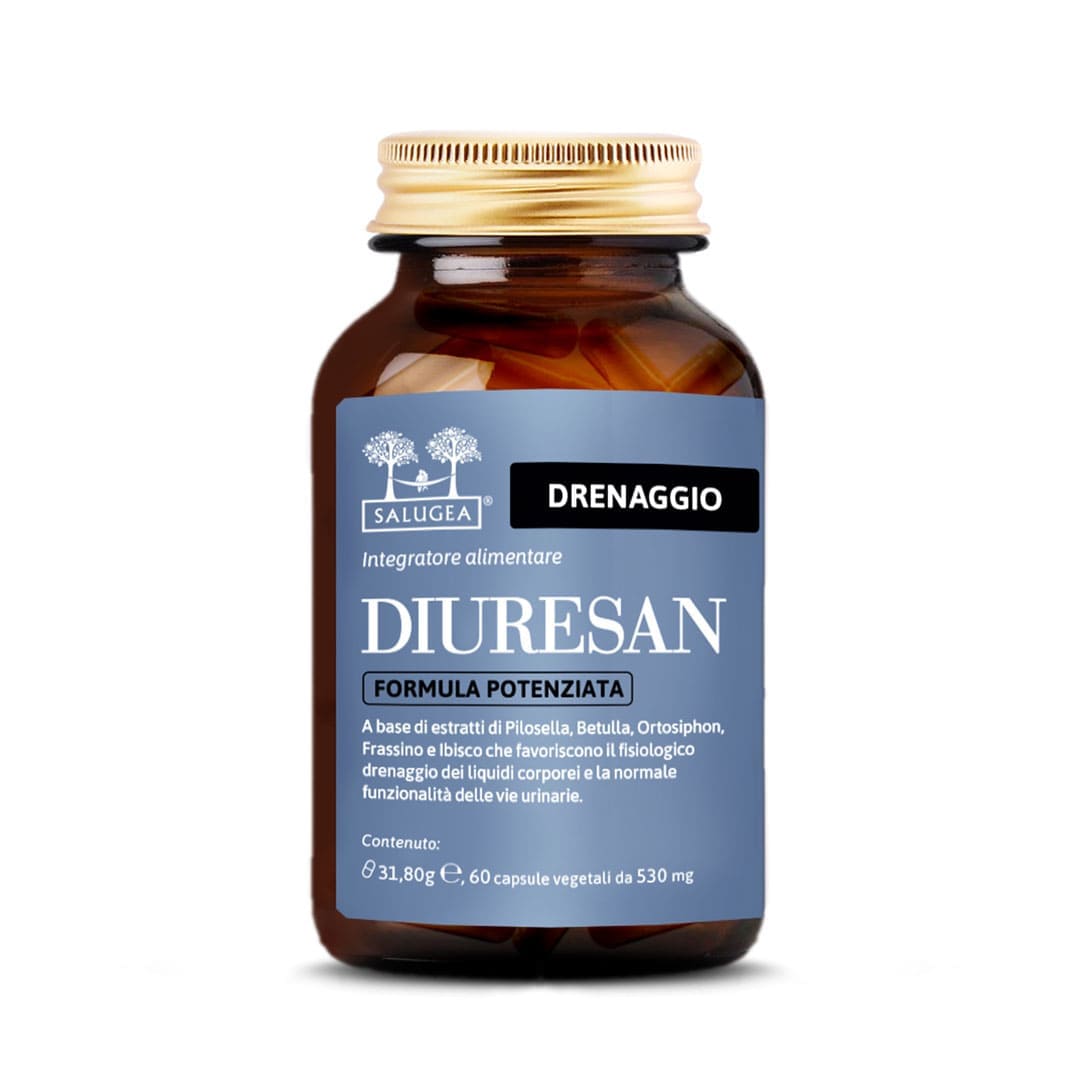
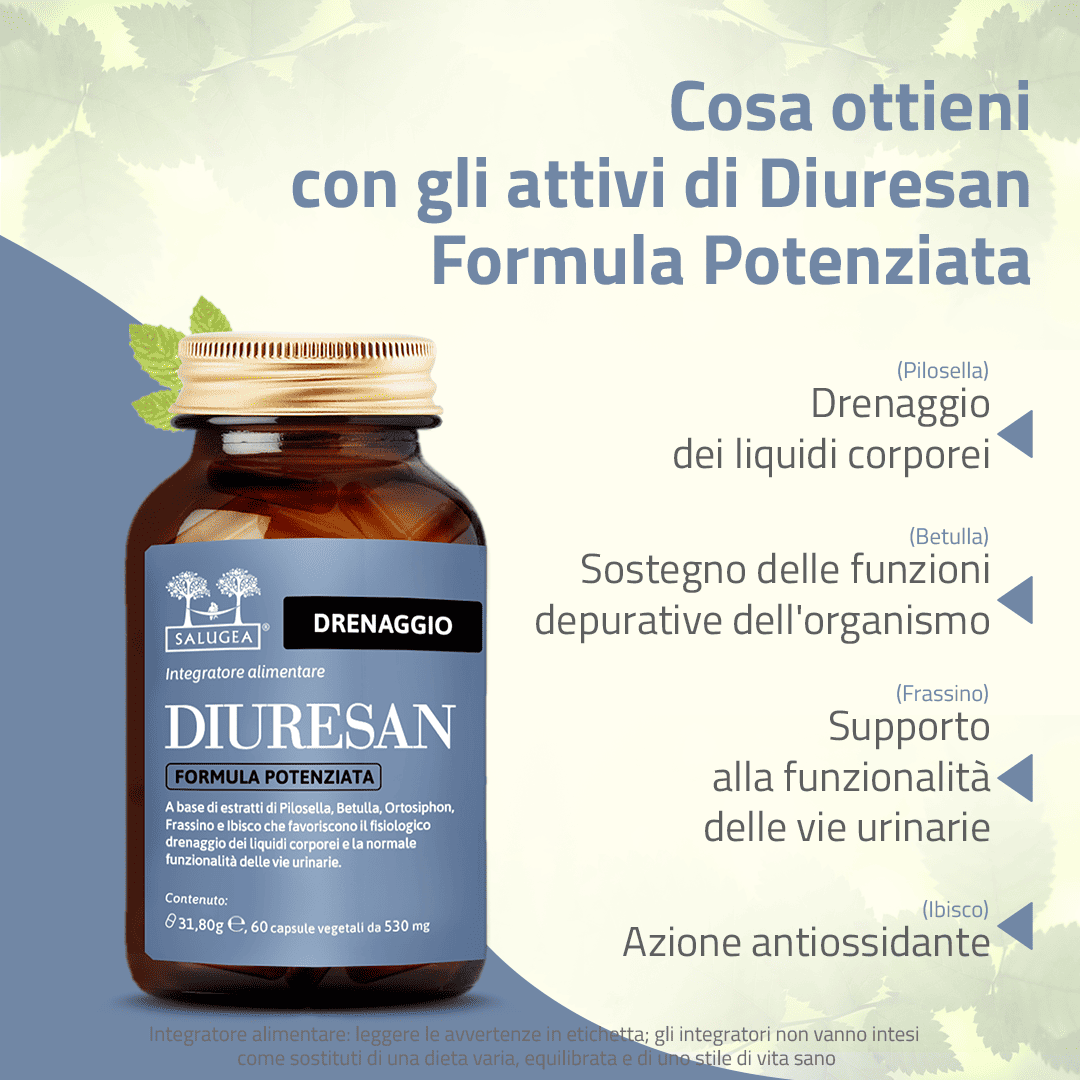
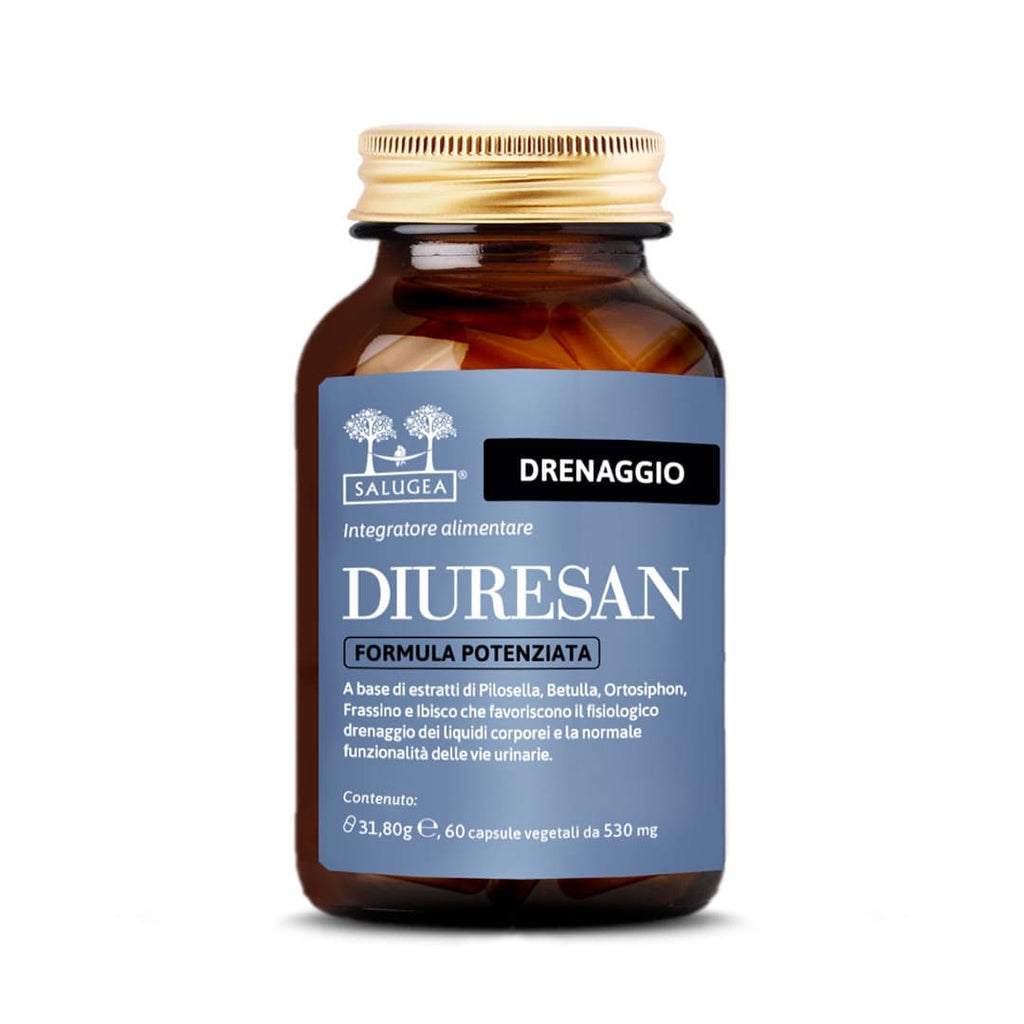
The formulation of Diuresan Enhanced Formula contains Mouse-ear Hawkweed, Birch, Orthosiphon, Ash and Hibiscus.
Let us now look at some in-depth studies carried out on these actives.
Mouse-ear Hawkweed
- Stanojević L, Stanković M, Nikolić V, Nikolić L, Ristić D, Canadanovic-Brunet J, Tumbas V. Antioxidant Activity and Total Phenolic and Flavonoid Contents of Hieracium pilosella L. Extracts. Sensors (Basel). 2009;9(7):5702-14. doi: 10.3390/s90705702. Epub 2009 Jul 16. PMID: 22346723; PMCID: PMC3274148.
In this study the researchers showed that Mouse-ear Hawkweed, as well as being a strong diuretic, is also a powerful antioxidant.
Birch
- Raudonė L, Raudonis R, Janulis V, Viškelis P. Quality evaluation of different preparations of dry extracts of birch (Betula pendula Roth) leaves. Nat Prod Res. 2014;28(19):1645-8. doi: 10.1080/14786419.2014.925893. Epub 2014 Jun 17. PMID: 24934103.
This study assessed the effects of different types of Birch, showing that it is with dry extracts that the greatest benefits are obtained.
Orthosiphon
- Ameer OZ, Salman IM, Asmawi MZ, Ibraheem ZO, Yam MF. Orthosiphon stamineus: traditional uses, phytochemistry, pharmacology, and toxicology. J Med Food. 2012 Aug;15(8):678-90. doi: 10.1089/jmf.2011.1973. Epub 2012 Jun 25. PMID: 22846075.
This analysis presents a complete overview of the chemical, pharmacological and toxicological investigations currently available on Orthosiphon. In detail, the researchers found that this plant has diuretic, hypouricaemic, kidney-protective, antioxidant, anti-inflammatory, hepatoprotective, gastroprotective, antihypertensive, antihyperlipidaemic and antimicrobial properties. The researchers conclude that orthosiphon has broad traditional and functional uses in various pathophysiological conditions.
Ash
- Younis T, Khan MR, Sajid M, Majid M, Zahra Z, Shah NA. Fraxinus xanthoxyloides leaves reduced the level of inflammatory mediators during in vitro and in vivo studies. BMC Complement Altern Med. 2016 Jul 19;16:230. doi: 10.1186/s12906-016-1189-7. PMID: 27430329; PMCID: PMC4949749.
The study shows the therapeutic potential of Algerian or Afghan Ash leaves against inflammatory disorders, thanks to the presence of active constituents in the chloroform fraction.
- Casadebaig J, Jacob M, Cassanas G, Gaudy D, Baylac G, Puech A. Physicochemical and pharmacological properties of spray-dried powders from Fraxinus excelsior leaf extracts. J Ethnopharmacol. 1989 Sep;26(2):211-6. doi: 10.1016/0378-8741(89)90069-x. PMID: 2601362.
This study confirms the main properties of Fraxinus excelsior leaf extracts in draining body fluids and in the function of the urinary tract.
- Younis T, Khan MR, Sajid M, Majid M, Zahra Z, Shah NA. Fraxinus xanthoxyloides leaves reduced the level of inflammatory mediators during in vitro and in vivo studies. BMC Complement Altern Med. 2016 Jul 19;16:230. doi: 10.1186/s12906-016-1189-7. PMID: 27430329; PMCID: PMC4949749.
This research explored a further feature of Ash, namely its marked activity against inflammatory disorders as well.
Hibiscus
- Da-Costa-Rocha I, Bonnlaender B, Sievers H, Pischel I, Heinrich M. Hibiscus sabdariffa L. - a phytochemical and pharmacological review. Food Chem. 2014 Dec 15;165:424-43. doi: 10.1016/j.foodchem.2014.05.002. Epub 2014 May 27. PMID: 25038696.
This research is a synthesis of other studies that have documented how Hibiscus has, besides a draining activity, also antibacterial, antioxidant, kidney- and liver-protective, lipid-lowering (anti-cholesterol) and antihypertensive effects.
- Alarcón-Alonso J, Zamilpa A, Aguilar FA, Herrera-Ruiz M, Tortoriello J, Jimenez-Ferrer E. Pharmacological characterization of the diuretic effect of Hibiscus sabdariffa Linn (Malvaceae) extract. J Ethnopharmacol. 2012 Feb 15;139(3):751-6. doi: 10.1016/j.jep.2011.12.005. Epub 2011 Dec 13. PMID: 22178178.
This study showed that the compound present in Hibiscus sabdariffa (or karkadè), quercetin, acts on the vascular endothelium causing the release of nitric oxide, which increases renal vasodilation and thus supports renal filtration. The diuretic effect of Hibiscus sabdariffa may therefore be mediated by the release of nitric oxide.
[1] 1 July 2014 EMA/HMPC/680373/2013 Committee on Herbal Medicinal Products (HMPC) Assessment report on Hieracium pilosella L., herba (PDF).
[2] Nat Prod Res. 2014;28(19):1645-8. doi: 10.1080/14786419.2014.925893. Epub 2014 Jun 17. Quality evaluation of different preparations of dry extracts of birch (Betula pendula Roth) leaves. Raudonė L, Raudonis R, Janulis V, Viškelis P.
[3] Ameer OZ, Salman IM, Asmawi MZ, Ibraheem ZO, Yam MF. Orthosiphon stamineus: traditional uses, phytochemistry, pharmacology, and toxicology. J Med Food. 2012 Aug;15(8):678-90. doi: 10.1089/jmf.2011.1973. Epub 2012 Jun 25. PMID: 22846075.
[4] Humanitas San Pio X - Water retention in the legs, how to counter it? - Dr. Massimo Callegari - 04/07/2017.
[5] Humanitas Gavazzeni - Medical encyclopaedia: Water retention.
[6] Humanitas Research hospital - Symptoms: Water retention
Our texts are for information purposes only; they are not to be understood as an indication for the diagnosis and treatment of medical conditions and are in no way intended to replace the advice of a doctor.