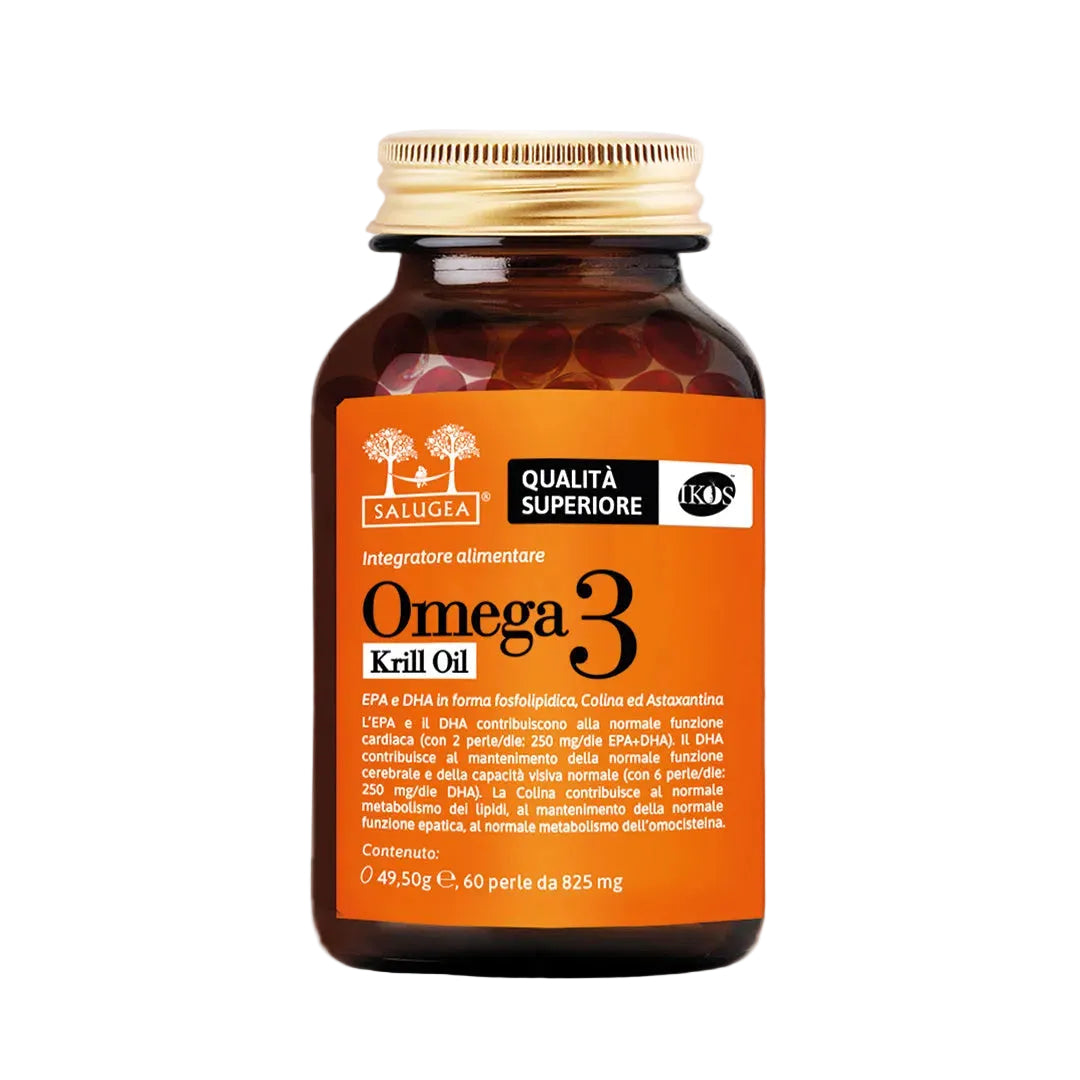
Omega 3s are “essential” fatty acids, important for our wellbeing [15], which cannot be produced by our body.
That’s why it is important to obtain them through diet and supplementation.
We can get them from our diet, but only up to a point. Since they are found mainly in fish, a prized food, we would have to eat a great deal of it, and all the time!
And when it comes to supplementation, the situation is not entirely clear either.
In fact, we have always been convinced that the best source of Omega 3 is fish oil.
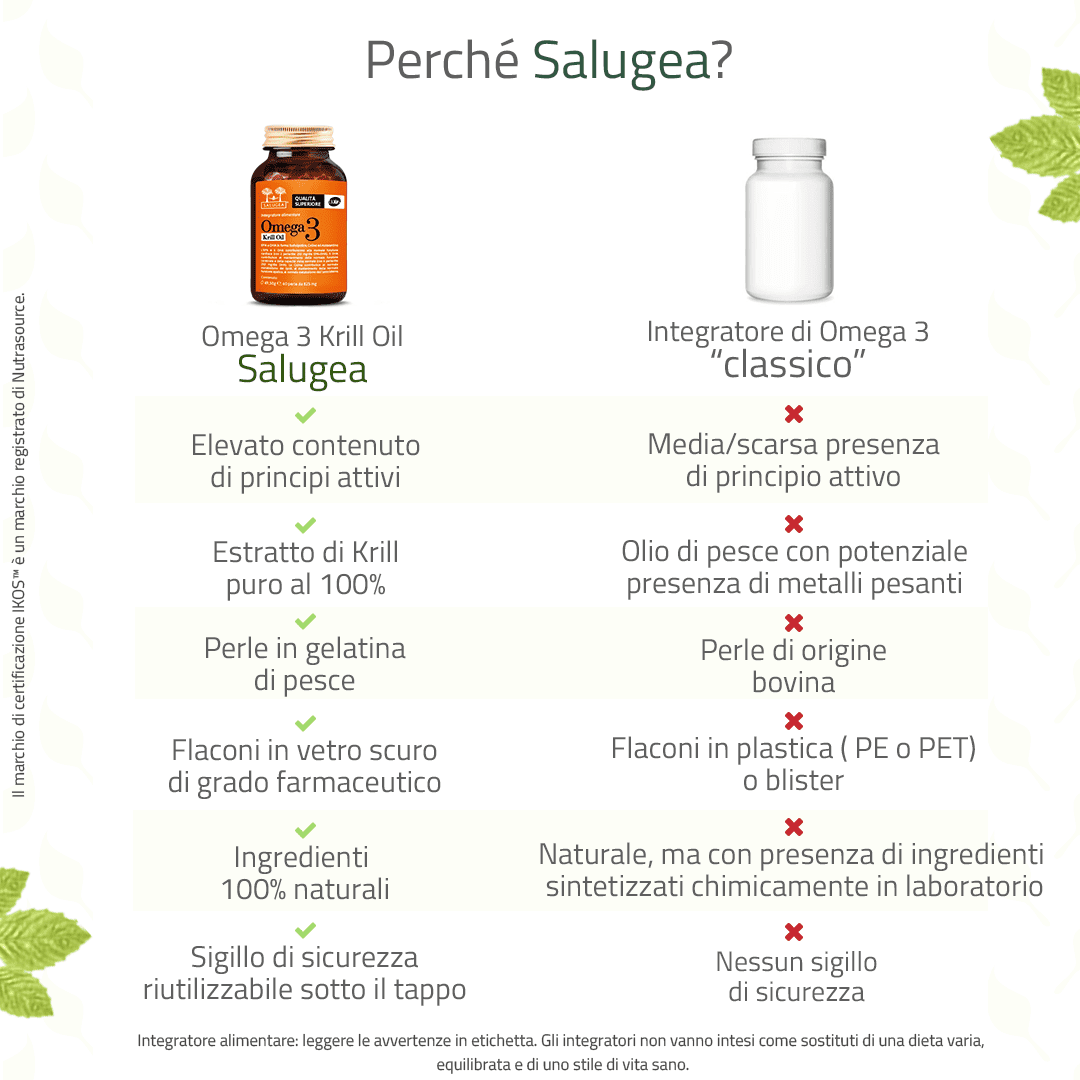
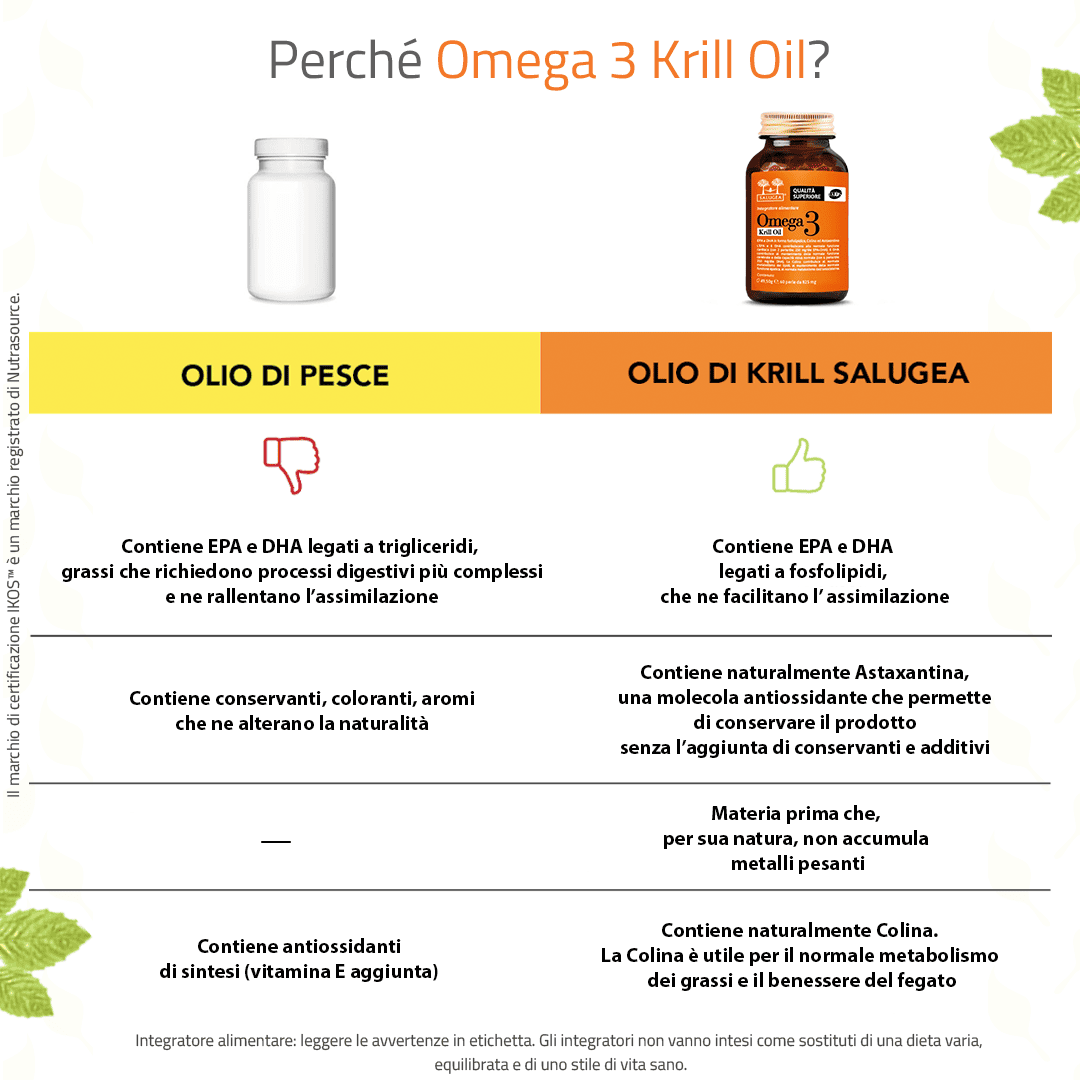
In reality, Omega 3s from fish have characteristics that limit their effectiveness, because they:
- have a chemical structure that makes it difficult for them to enter cells,
- are more likely to contain heavy metals,
- are difficult to digest and often leave a fishy aftertaste,
- often come in softgels made of animal gelatine, i.e. obtained from the bones, skin and hooves of cattle or sheep.
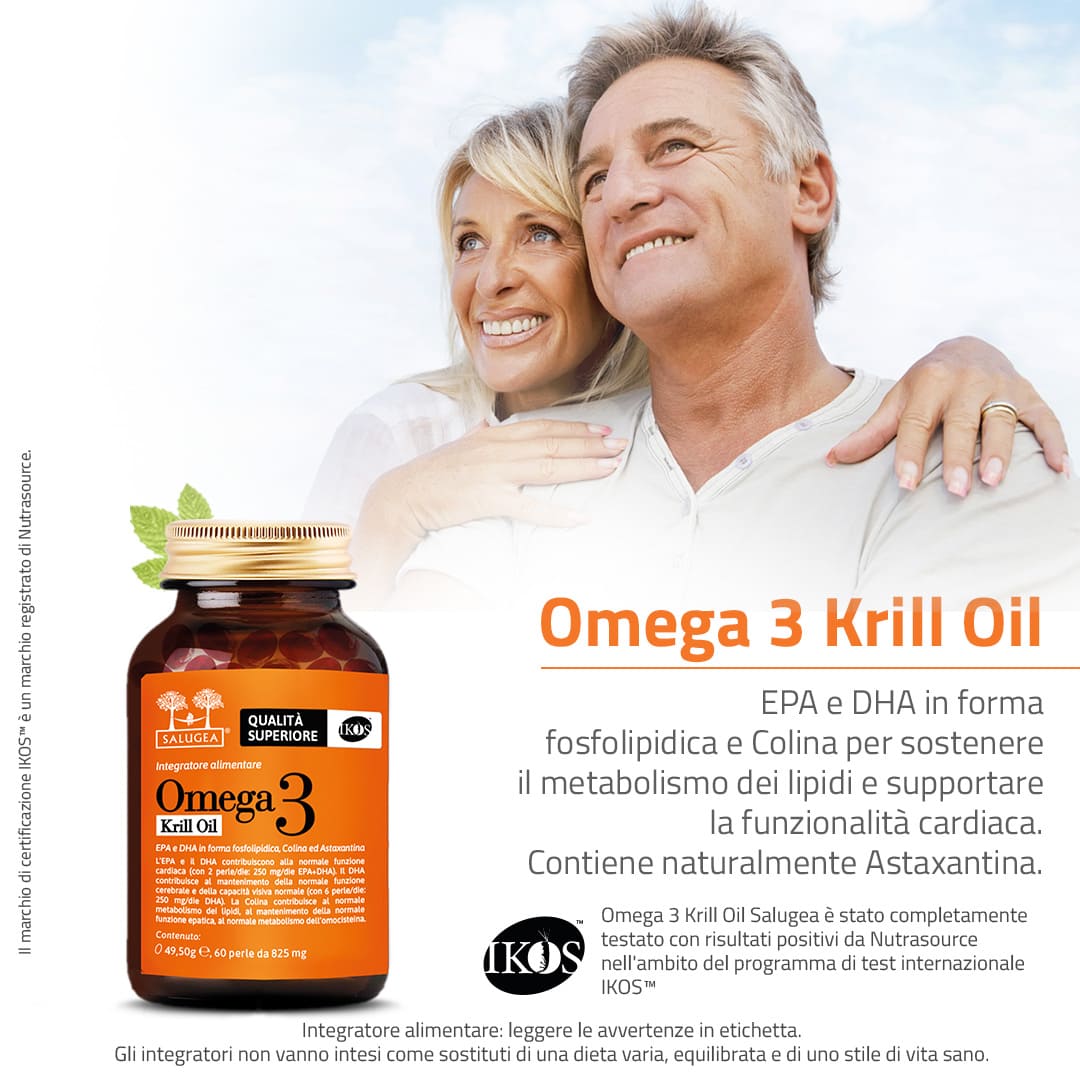
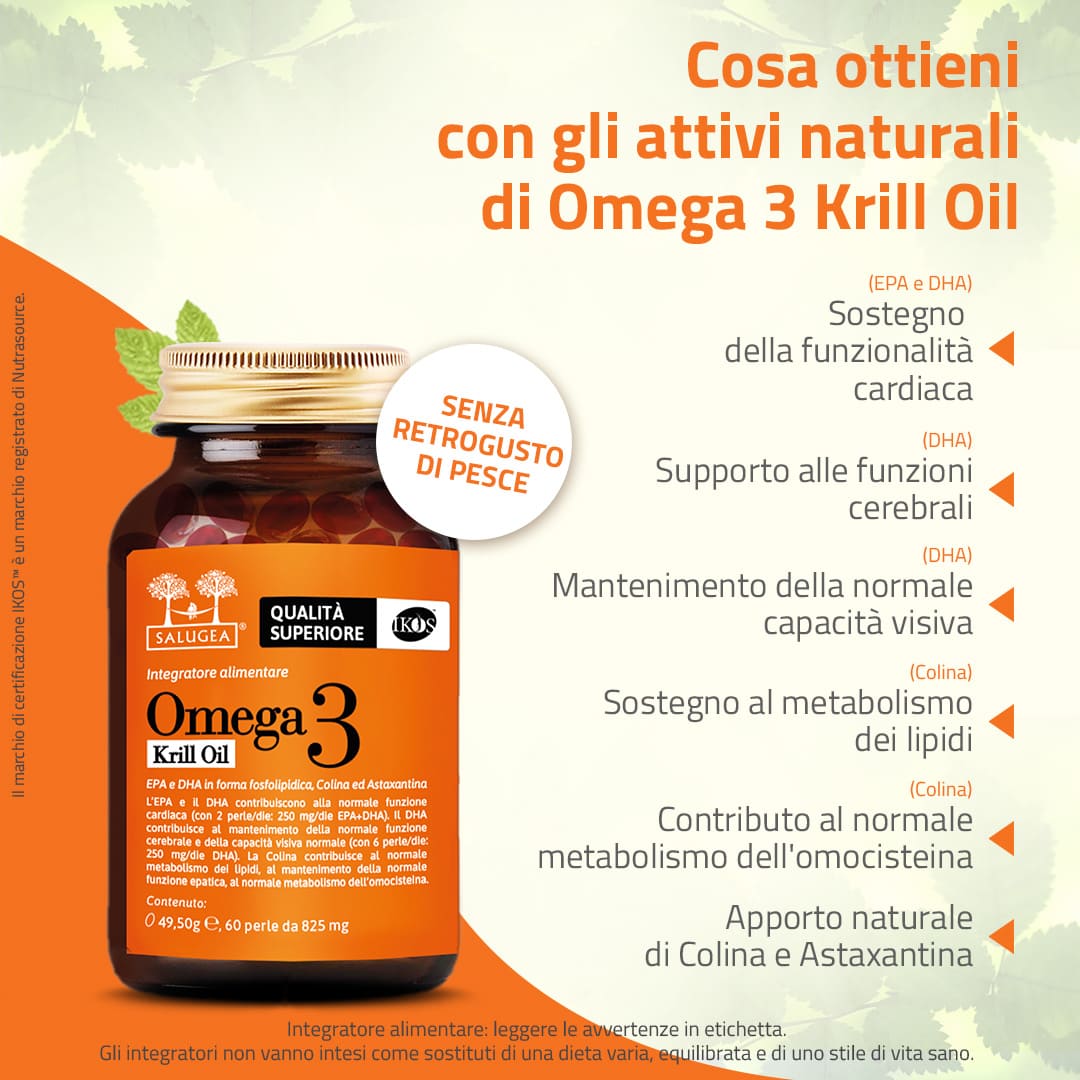
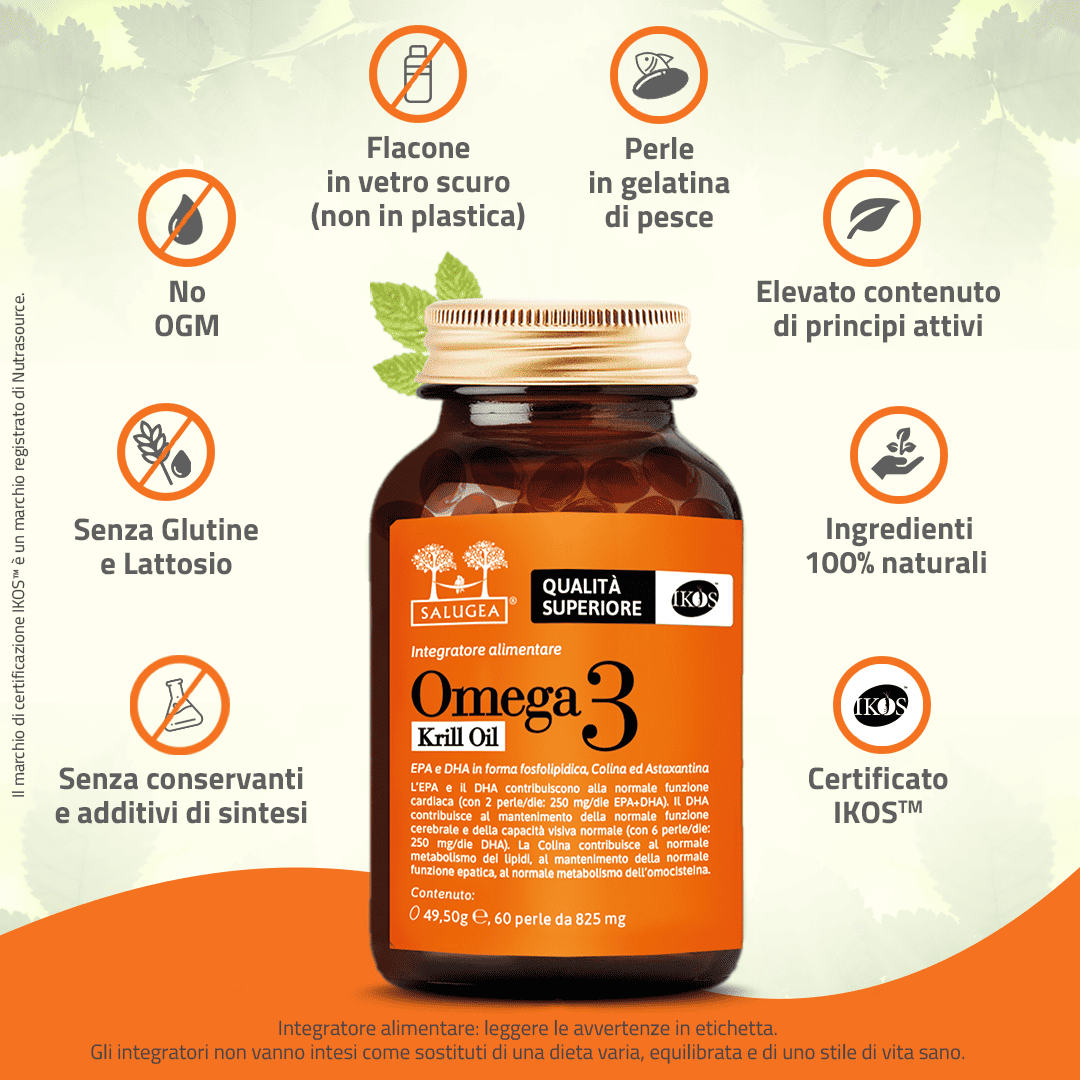
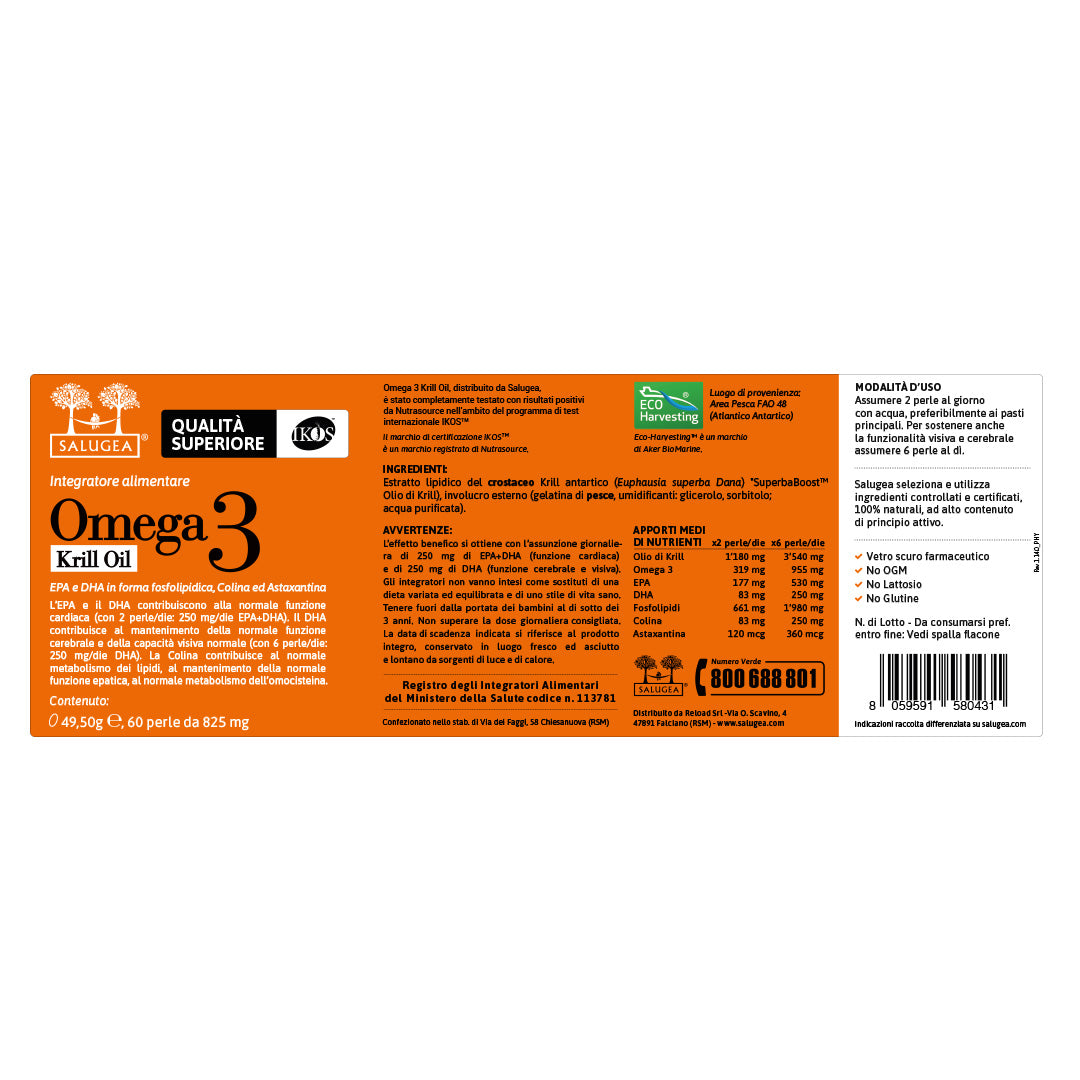
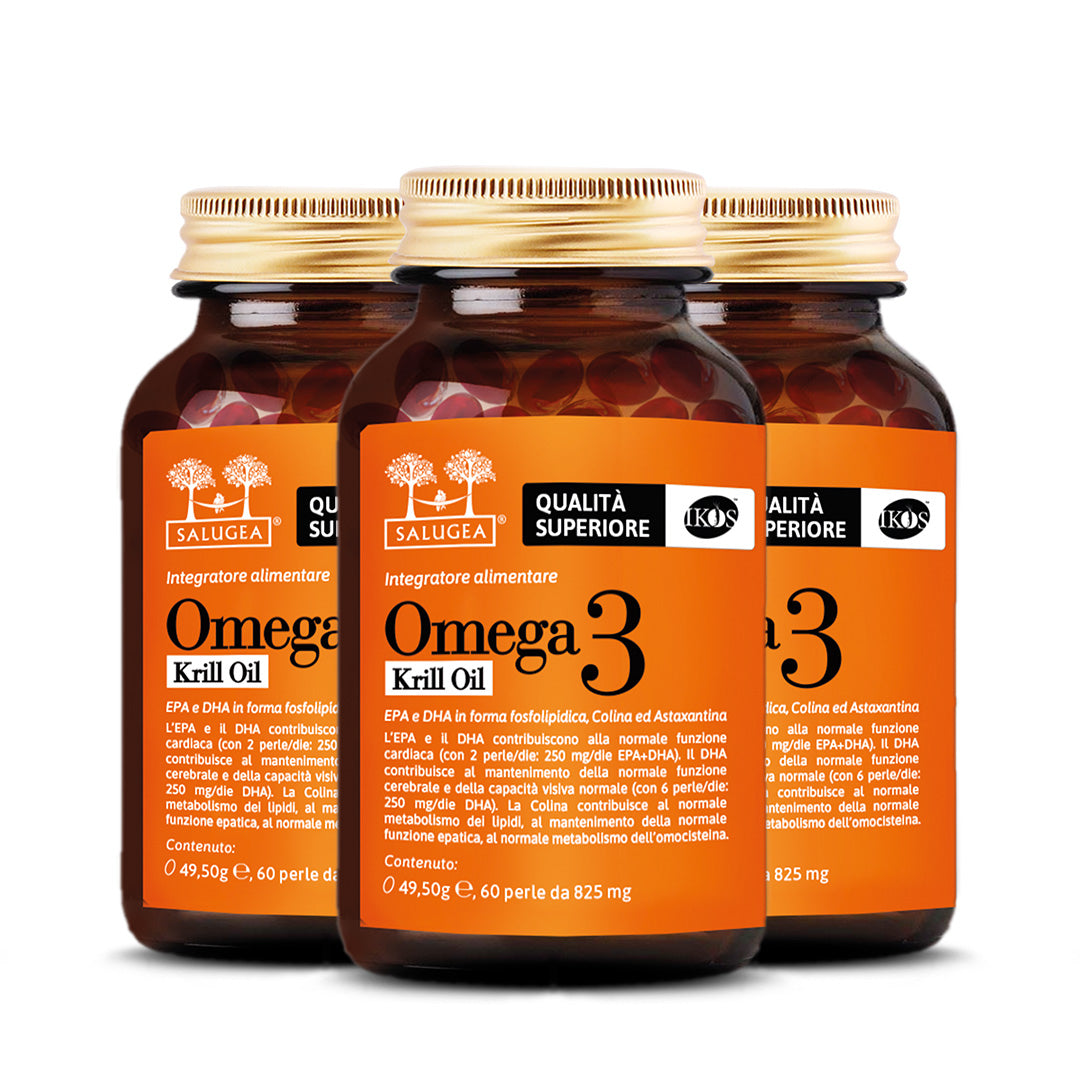
For all these reasons it is preferable to turn to other sources, and Krill Oil is the perfect answer because it fully meets the body’s needs and, in the form of Omega 3 Krill Oil, respects the environment.
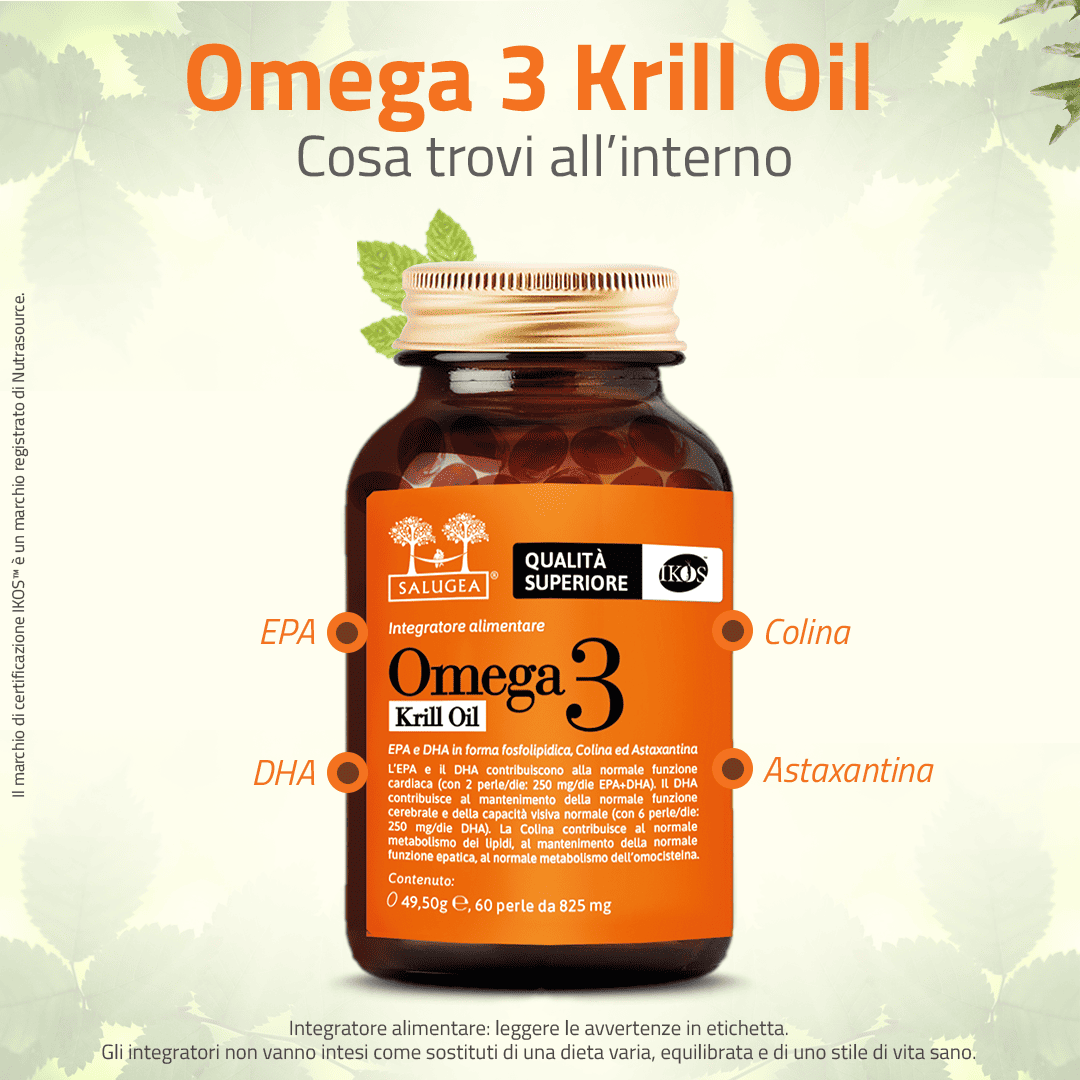
Research on Omega 3s is truly extensive. Here we report some of the most relevant studies, not only on Krill Omega 3s but also on Choline and Astaxanthin, two substances naturally present in Krill Oil that have amply demonstrated their effectiveness.
Scientific Bibliography
- Ursoniu S, Sahebkar A, Serban MC, Antal D, Mikhailidis DP, Cicero A, Athyros V, Rizzo M, Rysz J, Banach M; Lipid and Blood Pressure Meta-analysis Collaboration Group. Lipid-modifying effects of krill oil in humans: systematic review and meta-analysis of randomized controlled trials. Nutr Rev. 2017 May 1;75(5):361-373. doi: 10.1093/nutrit/nuw063. PMID: 28371906.
In this study, the researchers set out to investigate the role of Krill Omega 3s in blood lipid control. After the trial, the scientists concluded that krill oil supplementation can normalise levels of cholesterol, triglycerides and low-density lipoproteins (LDL).
- Köhler A, Sarkkinen E, Tapola N, Niskanen T, Bruheim I. Bioavailability of fatty acids from krill oil, krill meal and fish oil in healthy subjects–a randomized, single-dose, cross-over trial. Lipids Health Dis. 2015 Mar 15;14:19. doi: 10.1186/s12944-015-0015-4. PMID: 25884846; PMCID: PMC4374210.
In this study, the researchers showed that the EPA and DHA contained in krill oil have an average latency of 72 hours in the body after administration, and confirmed the hypothesis that phospholipid forms are absorbed more easily than triglyceride forms (from fish).
- Wu J, Cho E, Giovannucci EL, Rosner BA, Sastry SM, Willett WC, Schaumberg DA. Dietary Intakes of Eicosapentaenoic Acid and Docosahexaenoic Acid and Risk of Age-Related Macular Degeneration. Ophthalmology. 2017 May;124(5):634-643. doi: 10.1016/j.ophtha.2016.12.033. Epub 2017 Jan 30. PMID: 28153441; PMCID: PMC5401792.
In this study, the researchers assessed the associations between the intake of eicosapentaenoic acid (EPA) and docosahexaenoic acid (DHA) and various stages of age-related macular degeneration. The study concluded that higher intakes of EPA and DHA may prevent or delay the onset of these conditions.
- Konagai C, Yanagimoto K, Hayamizu K, Han L, Tsuji T, Koga Y. Effects of krill oil containing n-3 polyunsaturated fatty acids in phospholipid form on human brain function: a randomized controlled trial in healthy elderly volunteers. Clin Interv Aging. 2013;8:1247-57. doi: 10.2147/CIA.S50349. Epub 2013 Sep 19. PMID: 24098072; PMCID: PMC3789637.
In this study, the researchers set out to assess the influence of krill oil intake on cognitive function in elderly subjects. Another Omega 3 oil in triglyceride form was used for comparison. The study concludes that both types of Omega 3 can support cognitive function in older people, but to a much greater extent in the subjects who took Krill Omega 3. This is thanks to the greater bioavailability of the phospholipid form compared with the triglyceride form.
- Sampalis F, Bunea R, Pelland MF, Kowalski O, Duguet N, Dupuis S. Evaluation of the effects of Neptune Krill Oil on the management of premenstrual syndrome and dysmenorrhea. Altern Med Rev. 2003 May;8(2):171-9. PMID: 12777162.
The aim of this study was to assess the effect of Krill Omega 3s on the management of the symptoms of premenstrual syndrome and dysmenorrhoea. The study involved 70 women of childbearing age with dysmenorrhoea and premenstrual syndrome according to the DSM-III-R. At the end of the study, all 70 patients showed a statistically significant improvement in their symptoms.
- Fassett RG, Coombes JS. Astaxanthin, oxidative stress, inflammation and cardiovascular disease. Future Cardiol. 2009;5(4):333-342. doi:10.2217/fca.09.19
This study highlighted how Astaxanthin may be an important antioxidant and anti-inflammatory agent, particularly in relation to cardiovascular diseases, with no adverse effects.
- Zeisel SH, da Costa KA. Choline: an essential nutrient for public health. Nutr Rev. 2009;67(11):615-623. doi:10.1111/j.1753-4887.2009.00246.x
This important study reports how Choline can be considered useful in a great many areas of health and wellbeing: pregnancy, cognitive function, inflammation and cardiovascular problems. The researchers conclude by calling for greater awareness among healthcare professionals that choline can play an important role as a functional nutrient in various physiological conditions.
Bibliography
[1] Ursoniu S, Sahebkar A, Serban MC, Antal D, Mikhailidis DP, Cicero A, Athyros V, Rizzo M, Rysz J, Banach M; Lipid and Blood Pressure Meta-analysis Collaboration Group. Lipid-modifying effects of krill oil in humans: systematic review and meta-analysis of randomized controlled trials. Nutr Rev. 2017 May 1;75(5):361-373. doi: 10.1093/nutrit/nuw063. PMID: 28371906..
[2] Ulven SM, Kirkhus B, Lamglait A, Basu S, Elind E, Haider T, Berge K, Vik H, Pedersen JI. Metabolic effects of krill oil are essentially similar to those of fish oil but at lower dose of EPA and DHA, in healthy volunteers. Lipids. 2011 Jan;46(1):37-46. doi: 10.1007/s11745-010-3490-4. Epub 2010 Nov 2. PMID: 21042875; PMCID: PMC3024511.
[3] Wu J, Cho E, Giovannucci EL, Rosner BA, Sastry SM, Willett WC, Schaumberg DA. Dietary Intakes of Eicosapentaenoic Acid and Docosahexaenoic Acid and Risk of Age-Related Macular Degeneration. Ophthalmology. 2017 May;124(5):634-643. doi: 10.1016/j.ophtha.2016.12.033. Epub 2017 Jan 30. PMID: 28153441; PMCID: PMC5401792.
[4] Konagai C, Yanagimoto K, Hayamizu K, Han L, Tsuji T, Koga Y. Effects of krill oil containing n-3 polyunsaturated fatty acids in phospholipid form on human brain function: a randomized controlled trial in healthy elderly volunteers. Clin Interv Aging. 2013;8:1247-57. doi: 10.2147/CIA.S50349. Epub 2013 Sep 19. PMID: 24098072; PMCID: PMC3789637.
[5] Sampalis F, Bunea R, Pelland MF, Kowalski O, Duguet N, Dupuis S. Evaluation of the effects of Neptune Krill Oil on the management of premenstrual syndrome and dysmenorrhea. Altern Med Rev. 2003 May;8(2):171-9. PMID: 12777162.
[6] Ierna M, Kerr A, Scales H, Berge K, Griinari M. Supplementation of diet with krill oil protects against experimental rheumatoid arthritis. BMC Musculoskelet Disord. 2010 Jun 29;11:136. doi: 10.1186/1471-2474-11-136. PMID: 20587038; PMCID: PMC2907316.
[7] Healthline.com - Krill Oil vs Fish Oil: Which Is Better for You? - Keith Pearson, PhD, RD.
[8] Köhler A, Sarkkinen E, Tapola N, Niskanen T, Bruheim I. Bioavailability of fatty acids from krill oil, krill meal and fish oil in healthy subjects–a randomized, single-dose, cross-over trial. Lipids Health Dis. 2015 Mar 15;14:19. doi: 10.1186/s12944-015-0015-4. PMID: 25884846; PMCID: PMC4374210.
[9] Fischer LM, daCosta KA, Kwock L, Stewart PW, Lu TS, Stabler SP, Allen RH, Zeisel SH. Sex and menopausal status influence human dietary requirements for the nutrient choline. Am J Clin Nutr. 2007 May;85(5):1275-85. doi: 10.1093/ajcn/85.5.1275. PMID: 17490963; PMCID: PMC2435503.
[10] Bjelland I, Tell GS, Vollset SE, Konstantinova S, Ueland PM. Choline in anxiety and depression: the Hordaland Health Study. Am J Clin Nutr. 2009;90(4):1056-1060. doi:10.3945/ajcn.2009.27493.
[11] Poly C, Massaro JM, Seshadri S, et al. The relation of dietary choline to cognitive performance and white-matter hyperintensity in the Framingham Offspring Cohort. Am J Clin Nutr. 2011;94(6):1584-1591. doi:10.3945/ajcn.110.008938
[12] WebMD – ASTAXANTHIN.
[13] MDPI – Astaxanthin: A Potential Therapeutic Agent – A special issue of Marine Drugs (ISSN 1660-3397).
[14] Kidd P. Astaxanthin, cell membrane nutrient with diverse clinical benefits and anti-ageing potential. Altern Med Rev. 2011;16(4):355-364.
[15] EFSA – European Food Safety Authority – Volume7, Issue10 – October 2009 – 1263 – Scientific Opinion on the substantiation of health claims related to EPA, DHA, DPA and maintenance of normal blood pressure (ID 502), maintenance of normal HDL‐cholesterol concentrations (ID 515), maintenance of normal (fasting) blood concentrations of triglycerides (ID 517), maintenance of normal LDL‐cholesterol concentrations (ID 528, 698) and maintenance of joints (ID 503, 505, 507, 511, 518, 524, 526, 535, 537) pursuant to Article 13(1) of Regulation (EC) No 1924/2006.
[16] Ulven SM, Holven KB. Comparison of bioavailability of krill oil versus fish oil and health effect. Vasc Health Risk Manag. 2015 Aug 28;11:511-24. doi: 10.2147/VHRM.S85165. PMID: 26357480; PMCID: PMC4559234.
The IKOS™ certification mark is a registered trademark of Nutrasource. Eco-Harvesting™ is a trademark of Aker BioMarine. These texts are for information purposes only; they are not intended as a guide to the diagnosis or treatment of medical conditions and are in no way intended to replace the advice of a Doctor. Food supplements should not be used as a substitute for a varied and balanced diet and a healthy lifestyle. Read the warnings on the label.
Our texts are for information purposes only; they are not to be understood as an indication for the diagnosis and treatment of medical conditions and are in no way intended to replace the advice of a doctor.