Salugea Longevity
Autophagy and longevity: the science behind it
Discover how Spermidine, NADH and Polydatin act positively on the mechanisms of autophagy, promoting longevity.
DOWNLOAD THE IN VITRO STUDY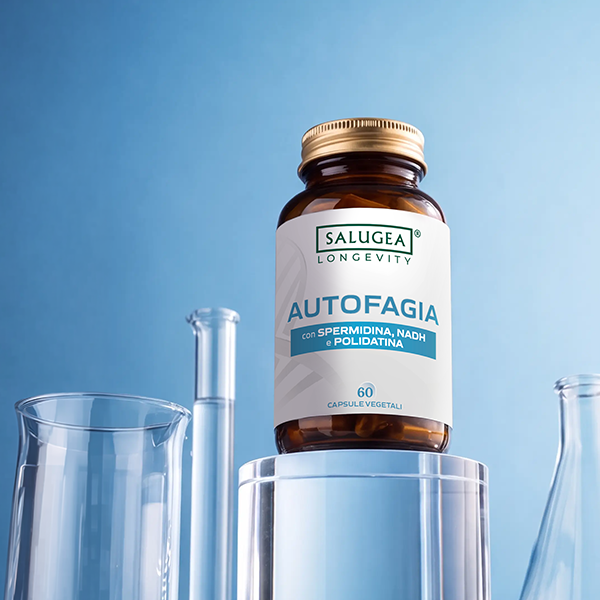
AUTOPHAGY
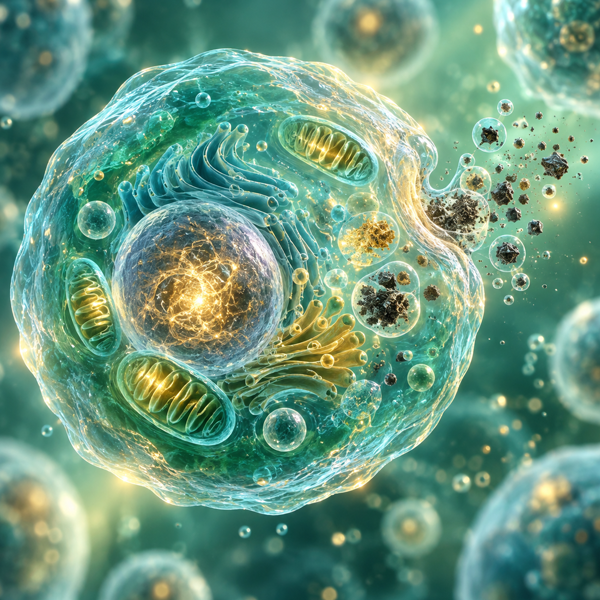
Autophagy is the natural process by which cells renew themselves, getting rid of what they no longer need.
Autophagy is the natural process by which cells renew themselves, getting rid of what they no longer need.
The pillars
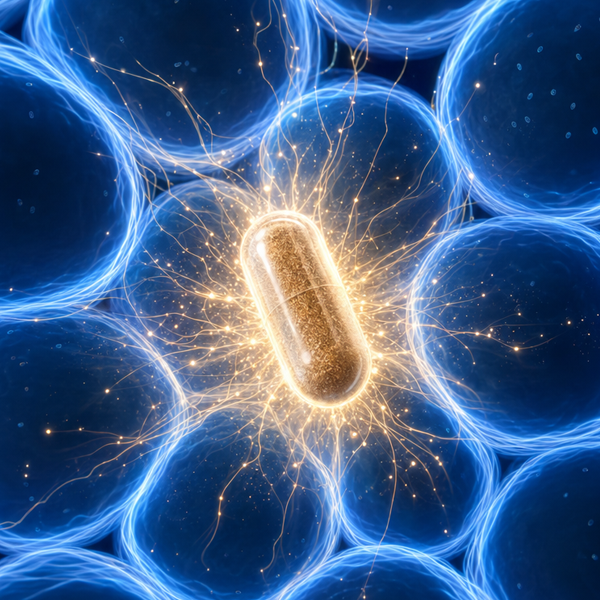
Four mechanisms, one vision: ageing well.



Featured article · 4 min read
Longevity: passing fad or the new frontier of wellbeing?
You may have noticed it too: lately there’s a lot of talk about topics such as longevity, well-ageing or pro-age. People are talking about them on social media, in online articles and even in adverts for the latest “revolutionary” face cream.
Read the articleProduct focus
Cell renewal: the science behind autophagy
Spermidine, NADH and sirtuins: articles to help you understand how the body "recycles" its own cells.


Product focus
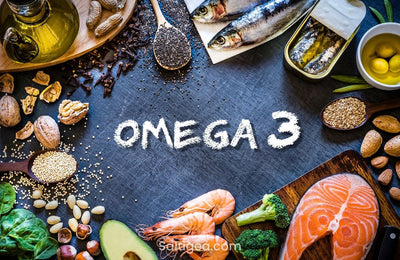
Energy and cell membranes: the role of Omega 3s
Why not all omega 3s are the same, and what they have to do with low-grade inflammation.
Omega 3
Leggi
What are Omega-3s for? The benefits suggested by science
If I ask you what Omega-3s are for, what’s the first thing that comes to mind?
Nutrition
Leggi
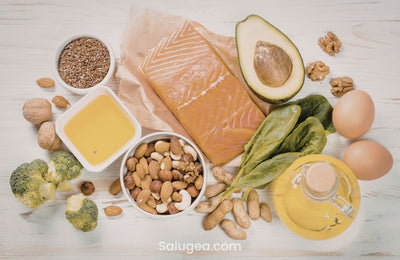
Omega3 and Omega6: why it’s worth knowing the difference
Have you ever heard people talk about Omega3 and Omega6 without really understanding the difference?

Research
Leggi
Omega3: the effect on dryness that hardly anyone knows about
Have you ever noticed your skin feeling tight, especially after a shower? That feeling of dryness...
Product focus
The "master antioxidant" and oxidative stress
Why glutathione is considered the body’s chief antioxidant.

Glutathione
Leggi
Glutathione: natural support for energy and detox
You pay attention to your lifestyle and you know what really matters for your wellbeing. But then…

Research
Leggi
Glutathione and the immune system
Glutathione is one of the most important antioxidants in our body1. As well as counteracting the oxidative damage caused by the build-up of free radicals

Ingredients
Leggi
Where is glutathione found?
We’ve already explored what Glutathione is and what it does in this article. Now let’s look at where it is found in nature
LuxGea line focus
Collagen and skin longevity
The natural decline in collagen is one of the most visible signs of ageing.

LuxGea
Leggi
Radiant skin and strong hair: a guide to beauty from within
I know. Sometimes, maintaining radiant skin and strong hair can seem like an impossible goal!
Beauty
Leggi
Why choose natural food supplements?
Have you ever read the label of a food supplement and found yourself faced with a long list of incomprehensible names?

Beauty
Leggi
Stress and hair: when hair loss appears and how to deal with it
Have you noticed it too? At times when commitments pile up, the pace of life gets more intense and situations become difficult to manage...
It’s not about stopping time, but about living better as time goes by.
This is where science and longevity meet.

Marco De Gregorio
Founder, Salugea
Salugea Professionals
Over to the Expert: let’s talk about Longevity

Dr Stefano Censani
Salugea Scientific DirectorThe science of longevity, explained by Salugea’s Scientific Department: clear answers on the topics that matter.
1 What does longevity really mean, and why isn’t it simply about living longer?
Longevity doesn’t just mean living longer, but also maintaining a good quality of life over time.
When we talk about longevity, in fact, the focus is on healthy ageing, supported by habits such as a balanced diet, regular physical activity, adequate rest and an active, mindful lifestyle.
2 What is autophagy and why is it important for our cells?
Autophagy is a natural process through which cells carry out a kind of “internal clean-up”. During this process, some damaged, altered or no longer needed cellular components are recognised, broken down and partly recycled.
In this way, the cell can recover and reuse some of its components, contributing to the maintenance of its own balance and normal function.
Autophagy is therefore one of the fundamental mechanisms for maintaining cellular balance and is the subject of numerous scientific studies, including in the field of processes linked to ageing and longevity.
3 What is the relationship between autophagy and cellular ageing?
Autophagy is one of the natural mechanisms that help cells maintain their balance over time. Through this physiological process, the cell recognises and removes some damaged or no longer needed components, recovering and reusing part of them.
As we age, the efficiency of various cellular mechanisms can change. This is why autophagy is now the subject of numerous scientific studies aimed at better understanding its role in processes linked to ageing and cellular longevity.
So it’s not about “stopping” ageing, but about studying the natural processes through which cells maintain their balance and function over time.
4 What is the relationship between intermittent fasting and autophagy?
Intermittent fasting is one of the most studied approaches in relation to autophagy, but the relationship between fasting and this cellular process is complex.
During periods when less energy is available, cells adjust their metabolism and some of the mechanisms that regulate autophagy. This process promotes the recycling of cellular components and contributes to maintaining the cell’s balance.
However, the response to fasting is not the same for everyone and can depend on various factors, such as age, diet, physical activity and individual circumstances. For this reason, it is not correct to regard intermittent fasting as the only factor involved in autophagy, or as a one-size-fits-all solution.
In addition, intermittent fasting is not suitable for everyone: before starting it, especially if you have a medical condition, are taking medication or have particular nutritional needs, you should talk to a healthcare professional.
5 What are Omega-3s and why are they important for the body?
Omega-3s are essential fatty acids: our body cannot produce some of them in sufficient quantities, which is why it is important to obtain them through our diet. The best known include EPA and DHA, found mainly in fish and marine oils, and ALA, found in some plant sources.
EPA and DHA perform various functions in the body. In particular, EPA and DHA contribute to the normal function of the heart, while DHA contributes to the maintenance of normal brain function and normal vision.*
A varied, balanced diet makes it possible to include sources of Omega-3s as part of a healthy lifestyle. Where this is not always possible, appropriate
supplementation with EPA and DHA is advisable, especially in their phospholipid form, which is more
bioavailable and typical of Krill oil.
*The beneficial effects are obtained with the daily intakes specified for the relevant authorised claims.
6 What role does glutathione play in protecting against oxidative stress and external agents such as smog and pollution?
Glutathione (GSH) is a substance naturally present in our cells, made up of three amino acids: glutamic acid, cysteine and glycine.[1,2]
It plays an important role in cellular balance and is involved in the natural mechanisms by which cells manage oxidative stress,[1] and therefore in counteracting inflammatory and ageing processes. It also takes part in certain cellular processes that transform and eliminate substances, often of a toxic nature.[2]
The amount of glutathione in the body can vary depending on several factors, such as age, diet and conditions of increased oxidative stress.[3] In such conditions, it is possible to supplement this element, which is so important for our wellbeing.
[1] Averill-Bates DA. The antioxidant glutathione. Vitam
Horm. 2023;121:109-141. doi:10.1016/bs.vh.2022.09.002
[2] Jefferies H, Coster J, Khalil A, Bot J, McCauley RD,
Hall JC. Glutathione. ANZ J Surg. 2003;73(7):517-522.
doi:10.1046/j.1445-1433.2003.02682.x
[3] Wu G, Fang YZ, Yang S, Lupton JR, Turner ND; New
Collective Author. Glutathione metabolism and its implications for
health. J Nutr. 2004;134(3):489-492. doi:10.1093/jn/134.3.489
7 What are sirtuins and NADH, and what role do they play in the body?
Sirtuins are a family of enzymes found in cells and involved in various cellular processes, including energy metabolism, the response to cellular stress and the regulation of some mitochondrial functions.[1]
Their activity is linked to the availability of NAD+, a coenzyme naturally present in cells and essential for many metabolic reactions.[1]
NADH is the reduced form of NAD+ and plays an important role in cellular energy metabolism: it takes part in the processes through which mitochondria produce ATP, the main source of energy used by cells.
As we age, NAD+ metabolism can change. This is why the relationship between NAD+, cellular metabolism, the activation of autophagy and ageing-related processes is now the subject of numerous scientific studies.[1,2]
Sirtuins and NAD are therefore two important elements for understanding some of the mechanisms that regulate the functioning and physiological balance of cells.
[1] Gomes AP, Price NL, Ling AJY, Moslehi JJ, Montgomery MK, Rajman L, et al. Declining NAD+ induces a pseudohypoxic state disrupting nuclear-mitochondrial communication during aging. Cell. 2013;155(7):1624-1638.
[2] Campbell JM. Supplementation with NAD+ and Its Precursors to Prevent Cognitive Decline across Disease Contexts. Nutrients. 2022;14(15):3231. doi:10.3390/nu14153231
[3] Demarin V, Podobnik SS, Storga-Tomic D, Kay G. Treatment of Alzheimer's disease with stabilized oral nicotinamide adenine dinucleotide: a randomized, double-blind study. Drugs Experimental and Clinical Research. 2004;30(1):27-33.
8 Polydatin and resveratrol: what’s the difference?
Polydatin is a natural compound closely related to resveratrol: chemically, it is a form of resveratrol bound to a glucose molecule.
Both belong to the polyphenol family and are the subject of numerous scientific studies aimed at better understanding their characteristics and their role in cellular processes.[1-4]
The presence of the glucose molecule gives polydatin different biochemical characteristics from resveratrol, which can positively influence its stability, absorption and
metabolism in the body.
Research is exploring these differences and the possible involvement of polydatin in various cellular mechanisms, including those linked to oxidative stress and autophagy.[4]
This is a field of research that is still evolving: further clinical studies in humans are under way to fully understand its effects.
[1] Morselli E, Galluzzi L, Kepp O, et al. Autophagy mediates pharmacological lifespan extension by spermidine and resveratrol. Aging (Albany NY). 2009;1(12):961-970. doi:10.18632/aging.100110
[2] Gonçalinho GHF, Kuwabara KL, Faria NFO, et al. Sirtuin 1 and Vascular Function in Healthy Women and Men: A Randomized Clinical Trial Comparing the Effects of Energy Restriction and Resveratrol. Nutrients. 2023;15(13):2949. doi:10.3390/nu15132949
[3] García-Martínez BI, Ruiz-Ramos M, Pedraza-Chaverri J, Santiago-Osorio E, Mendoza-Núñez VM. Effect of Resveratrol on Markers of Oxidative Stress and Sirtuin 1 in Elderly Adults with Type 2 Diabetes. International Journal of Molecular Sciences. 2023;24(8):7422. doi:10.3390/ijms24087422
[4] He J, Qian YC, Yin YC, Kang JR, Pan TR. Polydatin: a potential NAFLD therapeutic drug that regulates mitochondrial autophagy through SIRT3-FOXO3-BNIP3 and PINK1-PRKN mechanisms. Chem Biol Interact. 2024;398:111110. doi:10.1016/j.cbi.2024.111110
A tailor-made programme
Longevity changes shape with age. The programme adapts.
Early defences
Supporting antioxidant defences before oxidative stress leaves its mark.
Focus · Glutatione Forte