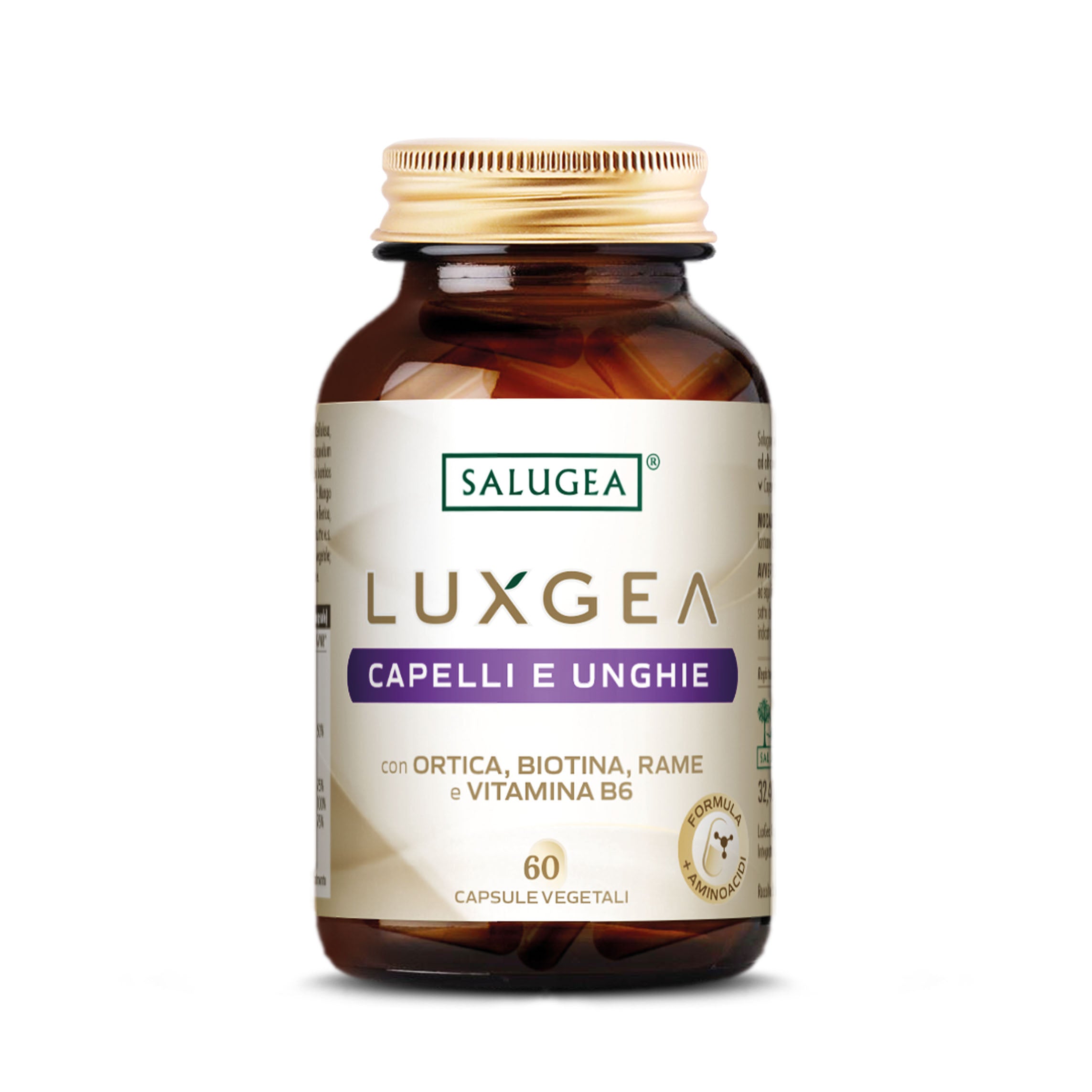
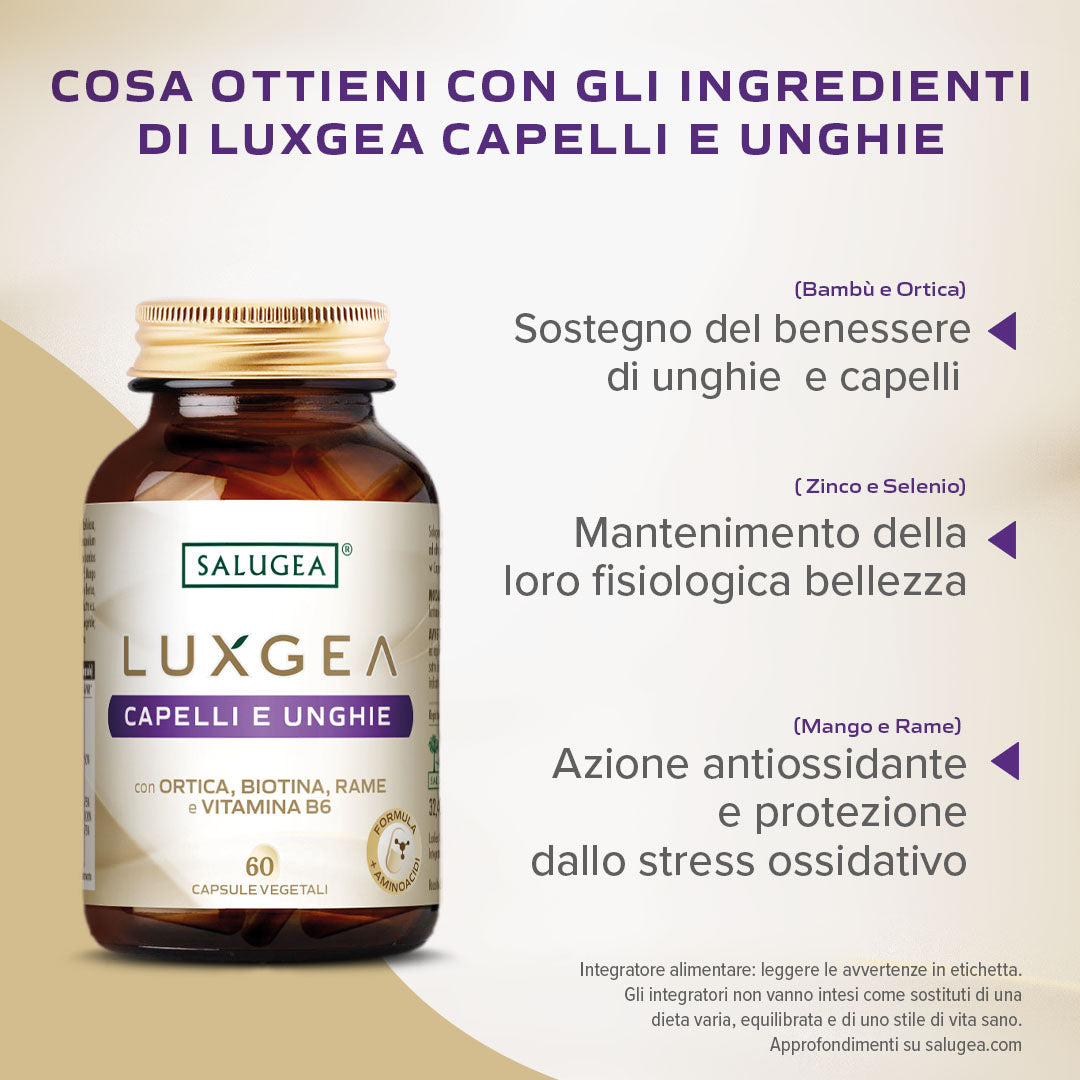
The world of hair supplementation is studded with products that proclaim themselves the definitive “fixers” of a problem that is as simple as it is complex.
Simple because the structure of the hair is the result of an organised system that includes:
- A bulb that contains the dermal papilla, from which the hair originates;
- Capillaries that bring nutrients;
- The sebaceous gland, responsible for the aesthetic quality of the hair;
- The shaft, that is, the hair itself.
At the biochemical level too, we find a composition of just a few, but important, elements.
Hair is made up of up to 95% keratin, a highly resistant fibrous protein, and of lipids, trace elements and pigments. Another important element is also melanin, the protein that gives hair its natural colour.
This structure is the same for every hair on the human body.
So why is it complex?
The complexity comes first of all from the fact that there are a great many factors that can affect the wellbeing of the hair such as stress, smoking, an unbalanced diet and hormonal changes.
And secondly because it is necessary to understand that these structures are extremely interconnected with the whole body and that every action we take to support their appearance or to act on hair loss has an effect on the whole body.
In this context, hormonal factors also come into play.
Hair growth is in fact regulated mostly by hormonal mechanisms, even if not all hormones act in the same way.
When we talk about the hair follicle, the spotlight falls above all on male hormones such as testosterone and on its derivative, DHT (dihydrotestosterone).
We can imagine this process as an orchestra. Testosterone is the musician who starts playing, while the enzyme 5-alpha-reductase is the conductor who changes its rhythm, transforming it into DHT right at the level of the hair follicle.
If the “conductor” turns the volume up too high, the music loses its rhythm. Excessive production of DHT can put the follicle under stress, encouraging hair loss and the progressive miniaturisation of the hair.
Over time, the follicle produces hairs that are increasingly thin, weak and short. Until it becomes almost inactive.
If you have ever used hair supplements, you will probably have found Serenoa repens among the ingredients, sometimes also listed as Saw palmetto. This is because it is a plant known for its action on the enzyme 5-alpha-reductase. However, there is one aspect to take into account. In some cases, it has been observed that its action can also extend to other aspects of the balance of male hormones, with possible effects on intimate wellbeing[1]-[2]-[3].
The use of selected natural active ingredients, such as Quercetin and Nettle[4], makes it possible instead to modulate the activity of 5-alpha-reductase while respecting the natural hormonal balance of the body.
Do you remember what the innermost part is called, the one inside the bulb? Exactly, the dermal papilla.
The more vital the dermal papilla, the stronger the hair will be, more resistant and naturally shiny.
So this is a tissue that needs to be nourished in a targeted and constant way over time through:
- An intake of quality nutrients;
- An intake of antioxidants;
- Active ingredients with a detox action on the scalp.
Over the years, phytotherapy has become increasingly interested in these aspects and there are numerous studies confirming the importance of a targeted approach that is also natural.
In the next section we will look at some of them and understand how and why plant active ingredients can be useful for the wellbeing of the hair and the scalp.
Experimental Phytotherapy
Sulphur amino acids: L-Cystine and L-Methionine
Almost all studies report that supplementation with L-cystine is always combined with other nutrients, in particular B group vitamins such as B5 and biotin.
- Lengg, N., Heidecker, B., Seifert, B., & Trüeb, R. (2007). Dietary supplement increases anagen hair rate in women with telogen effluvium: results of a double-blind, placebo-controlled trial. Therapy, 4, 59-65.
This study on women with telogen effluvium (diffuse hair loss, characterised by an abnormal increase in hairs that prematurely enter the resting phase – telogen phase) tested the intake of L-cystine in combination with vitamin B5 and yeast, giving excellent results. In fact, after 6 months of taking the mixture, the appearance, thickness and quality of the hair improved. In addition, the number of hairs in the anagen (growth) phase increased both during and at the end of the treatment.
- Piquero-Casals, J., Saceda‐Corralo, D., Aladren, S., Bustos, J., Fernández-Botello, A., Navasa, A., Logusso, G., Jourdan, E., Mir-Bonafé, J., & Morgado-Carrasco, D. (2024). Oral Supplementation with l-Cystine, Serenoa repens, Cucurbita pepo, and Pygeum africanum in Chronic Telogen Effluvium and Androgenetic Alopecia: A Double-Blind, Placebo-Controlled, Randomized Clinical Study. Skin Appendage Disorders, 11, 27 - 35.
This study observed the effect of a mix containing L-cystine on telogen effluvium or androgenetic alopecia, in men and women of different ages (18-60). The mix administered also included vitamins, minerals (zinc and silicon) and elements that act on the activity of 5-alpha-reductase.
Before, during and at the end of the 6-month study, various parameters were measured concerning the number, wellbeing and appearance of the hair. At the end of the treatment, the subjects who had taken this supplementation recorded statistically significant improvements in hair quality and also in hair number and density.
L-methionine is an essential amino acid of extreme importance and present in all human proteins.
- Kubota, Y., Varshney, N., Kobayashi, K., Tsunoda, T., & Hoffman, R. (2024). Methionine Dependence of Hair Maintenance in C57BL/6 Mice. In Vivo, 38, 1199 - 1202.
This study reports the importance of methionine in hair development; in fact, its deficiency leads to reversible forms of alopecia.
- Li, S., Wang, X., Liu, G., & Li, F. (2025). Methionine Modulates the Growth and Development of Heat-Stressed Dermal Papilla Cells via the Wnt/β-Catenin Signaling Pathway. International Journal of Molecular Sciences, 26
In this study the importance of methionine for the wellbeing of the hair follicle was underlined. It emerges that its supplementation in fact increases follicular density and stimulates the growth of the hair shaft.
Bamboo
- The hair follicle as a dynamic miniorgan - Curr Biol. 2009 Feb. 10;19(3):R132-42.doi: 10.1016/j.cub.2008.12.005. - Marlon R Schneider et - Development of Hair Fibres - Adv Exp Med Biol. 2018;1054:109-154.doi:10.1007/978-981-10-8195-8_10. - Duane P Harland et Al.
In this review, the researchers present the basic concepts of hair follicle biology and summarise important recent advances in the field, such as the use of Bamboo extract.
B Group Vitamins (PANMOL®-B-COMPLEX 120)
- Med Hypotheses. 2000 Dec;55(6):461-9. Doi: 10.1054/mehy.2000.1090. Natural vitamins may be superior to synthetic ones – R. J. Thiel
This study is fundamental because it shows that natural vitamins are much more bioavailable, and therefore more assimilable, than synthetic ones.
- A. Vinson, P. Bose, L. Lemoire and K. Hsiao, "Relative Bioavailability of Trace Elements and Vitamins Found in Commercial Supplements in Nutrient Availability: Chemical and Biological Aspects” Royal Society of Chemistry, Scranton, USA. 1989
This other work shows that the actual absorption of Vitamin B3 can be up to 4 times higher, and that of Vitamins B6 and B12 up to 2.5 times higher, when in organic form compared with the synthetic form.
- Almohanna HM, Ahmed AA, Tsatalis JP, Tosti A. “The Role of Vitamins and Minerals in Hair Loss: A Review.” Dermatology and Therapy (Heidelberg). 2019 Mar;9(1):51-70. Doi: 10.1007/s13555-018-0278-6.
This review analyses the role of various vitamins and minerals in the life cycle and appearance of the hair. In particular, low levels of some B group vitamins, such as riboflavin, biotin, folate and vitamin B12, have been associated with hair loss conditions and with changes in the structure and appearance of the hair.
Mango, (Careflow®)
- Mangiferin: a natural miracle bioactive compound against lifestyle related disorders; Lipids Health Dis. 2017 May 2;16(1):84. Doi: 10.1186/s12944-017-0449-y. M. Imran et Al.
- Mangiferin: An effective therapeutic agent against several disorders (Review); Mol Med Rep. 2018 Dec;18(6):4775-4786. Doi: 10.3892/mmr.2018.9529. Epub 2018 Oct 2. Suya Du et Al.)
These studies found that the extract standardised to Mangiferin, a xanthone derivative, has numerous properties, among which the antioxidant ones stand out, together with the suppression of the expression of necrosis factor α and the induction of apoptosis. The compound is also able to block lipid peroxidation.
- Effects of Mangifera indica (Careless) on Microcirculation and Glucose Metabolism in Healthy Volunteers”; Planta Med 2017 Jul;83(10):824-829)
This study highlights the benefits of Mango on microcirculation and on glucose metabolism. Two groups of subjects were given Mango extract and a placebo. At the end of the trial, the group given the Mango extract showed an increase in microcirculatory blood flow and a reduction in postprandial glucose levels compared with the placebo group.
Quercetin
- Hiipakka RA, Zhang HZ, Dai W, Dai Q, Liao S. Structure-activity relationships for inhibition of human 5alpha-reductases by Biochem Pharmacol. 2002;63:1165–76
- Sugimoto Y, Lopez Solache I, Labrie F, Luu-The V. Cations inhibit specifically type I 5α-reductase found in human skin. J Invest Dermatol. 1995;104:775–8
In these studies it was seen that Quercetin and Copper are able to keep the hair follicle in the anagen (growth) phase for longer, through the inhibition of 5-a-Reductase, which prevents the formation of DHT, the element underlying androgenetic alopecia.
- Prevention and treatment of alopecia areata with quercetin in the C3H/hej mouse model - Cell Stress Chaperones. 2012 Mar;17(2):267-74.- doi: 10.1007/s12192-011-0305-3. Epub 2011 Nov 1. - T C Wikramanayake
In this study carried out on mice, the effects of quercetin, a bioflavonoid with anti-inflammatory properties, were tested in an experimental condition of alopecia. Hair regrowth was observed in the lesional areas in all the mice treated with quercetin.
In conclusion, the researchers maintain that quercetin as a food supplement may lead to greater support of the physiology of the bulb, with positive outcomes for alopecia.
Iron (sunactive® Fe-P80LK)
- Dermatol Ther (Heidelb). 2019 Mar;9(1):51-70. Doi: 10.1007/s13555-018-0278-6. Epub 2018 Dec 13. The Role of Vitamins and Minerals in Hair Loss: A Review Hind M Almohanna, Azhar A Ahmed, John P Tsatalis, Antonella Tosti
In this review the researchers highlight the role of vitamins and minerals, such as vitamin A, vitamin B, vitamin C, vitamin D, vitamin E, iron, selenium and zinc, in non-scarring alopecia. A deficiency of these micronutrients may represent a modifiable risk factor associated with the development, prevention and treatment of alopecia. Keeping a correct level of these nutrients in the body can therefore contribute to maintaining healthy hair.
- Clin Exp Dermatol . 2002 Jul;27(5):396-404. Doi: 10.1046/j.1365-2230.2002.01076.x. Nutritional factors and hair loss D H Rushton
This important review of studies further highlights the link between hair loss and iron levels.
Hård, 40 years ago, demonstrated the importance of iron supplements in women who are not anaemic but are iron-deficient and have hair loss. Serum ferritin concentrations provide a good assessment of an individual's iron status. Rushton et al. produced the first published data showing that serum ferritin concentrations are a contributing factor in female hair loss and, 10 years later, Kantor et al. confirmed this association.
It is therefore important to consider the level of Iron in the blood as a possible factor affecting conditions of imbalance in the wellbeing of the hair.
Sunactive® is a registered trademark of Taiyo Kagaku Co., Ltd.
Careflow® is a trademark of Vital Solutions gmbh, Germany.
Bibliography
[1] Haslam IS, Jadkauskaite L, Szabó IL, et al. Oxidative Damage Control in a Human (Mini-) Organ: Nrf2 Activation Protects against Oxidative Stress-Induced Hair Growth Inhibition. J Invest Dermatol. 2017;137(2):295-304. doi:10.1016/j.jid.2016.08.035.
[2] Kubota, Y., Varshney, N., Kobayashi, K., Tsunoda, T., & Hoffman, R. (2024). Methionine Dependence of Hair Maintenance in C57BL/6 Mice. In Vivo, 38, 1199 - 1202. https://doi.org/10.21873/invivo.13555.)
[3] Li, S., Wang, X., Liu, G., & Li, F. (2025). Methionine Modulates the Growth and Development of Heat-Stressed Dermal Papilla Cells via the Wnt/β-Catenin Signaling Pathway. International Journal of Molecular Sciences, 26. https://doi.org/10.3390/ijms26041495.
[4] Araújo LA, Addor F, Campos PM. Use of silicon for skin and hair care: an approach of chemical forms available and efficacy. An Bras Dermatol. 2016;91(3):331-335. doi:10.1590/abd1806-4841.20163986.
[5] Haftek M, Abdayem R, Guyonnet-Debersac P. Skin Minerals: Key Roles of Inorganic Elements in Skin Physiological Functions. Int J Mol Sci. 2022;23(11):6267. Published 2022 Jun 3. doi:10.3390/ijms23116267.
[6] Med Hypotheses. 2000 Dec;55(6):461-9. doi: 10.1054/mehy.2000.1090. Natural vitamins may be superior to synthetic ones – R. J. Thiel
[7] Thiel RJ. Natural vitamins may be superior to synthetic ones. Med Hypotheses. 2000 Dec;55(6):461-9. doi: 10.1054/mehy.2000.1090. PMID: 11090291.
[8] Buchwald-Werner S, Schön C, Frank S, Reule C. Effects of Mangifera indica (Careless) on Microcirculation and Glucose Metabolism in Healthy Volunteers. Planta Med. 2017;83(10):824-829. doi:10.1055/s-0043-103017.
[9] Benefits of a Mangifera indica L. fruit powder for well-aging: In vitro investigation of effects on master regulators for the aging process. Röchter, S. & Ehrhardt, Christina & Buchwald-Werner, Sybille & Berger Büter, Karin & Schatton, Elena. (2015). Benefits of a Mangifera indica L. fruit powder for well-aging: In vitro investigation of effects on master regulators for the aging process. Agro Food Industry Hi-Tech. 26. 4-7.
[10] Redford KE, Abbott GW. The ubiquitous flavonoid quercetin is an atypical KCNQ potassium channel activator. Commun Biol. 2020;3(1):356. Published 2020 Jul 8. doi:10.1038/s42003-020-1089-8.
[11] Kim J, Kim SR, Choi YH, et al. Quercitrin Stimulates Hair Growth with Enhanced Expression of Growth Factors via Activation of MAPK/CREB Signaling Pathway. Molecules. 2020;25(17):4004. Published 2020 Sep 2. doi:10.3390/molecules25174004.
[12] Hiipakka RA, Zhang HZ, Dai W, Dai Q, Liao S. Structure-activity relationships for inhibition of human 5alpha-reductases by polyphenols. Biochem Pharmacol. 2002;63:1165–76 / Sugimoto Y, Lopez Solache I, Labrie F, Luu-The V. Cations inhibit specifically type I 5α-reductase found in human skin. J Invest Dermatol. 1995;104:775–8.
[13] Guo T, Li W, Zheng W, Lin Y, Wen S. Quercetin rescues dihydrotestosterone-treated human dermal papilla cells via SHP2/AKT signaling to suppress autophagy and apoptosis. Naunyn Schmiedebergs Arch Pharmacol. 2025 Jun;398(6):7155-7170. doi: 10.1007/s00210-024-03742-z. Epub 2024 Dec 24. PMID: 39718610.
[14] Elston DM. Commentary: Iron deficiency and hair loss: problems with measurement of iron. J Am Acad Dermatol. 2010;63(6):1077-1082. doi:10.1016/j.jaad.2009.09.054.
[15] Gallo, E., Maggini, V., Lombardi, N., Crescioli, G., Sivelli, F., Vannacci, A. and Firenzuoli, F. (2022), Serenoa repens induced erectile dysfunction: Underdiagnosis and phytovigilance. Br J Clin Pharmacol, 88: 2441-2443. https://doi.org/10.1111/bcp.15129
[16] Agbabiaka TB, Pittler MH, Wider B, et al. Serenoa repens (saw palmetto): a systematic review of adverse events. 2009. In: Database of Abstracts of Reviews of Effects (DARE): Quality-assessed Reviews [Internet]. York (UK): Centre for Reviews and Dissemination (UK); 1995-. Available from: https://www.ncbi.nlm.nih.gov/books/NBK76603/
[17] Firenzuoli F, Firenzuoli B, Mascherini V, et al. Can we identify a post-Serenoa syndrome (PSS)? A case series on sexual and psychiatric side effects of Serenoa repens. Br J Clin Pharmacol. 2026;1-10. doi:10.1002/bcp.70442
[18] Ortica Urtica Dioica – S.I.Tri. Società Italiana Di Tricologia
[19] Guo T, Li W, Zheng W, Lin Y, Wen S. Quercetin rescues dihydrotestosterone-treated human dermal papilla cells via SHP2/AKT signaling to suppress autophagy and apoptosis. Naunyn Schmiedebergs Arch Pharmacol. 2025 Jun;398(6):7155-7170. doi: 10.1007/s00210-024-03742-z. Epub 2024 Dec 24. PMID: 39718610.
[20] Kim J, Kim SR, Choi YH, Shin JY, Kim CD, Kang NG, Park BC, Lee S. Quercitrin Stimulates Hair Growth with Enhanced Expression of Growth Factors via Activation of MAPK/CREB Signaling Pathway. Molecules. 2020 Sep 2;25(17):4004. doi: 10.3390/molecules25174004. PMID: 32887384; PMCID: PMC7504764
[21] Wickett RR, Kossmann E, Barel A, Demeester N, Clarys P, Vanden Berghe D, Calomme M. Effect of oral intake of choline-stabilized orthosilicic acid on hair tensile strength and morphology in women with fine hair. Arch Dermatol Res. 2007 Dec;299(10):499-505. doi: 10.1007/s00403-007-0796-z. Epub 2007 Oct 25. PMID: 17960402.
[22] Ortica Urtica Dioica – S.I.Tri. Società Italiana Di Tricologia
[23] Buchwald-Werner S, Schön C, Frank S, Reule C. Effects of Mangifera indica (Careless) on Microcirculation and Glucose Metabolism in Healthy Volunteers. Planta Med. 2017;83(10):824-829. doi:10.1055/s-0043-103017
Our texts are for information purposes only; they are not to be understood as an indication for the diagnosis and treatment of medical conditions and are in no way intended to replace the advice of a doctor.