Excess cholesterol and triglycerides are silent conditions that do not present any particular symptoms and are very widespread in Italy5.
We often fail to notice them because we pay attention to other, more evident situations such as high blood pressure, recurring vascular problems, excess weight, etc.
At other times (and more frequently than we might imagine) excess cholesterol and triglycerides can be of genetic origin6.
There are, in fact, some people who have high levels of cholesterol and/or triglycerides in their blood regardless of diet and lifestyle (smoking, alcohol, sedentary habits).
This happens because cholesterol levels do not depend only on how we eat. As well as exogenous cholesterol (taken in with food), there is also endogenous cholesterol, the kind produced by our own body.
Endogenous or exogenous cholesterol aside, what is really relevant is that these are extremely widespread situations.
Just think that hypercholesterolaemia, or high cholesterol, affects around 54% of the European population, equally among men and women, the latter especially after the age of 50 7.
And it represents the most widespread cardiovascular risk factor in Italy. One last figure, but not least in importance: 40% of those suffering from hypercholesterolaemia are not even aware of it! 8
Just by reading these figures, we immediately understand what a fundamental role prevention plays.
What does prevention mean in practice?
- Regular check-ups with medical examinations, specific tests and analyses.
- Taking care of the quality and quantity of your diet.
- Not smoking and not drinking alcohol.
- Taking regular physical exercise.
- Taking appropriate supplementation.
Experimental Phytotherapy
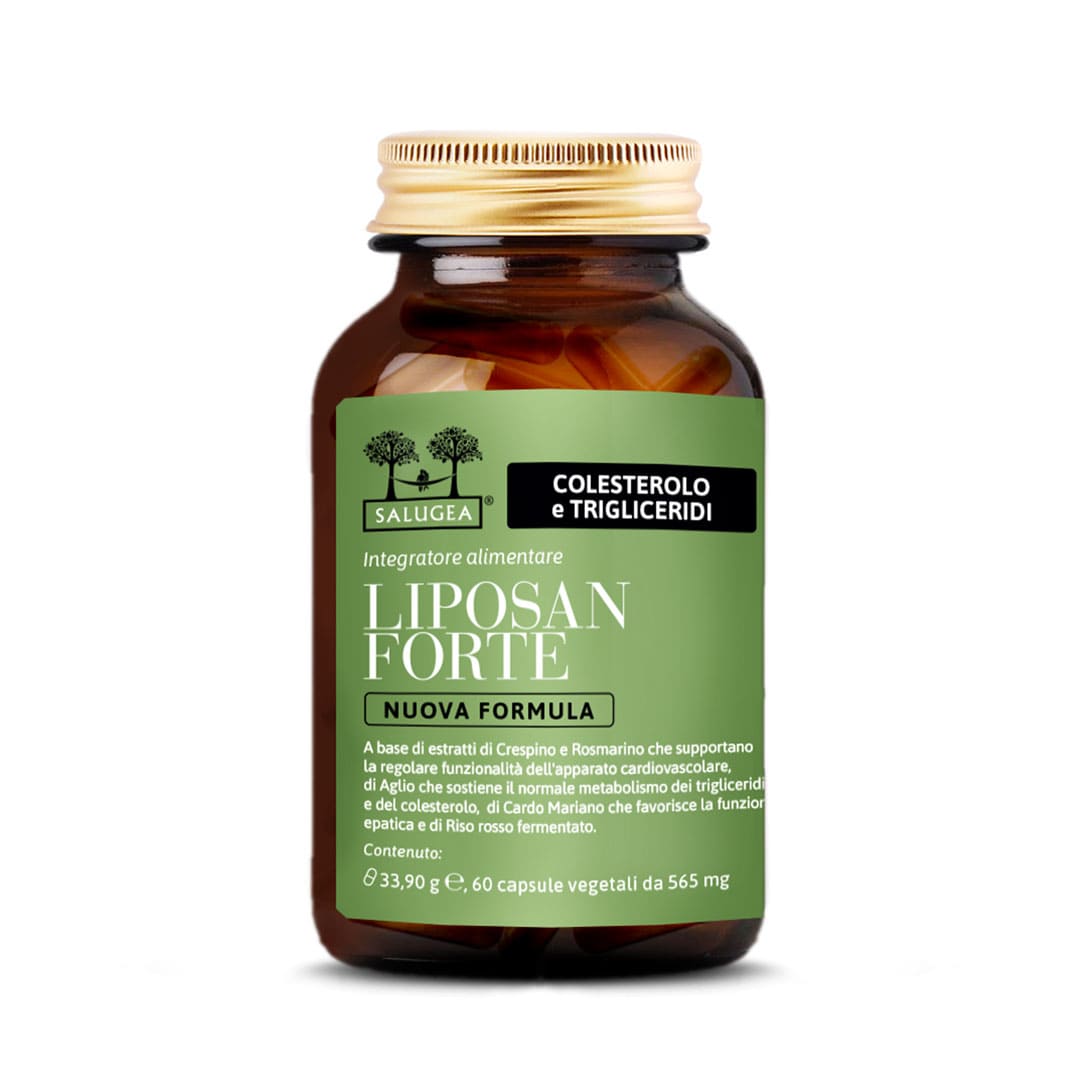
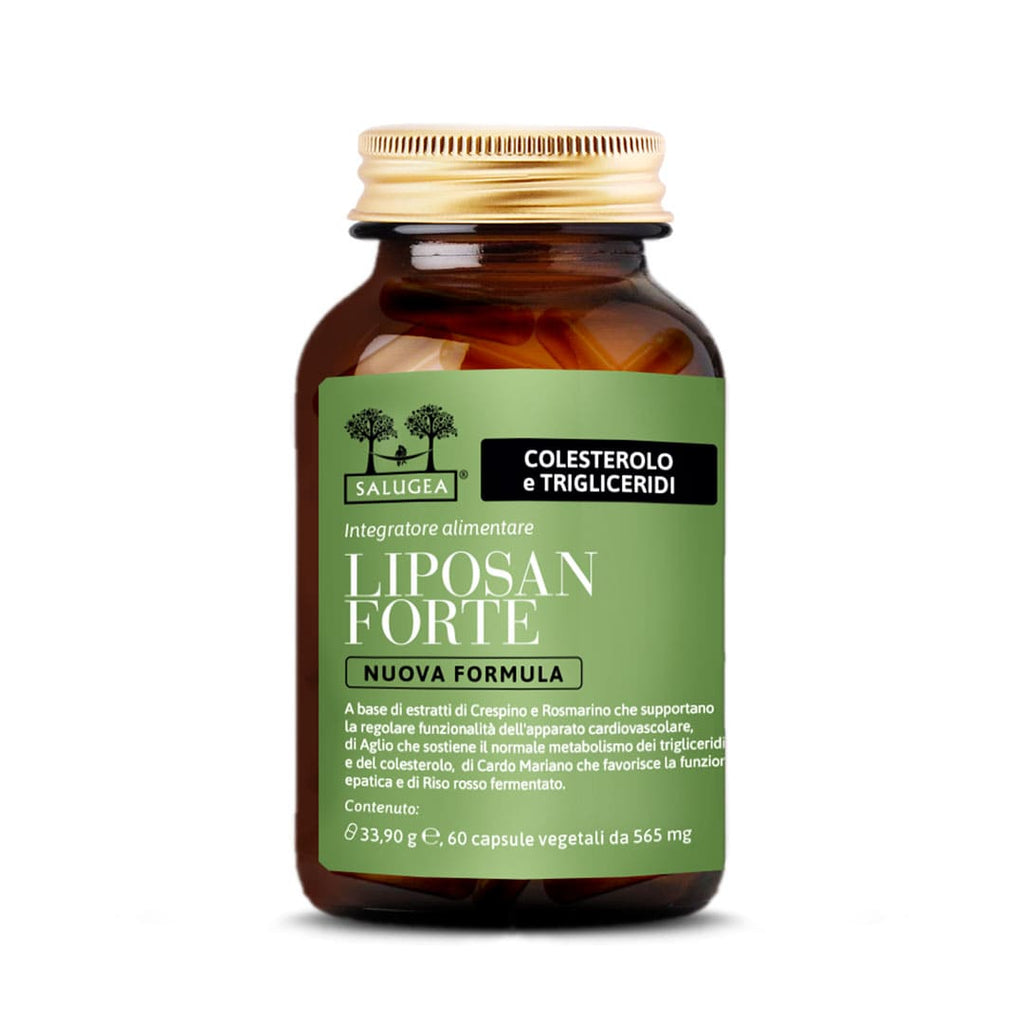
Liposan Forte New Formula is a 100% natural supplement, based on Red Yeast Rice (Total Monacolins (including K) 3 mg/day) and standardised dry extracts of Barberry, Milk Thistle, Aged Garlic and Rosemary.
In particular, the combination of Monacolin, Silymarin, Berberine and Rosemary proved effective in reducing total cholesterol, LDL cholesterol and triglycerides (approx. - 20% in 3 months) in a functional clinical study (Piante medicinali vol. 15(4) 2016 ed. Si.Fit. - Capriotti F., Censani S.)
Red Yeast Rice:
- Cicero AFG, Fogacci F, Banach M. Red Yeast Rice for Hypercholesterolemia. Methodist Debakey Cardiovasc J. 2019 Jul-Sep;15(3):192-199. doi: 10.14797/mdcj-15-3-192. PMID: 31687098; PMCID: PMC6822657.
This retrospective work found that Red Yeast Rice is currently the most effective natural remedy for keeping blood cholesterol levels in check. In particular for the parameters of Total Cholesterol, LDL Cholesterol and Apolipoprotein B, determining factors for cardiovascular wellbeing. This comes with only a minimal possibility of undesirable effects, limited to the subjects most sensitive to monacolin K, who may experience mild myalgia, in any case reversible on discontinuing the active ingredient.
- Heinz T, et al. Low daily dose of 3 mg monacolin K from RYR reduces the concentration of LDL-C in a randomized, placebo-controlled intervention. Nutr Res. 2016 Oct;36(10):1162-1170. doi: 10.1016/j.nutres.2016.07.005. Epub 2016 Jul 27. PMID: 27865358.
This interesting German study shows that even a dosage of 3 mg/day of Monacolin K is able to reduce levels of LDL cholesterol – the most harmful form of cholesterol for the cardiovascular system – by almost 15%. Therefore this dosage, too, is useful for normalising the degree of cardiovascular risk.
Barberry:
- Kong W, et al. Berberine is a novel cholesterol-lowering drug working through a unique mechanism distinct from statins. Nat Med. 2004 Dec;10(12):1344-51. doi: 10.1038/nm1135. Epub 2004 Nov 7. PMID: 15531889.
This functional study on humans showed that the administration of Berberine, the active ingredient of Barberry, over the course of 3 months was able to reduce Total Cholesterol levels by 29%, Triglycerides by 35% and LDL Cholesterol by 25%. These results confirm that Berberine is a powerful natural active ingredient useful for normalising lipaemic values, so important for cardiovascular wellbeing, with a mechanism different from and complementary to that of statins.
- Ju J, Li J, Lin Q, Xu H. Efficacy and safety of berberine for dyslipidaemias: A systematic review and meta-analysis of randomized clinical trials. 2018 Nov 15;50:25-34. doi: 10.1016/j.phymed.2018.09.212. Epub 2018 Sep 28. PMID: 30466986.
This work summarised the data obtained from no fewer than 16 different functional studies on Berberine from Barberry, with a total population of 2,147 patients. The findings confirm that the use of Barberry is able to reduce the levels of Total Cholesterol, LDL Cholesterol and Triglycerides, while favouring an increase in HDL Cholesterol, the “good” fraction, the one that is beneficial and promotes cardiovascular wellbeing.
Milk Thistle
- Cacciapuoti F, Scognamiglio A, Palumbo R, Forte R, Cacciapuoti F. Silymarin in non alcoholic fatty liver disease. World J Hepatol. 2013 Mar 27;5(3):109-13. doi: 10.4254/wjh.v5.i3.109. PMID: 23556042; PMCID: PMC3612568.
This study confirms the great hepatoprotective properties of Milk Thistle and its active ingredient Silymarin on liver function. The effect of a Milk Thistle extract standardised for Silymarin was tested on 72 patients suffering from non-alcoholic fatty liver: after 3 months the main parameters monitored had improved, including the blood values for atherosclerosis, determining factors for the reduction of cardiovascular risk.
- Formisano E, et al. Efficacy of Nutraceutical Combination of Monacolin K, Berberine, and Silymarin on Lipid Profile and PCSK9 Plasma Level in a Cohort of Hypercholesterolemic Patients. J Med Food. 2020 Jun;23(6):658-666. doi: 10.1089/jmf.2019.0168. Epub 2019 Oct 30. PMID: 31663806.
The study reported here found, in 53 patients with congenital hypercholesterolaemia, that a combination of Monacolin, Berberine and Silymarin offers results similar to those obtained with Atorvastatin, a synthetic statin, especially with regard to LDL Cholesterol. Improvements were also observed in the PCSK9 protein, a critical element in congenital cholesterol dyslipidaemias, something not achievable with the use of Atorvastatin. All this leads to the conclusion that this combination of natural active ingredients can play an important role in regulating blood fat levels.
Aged Garlic
- Jung ES, et al. Reduction of blood lipid parameters by a 12-wk supplementation of aged black garlic: a randomized controlled trial. 2014 Sep;30(9):1034-9. doi: 10.1016/j.nut.2014.02.014. Epub 2014 Mar 12. PMID: 24976429.
The action of Aged Garlic (also known as Black Garlic) was tested on 60 participants in this double-blind placebo-controlled study. After 12 weeks it was found that the members of the test group showed improved parameters compared with the placebo group as regards HDL Cholesterol and Apolipoprotein B values, determining factors for a more favourable degree of cardiovascular wellbeing. This highlighted the protective effect that Aged Garlic can exert on the circulatory system.
- Munday JS, et al. Daily supplementation with aged garlic extract, but not raw garlic, protects low density lipoprotein against in vitro oxidation. 1999 Apr;143(2):399-404. doi: 10.1016/s0021-9150(98)00293-7. PMID: 10217370.
LDL isolated from subjects given an Aged Garlic extract, but not raw garlic, was significantly more resistant to oxidation than LDL isolated from subjects receiving no supplements. These results suggest that the antioxidant and anti-atherogenic effects of Aged Garlic may be useful in preventing atherosclerotic disease, thus reducing the degree of cardiovascular risk.
Rosemary
- Kim GH, et al. Ursolic Acid Suppresses Cholesterol Biosynthesis and Exerts Anti-Cancer Effects in Hepatocellular Carcinoma Cells. Int J Mol Sci. 2019 Sep 26;20(19):4767. doi: 10.3390/ijms20194767. PMID: 31561416; PMCID: PMC6802365.
This interesting in vitro study found that Ursolic acid, a natural pentacyclic terpenoid present in Rosemary, is able to counter the endogenous production of cholesterol by cultured liver cells. The data that emerged may therefore lead to the conclusion that Ursolic acid could be a promising cholesterol-lowering nutraceutical for the prevention and treatment of patients with chronic diseases linked to excess cholesterol.
- Tu Z, Moss-Pierce T, Ford P, Jiang TA. Rosemary (Rosmarinus officinalis L.) extract regulates glucose and lipid metabolism by activating AMPK and PPAR pathways in HepG2 cells. J Agric Food Chem. 2013 Mar 20;61(11):2803-10. doi: 10.1021/jf400298c. Epub 2013 Mar 6. PMID: 23432097.
This work starts from the observation that rosemary has been experimentally shown to lower blood glucose and cholesterol levels in several in vivo studies. In a liver cell culture, it was found that a rosemary extract is potentially able to increase hepatic glycolysis and fatty acid oxidation. These effects underlie the body’s metabolic wellbeing and are important for prevention and for keeping blood sugar and fat levels under control, basic parameters for the general wellbeing of the body.
N.B. Our texts are for information purposes only; they are not to be understood as an indication for the diagnosis and treatment of medical conditions and are in no way intended to replace the advice of a doctor.
Bibliography
[1] Lin CC, Li TC, Lai MM. Efficacy and safety of Monascus purpureus Went rice in subjects with hyperlipidemia. Eur J Endocrinol. 2005 Nov;153(5):679-86. doi: 10.1530/eje.1.02012. PMID: 16260426.4 https://pubmed.ncbi.nlm.nih.gov/20858178/
[2] Federico A, Dallio M, Loguercio C. Silymarin/Silybin and Chronic Liver Disease: A Marriage of Many Years. Molecules. 2017 Jan 24;22(2):191. doi: 10.3390/molecules22020191. PMID: 28125040; PMCID: PMC6155865.
[3] Iloon Kashkooli R, et al. The effect of berberis vulgaris extract on transaminase activities in non-alcoholic Fatty liver disease. Hepat Mon. 2015 Feb 5;15(2):e25067. doi: 10.5812/hepatmon.25067. PMID: 25788958; PMCID: PMC4350248.
[4] Ulven SM, et al. Metabolic effects of krill oil are essentially similar to those of fish oil but at lower dose of EPA and DHA, in healthy volunteers. Lipids. 2011 Jan;46(1):37-46. doi: 10.1007/s11745-010-3490-4. Epub 2010 Nov 2. PMID: 21042875; PMCID: PMC3024511.
[5] Epicentro – Istituto Superiore di Sanità - Aspetti epidemiologici: Ipercolesterolemia in Italia [Epidemiological aspects: hypercholesterolaemia in Italy].
[6] ANIF - Associazione Nazionale Ipercolesterolemia Familiare - Risposte ai quesiti sull'ipercolesterolemia [Answers to questions on hypercholesterolaemia].
[7] Quotidianosanita.it - Daiichi Sankyo Italia, una campagna per prevenire l’ipercolesterolemia [a campaign to prevent hypercholesterolaemia].
[8] Istituto Superiore di Sanità: Progetto Cuore 2012.
Our texts are for information purposes only; they are not to be understood as an indication for the diagnosis and treatment of medical conditions and are in no way intended to replace the advice of a doctor.