
With its note of 8 November 20231, the Italian Medicines Agency highlighted the risks associated with taking high doses of Omega-3 ethyl esters in certain conditions.
In the light of the indications provided by AIFA, it becomes essential for healthcare professionals to assess natural sources of Omega3 to recommend to their patients, so that they can continue to promote their cardiovascular wellbeing safely and just as effectively.
This article aims to provide a clear and precise overview of the natural options available on the market today, with a particular focus on Omega3 from Krill oil, highlighting its particular advantages over Omega3 from fish oil.
The article will explore the following topics:
- A precise summary of the points highlighted in the AIFA note
- Natural sources of Omega3 fatty acids: Krill oil, fish oil, cod liver oil
- The advantages of Krill oil
- The benefits of Krill oil for cardiovascular wellbeing: a recent clinical study
- How Salugea Omega 3 Krill Oil is different
Summary of the AIFA note to healthcare professionals
The AIFA information note1, addressed to healthcare professionals, brought to light a significant increase in the risk of atrial fibrillation in patients treated with medicines based on ethyl esters of Omega3 fatty acids.
This category of medicines is recommended for the treatment of metabolic clinical conditions, such as hypertriglyceridaemia, when diet and other drug treatments have not given an adequate response.
The risk of atrial fibrillation proved to be higher in patients with established cardiovascular disease, or with a known cardiovascular risk, and with a dosage of Omega3 ethyl esters of 4 grams a day.
In its conclusions, the AIFA note recommends that healthcare professionals monitor patients and permanently discontinue treatment in the event of episodes of fibrillation.
In this context - and faced with patients’ concerns - it may be appropriate for healthcare professionals to consider supplementation with Omega3 fatty acids from a natural source rather than a synthetic one such as ethyl esters.
Natural sources of Omega3
Many Omega3-based supplements are available on the market, including fish oil, Krill oil and cod liver oil.
All of them are sources of EPA (eicosapentaenoic acid) and DHA (docosahexaenoic acid) fatty acids; they nevertheless show significant differences in terms of their bioavailability2, purity and sustainability for the marine ecosystem.
Omega3 from Krill oil
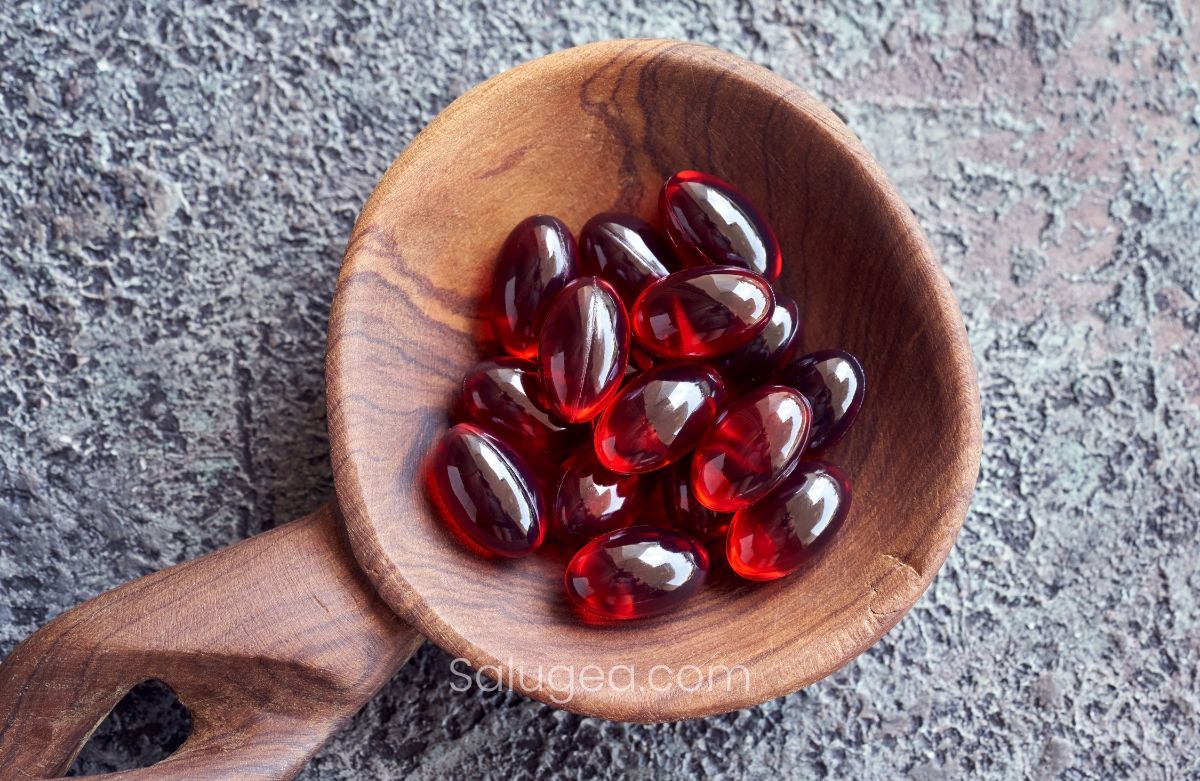
Krill oil is extracted from a small crustacean that lives in the Antarctic (Euphausia superba Dana). The Omega3 present in Krill oil, unlike those found in ordinary fish oil, are bound to phospholipids, which makes them more bioavailable and easier to absorb2. And it is precisely because of this characteristic that they are to be preferred.
A product with a 100% natural formula is Salugea Omega 3 Krill Oil, whose characteristics we will return to in more detail.
Omega3 from fish oil
In fish oil, the Omega3 EPA and DHA are bound to triglycerides, which are less bioavailable for the body 3 than Omega3 bound to phospholipids. Furthermore, taking it means ingesting triglycerides, sometimes even in significant amounts, given that many products contain 1-2 g of oil. In that case you would be taking in precisely those substances that you would want to limit in the body.
Omega3 from cod liver oil
Cod liver oil is also a source of Omega3 fatty acids. If it is of good quality it also contains vitamin A and vitamin D. However, unlike Krill oil, it may have a lower bioavailability, again because of the conjugation with triglycerides, and it has an unpleasant taste that discourages its use.
The advantages of Krill Oil
The Omega3 from Krill oil that Salugea uses offer several advantages over Omega 3 from ordinary fish oil. These include:
- greater bioavailability;
- absence of pollutants;
- sustainability and respect for the marine environment;
- the natural presence of Astaxanthin and Choline.
Let us look at each point in turn.
Bioavailability refers to the capacity of a nutrient to be assimilated and absorbed by the body.
The bioavailability of Omega3 fatty acids depends on their chemical form2.
The Omega3 from Krill oil are bound to phospholipids, and it is this characteristic that has a positive effect on their bioavailability and assimilation2-3-4.
Phospholipids are characterised by a hydrophilic head and two hydrophobic tails. This particular conformation allows phospholipids to form a lipid bilayer, which is the basis of cell membranes.
The Omega3 from krill oil, precisely because they are carried in the form of phospholipids, are transported and incorporated more easily into cell membranes and prove effective at lower doses than Omega3 from fish oil, since they can penetrate cells with less difficulty.
As regards the presence of any pollutants, Krill, lying at the base of the marine food chain as zooplankton and having a relatively short life, is exposed to a lower risk of accumulating toxins, pollutants and heavy metals than larger fish such as tuna, or salmon, which may show bioaccumulation phenomena.
The aspect of sustainability and respect for the marine ecosystem is also an important factor to bear in mind when recommending a product based on Omega3 fatty acids. Consumers today are increasingly attentive to the environmental impact of their choices and it is important to offer them sustainable options.
In fact, the fishing of the Krill used by Salugea is governed by strict regulation, certified by MSC (Marine Stewardship Council), an international supervisory body that monitors the sustainability of fishing systems, whose purpose is to preserve the wellbeing and biodiversity of the marine ecosystem.
Furthermore, its fishing method uses an eco-compatible catching technique that reduces the possibility of accidentally catching larger marine animals (seals, penguins, etc.).
Finally, unlike fish oils, Krill oil naturally contains Choline and Astaxanthin, elements that are not present in fish oils.
Choline is an important nutrient for supporting cardiovascular wellbeing more broadly because it:
- contributes to lipid metabolism
- supports liver function
- contributes to normal homocysteine metabolism
Astaxanthin, on the other hand, is a carotenoid with a marked antioxidant action and, as such, its role is to counter oxidative damage; it therefore performs both an action of this kind on the human body and an antioxidant function on the product, which does not need added synthetic Vitamin E, as often happens with fish oils.
Omega3 from Krill oil and effects on cardiovascular wellbeing
If you are a healthcare professional, it is only natural that you should want to promote your patients’ wellbeing effectively.
According to the findings of a 2023 clinical study6, published in the journal ScienceDirect, supplementation with Krill oil helped to significantly reduce the levels of total cholesterol, LDL cholesterol and triglycerides in the study participants.
Krill oil also proved to be a generally safe and well-tolerated remedy throughout the period of use.
In the conclusions of the paper, the researchers suggest that daily supplementation with Krill oil may represent an option for the management of blood lipid levels.
How Salugea Omega 3 Krill Oil is different
One product based on Omega3 fatty acids from Krill Oil is Salugea Omega 3 Krill Oil. Compared with other products available on the market it is different because:
- it is manufactured to high standards of quality and purity and is 100% natural;
- it contains no sweeteners, preservatives or artificial flavourings;
- it comes in pharmaceutical-grade dark glass bottles to guarantee optimal preservation of the product over time;
- the softgels are made of fish gelatine and not of bovine origin;
- it does not leave that unpleasant fishy aftertaste once taken;
- the recommended dose is 2 softgels a day.
Every Salugea food supplement is manufactured and formulated to high standards of quality and safety. The selected ingredients are 100% natural and their optimal preservation is guaranteed by pharmaceutical-grade dark glass bottles and a reusable safety seal. For a choice that is good for the wellbeing of the body and that of the environment.
