The link between intimate complaints and vaginal pH
Itching, burning, foul-smelling discharge... Over the course of their lives, all women, or almost all, have to deal, some more, some less, with vaginal discomfort like these, complaints that can indicate the presence of inflammation: vaginitis. When this inflammation has an infectious origin, we speak of vaginosis.
Vaginitis and vaginosis are originally linked to a variation in vaginal pH: under normal conditions, the pH is particularly acidic (4-4.5), a situation which in itself cuts down the risk of developing infections.
But there are factors that can cause pH swings, triggering mechanisms that will eventually lead to the onset of the most common vaginal discomfort.
Causes and consequences of vaginal pH swings
Among the main triggering and predisposing factors, we can mention:
- the physiological hormonal variations linked to the menstrual cycle, pregnancy or menopause;
- the use of irritating products, from "aggressive" intimate cleansers to the detergents used to wash clothes;
- a diet excessively rich in sugars, in cheeses, in leavened baked goods and in fermented drinks, such as beer and alcoholic drinks in general;
- alterations of the intestinal bacterial flora and imbalances in the urinary tract;
- prolonged conditions of stress or tiredness, such as to reduce local immune defences;
- the habit of wearing tight clothes or synthetic underwear.
Now, when the presence of these factors causes major changes in the vaginal pH, pathogens get the green light. In a nutshell, they colonise the vaginal bacterial flora causing more or less significant imbalances, imbalances that show up with certain symptoms. Here are the most common:
- whitish-grey vaginal discharge (leucorrhoea), rather watery and foul-smelling;
- itching of varying intensity;
- burning during urination;
- pain during sexual intercourse.
The pathogens responsible for vaginal infections
The pathogens that most often generate vaginal infections are:
- bacteria, such as Gardnerella vaginalis and Escherichia coli;
- fungi, such as Candida;
- protozoa, such as Trichomonas vaginalis.
There are also very many cases in which a specific cause cannot be established. Just think: in a review1 of studies published between 1966 and 2003, it emerged that in around 30% of symptomatic cases it was not possible to make a precise diagnosis.
Sometimes they come back!
Another interesting figure concerns recurrent conditions, i.e. vaginitis or vaginosis that tends to reappear with a certain frequency: it has been estimated that, in Italy, 75% of women have had at least one episode of vulvovaginal candidiasis in their lifetime, and that 40-45% have had two or more2.
How to combat vaginitis and vaginosis
Therapeutic strategies often involve the use of antibiotics, both oral and vaginal (pessaries, creams, gels). These measures are generally effective in the acute phase, but they must be assessed together with your doctor because, especially when there are recurrences, there is a risk of developing antibiotic resistance.
The real cornerstone is prevention. Meaning what?
- Maintain proper intimate hygiene: ask your gynaecologist or your pharmacist for advice on the most appropriate products and methods for washing (and also for cleaning yourself after going to the toilet). They will probably also tell you that internal vaginal douches are to be avoided; that during your period it is best to change sanitary towels often; and that it is better to limit the use of tampons and panty liners.
- Wear breathable cotton underwear and, in general, clothing that is not too tight.
- Pay attention to your diet. One tip above all: avoid excessive consumption of foods based on simple sugars and yeasts.
- Protect yourself during sexual intercourse that could be considered "risky" with the correct use of barrier methods, such as condoms.
- Use specific probiotics to maintain the normal vaginal bacterial flora (thus hindering the entry and growth of pathogens), as well as bringing balance to the intestinal bacterial flora too.
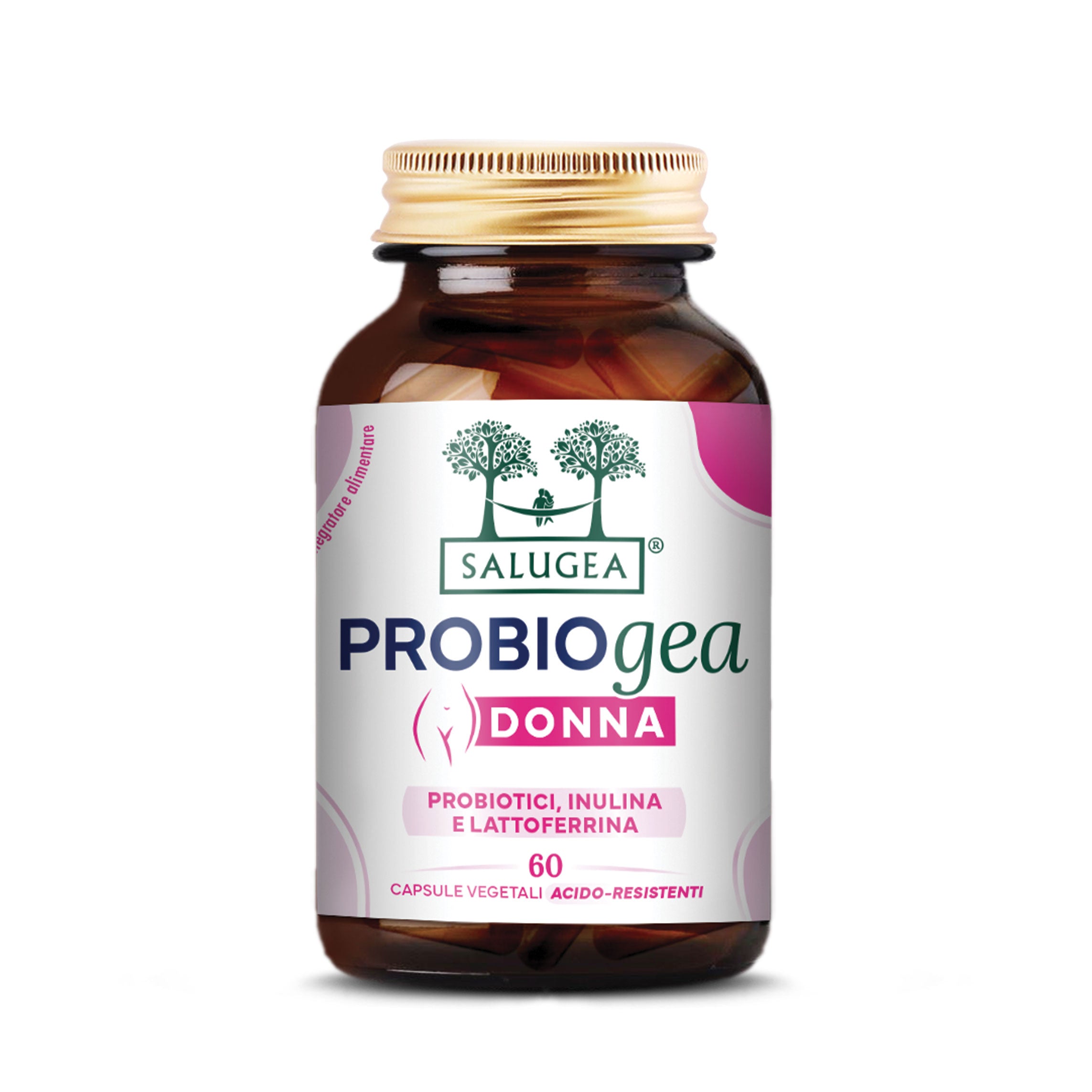
And speaking of probiotics, let's look at some studies conducted on the ones we selected for the ProbioGea Donna formula.
Scientific Bibliography
Patented probiotic mix: Lactiplantibacillus plantarum PBS067, Lacticaseibacillus rhamnosus LRH020, Bifidobacterium animalis subsp. lactis BL050
Presti I, D’Orazio G, Labra M, et al. Evaluation of the probiotic properties of new Lactobacillus and Bifidobacterium strains and their in vitro effect. Appl Microbiol Biotechnol. 2015 Jul;99(13):5613-26. doi: 10.1007/s00253-015-6482-8. Epub 2015 Mar 7. PMID: 25744647.
Various in vitro tests have recognised in this patented mix an action of countering the settlement and proliferation of pathogenic germs, such as Escherichia coli, and an action of steric competition (in practice, pathogens do not have enough space to take hold and proliferate). In addition, a co-aggregation mechanism with urogenital pathogens has been observed, i.e. the tendency of the probiotics to clump pathogenic urogenital bacteria together and then prevent their functionality. This effect has been demonstrated against Candida albicans, Escherichia coli, Gardnerella vaginalis, Candida glabrata, Trichomonas vaginalis and Neisseria gonorrhoeae (see doi: 10.3390/ijms24021323).
All these actions allow the probiotic complex to slow down tissue inflammation; to help activate the immune response by increasing the release of IL-4 cytokines (IL-4 is a stimulator of the immune defences); to have a synergistic antioxidant potential significantly greater than that of the individual strains (meaning it exerts an antioxidant and, consequently, also an anti-inflammatory effect); and to protect the cell vitality of the epithelium after induced stress (in other words, it has been seen that the epithelial tissue lining the vaginal environment shows an increase in vitality once the film of "good" bacteria of the patented mix has established itself).
Mezzasalma V, Manfrini E, Ferri E, et al. Orally administered multispecies probiotic formulations to prevent uro-genital infections: a randomized placebo-controlled pilot study. Arch Gynecol Obstet. 2017 Jan;295(1):163-172. doi: 10.1007/s00404-016-4235-2. Epub 2016 Nov 9. Erratum in: Arch Gynecol Obstet. 2017 Feb;295(2):527. PMID: 27826653.
This clinical study verified the efficacy of the patented multispecies probiotic formulation used, administered orally, in preventing urogenital infections. The study was conducted on 40 healthy women, divided into a test group and a placebo group. The group under treatment took the probiotic mix for 14 days, while the other group took an inert product. The mix of specific probiotics was shown to reach and colonise the vagina through oral intake, with a significant increase in the vaginal concentrations of the various strains in the test group compared with the placebo. In addition, vaginal pH levels also underwent a significant reduction, including in the period when administration of the product was suspended. This indicates that these patented probiotics taken orally are able to colonise the vagina beneficially, and that this is a substantial colonisation that persists over time.
Murina, Filippo & Vicariotto, Franco. (2019). Evaluation of an Orally Administered Multistrain Probiotic Supplement in Reducing Recurrences Rate of Bacterial Vaginosis: A Clinical and Microbiological Study. Advances in Infectious Diseases. 09. 151-161. 10.4236/aid.2019.93011.
This important clinical work recruited 75 women (18-50 years old) suffering from recurrent bacterial vaginosis. After treatment with the antibiotic metronidazole, the test group took the patented probiotic mix, while the placebo group was given an inert product. The mix of L. plantarum PBS067, L. rhamnosus LRH020 and B. animalis subsp. lactis BL050 brought good relief from symptoms after the acute treatment and was able to reduce the worsening of symptoms over time, whereas in the placebo group symptoms became aggravated. Not only that: in the group that took the probiotics, the success of the antibiotic therapy improved by 24% and the recurrence rate dropped by 40%. Finally, this mix showed a clear superiority in restoring the vaginal microbiota compared with the placebo group.
Vicariotto F, Malfa P, Viciani E, et al. Efficacy of Lactiplantibacillus plantarum PBS067, Bifidobacterium animalis subsp. lactis BL050, and Lacticaseibacillus rhamnosus LRH020 in the Amelioration of Vaginal Microbiota in Post-Menopausal Women: A Prospective Observational Clinical Trial. Nutrients. 2024 Jan 30;16(3):402. doi: 10.3390/nu16030402. PMID: 38337685; PMCID: PMC10857347.
Because of hormonal deficiencies, vulvovaginal problems (intimate dryness, inflammatory states, an increased tendency to vaginal infections) can intensify in menopause. In this clinical study, 50 healthy post-menopausal women aged between 45 and 65 were enrolled and given a patented mix of lactobacilli and bifidobacteria for 28 days. The probiotic complex was shown to improve the vaginal health of menopausal women by up to 50% (assessed through vaginal elasticity, secretion, the state of the mucosa, its integrity and lubrication) and to re-establish a good vaginal pH thanks to the restoration of lactobacilli, which inhibit the growth of pathogens. In addition, a major reduction in inflammatory markers was seen, with results obtained within just one month and persisting over time. Finally, the analysis of the vaginal microbiota shows that the patented mix favours the increase of "good" bacteria typical of the vaginal bacterial flora and reduces the presence of recurrent vaginal pathogens such as Streptococcus, Gardnerella, Atopobium, Escherichia, Shigella.
Lactobacillus crispatus
De Seta F, Campisciano G, Zanotta N, Ricci G, Comar M. The Vaginal Community State Types Microbiome-Immune Network as Key Factor for Bacterial Vaginosis and Aerobic Vaginitis. Front Microbiol. 2019 Oct 30;10:2451. doi: 10.3389/fmicb.2019.02451. PMID: 31736898; PMCID: PMC6831638.
The classification of the vaginal microbiota can be set on the basis of the relative abundance of various specific lactobacillus species; in this way 5 different microbial communities called "Community State Types" or CSTs are identified. In this study, women with a microbiota in CST I, i.e. characterised by the prevalence of Lactobacillus crispatus, and a pH of 4 showed the lowest risk of vaginosis or of contracting milder infections. Although an absolutely rigorous ranking cannot be drawn up, L. crispatus would appear to be the most protective of the lactobacilli for the wellbeing of the vaginal environment.
Mändar R, Sõerunurk G, Štšepetova J, et al. Impact of Lactobacillus crispatus-containing oral and vaginal probiotics on vaginal health: a randomised double-blind placebo controlled clinical trial. Benef Microbes. 2023 Apr 18;14(2):143-152. doi: 10.3920/BM2022.0091. Epub 2023 Mar 1. PMID: 36856121.
This interesting placebo-controlled clinical study tested the use of Lactobacillus crispatus, administered both orally and vaginally, in women with bacterial vaginosis (BV) and vulvovaginal candidiasis (VVC) aged between 18 and 50. The study showed that both the oral and the vaginal capsules reduced signs and symptoms in patients suffering from BV (a notable improvement was noted in discharge, but also in itching/irritation). In patients with VVC, the oral capsules were able to lower the combined score of the two most important symptoms, namely the amount of discharge and itching/irritation. It is interesting to note that oral treatment with L. crispatus performed on a par for vaginosis and even better for candidiasis compared with vaginal administration, thus representing an equally effective but more practical and convenient therapeutic method.
Lactobacillus fermentum
Kaur, Baljinder & Balgir, Praveen & Bhartimittu, Dr & Chauhan, Ashish & Kumar, Balvir. (2013). Purification and Physicochemical Characterization of Anti-Gardnerella vaginalis Bacteriocin HV6b Produced by Lactobacillus fermentum Isolate from Human Vaginal Ecosystem. American Journal of Biochemistry and Molecular Biology. 3. 91-100. 10.3923/ajbmb.2013.91.100.
This interesting in vitro work highlighted how Lactobacillus fermentum is able to metabolise proteins called bacteriocins, which exert a bactericidal action against Gardnerella vaginalis, the main bacterium responsible for vaginosis. The study in fact verified that this protein produced by L. fermentum strongly inhibits the growth of G. vaginalis, thereby representing an important element of probiotic protection for women's intimate wellbeing.
Reid G, Charbonneau D, Erb J, Kochanowski B, et al. Oral use of Lactobacillus rhamnosus GR-1 and L. fermentum RC-14 significantly alters vaginal flora: randomized, placebo-controlled trial in 64 healthy women. FEMS Immunol Med Microbiol. 2003 Mar 20;35(2):131-4. doi: 10.1016/S0928-8244(02)00465-0. PMID: 12628548.
This placebo-controlled clinical work, conducted on 64 women, verified the action of the synergy between Lactobacillus fermentum and Lactobacillus rhamnosus (also present in the patented probiotic complex) on the vaginal microbiota. Microscopic analysis of the vaginal swabs taken showed that oral administration of L. rhamnosus and L. fermentum is capable of achieving significant results in terms of restoring a normal microflora colonised by lactobacilli and reducing coliform bacteria (pathogenic bacteria) and yeasts.
Kang CH, Kim Y, Han SH, Kim JS, Paek NS, So JS. In vitro probiotic properties of vaginal Lactobacillus fermentum MG901 and Lactobacillus plantarum MG989 against Candida albicans. Eur J Obstet Gynecol Reprod Biol. 2018 Sep;228:232-237. doi: 10.1016/j.ejogrb.2018.07.005. Epub 2018 Jul 9. PMID: 30014929.
In this other work, on the other hand, the synergy between Lactobacillus fermentum and Lactobacillus plantarum (a lactobacillus species present in the probiotic mix) was tested in vitro against Candida albicans. The tests revealed that the C. albicans cells went on to lose their metabolic activity and, in the end, were eliminated.
Lactoferrin
Russo R, Karadja E, De Seta F. Evidence-based mixture containing Lactobacillus strains and lactoferrin to prevent recurrent bacterial vaginosis: a double blind, placebo controlled, randomised clinical trial. Benef Microbes. 2019 Feb 8;10(1):19-26. doi: 10.3920/BM2018.0075. Epub 2018 Dec 10. PMID: 30525953.
The aim of this clinical study was to evaluate the efficacy of a probiotic mixture, comprising Lactobacillus acidophilus and Lactobacillus rhamnosus, in combination with bovine lactoferrin, as an adjuvant therapy to the antibiotic metronidazole in women with recurrent bacterial vaginosis. 48 volunteers with recurrent bacterial vaginosis were divided into the test group and the placebo group; at the beginning they took metronidazole as the acute treatment, then they took the product under test or the placebo for 10 days each month over 6 months, starting from the first day of menstruation. The results showed that the symptoms (vaginal discharge and itching) and the recurrence rate were significantly improved by the probiotic mixture in association with lactoferrin. In conclusion, this approach can represent a safe and effective remedy for restoring a healthy vaginal microbiota in the prevention of recurrences of bacterial vaginosis.
Russo R, Superti F, Karadja E, De Seta F. Randomised clinical trial in women with Recurrent Vulvovaginal Candidiasis: Efficacy of probiotics and lactoferrin as maintenance treatment. Mycoses. 2019 Apr;62(4):328-335. doi: 10.1111/myc.12883. Epub 2019 Feb 20. PMID: 30565745.
Vulvovaginal candidiasis (VVC) is a recurrent vaginal condition in pregnant women.
This study evaluated the efficacy of an oral formulation containing Lactobacillus acidophilus, Lactobacillus rhamnosus and bovine lactoferrin on the symptoms and recurrence of VVC as an adjuvant therapy to topical clotrimazole. 48 pregnant women positive for C. albicans, with symptoms of VVC and a documented history of recurrences, were randomised into two groups that received the probiotic complex or the placebo as an adjuvant treatment to clotrimazole, also following a 6-month maintenance cycle (1 capsule/day or placebo for 10 consecutive days each month). Symptoms, the overall cure rate and the recurrence rate were assessed. After therapy with clotrimazole, a significant improvement in symptoms was seen in both groups. However, only the women treated with probiotics and lactoferrin showed a significant improvement in itching and discharge at 3 and 6 months. During the six-month follow-up, recurrences were significantly lower in the intervention group compared with the placebo: 33.3% vs 91.7% after 3 months and 29.2% vs 100% after 6 months. In other words, a threefold improvement. The results show that the mixture of lactobacilli in combination with lactoferrin represents a safe and effective adjuvant approach for reducing the symptoms and recurrences of vulvovaginal candidiasis, even in pregnant women.
Inulin from Chicory
Qin YQ, Wang LY, Yang XY, et al. Inulin: properties and health benefits. Food Funct. 2023 Apr 3;14(7):2948-2968. doi: 10.1039/d2fo01096h. PMID: 36876591.
This review of studies focuses on the function of Inulin and on its health benefits, including its recognised prebiotic activity and, therefore, the stimulus to the growth of beneficial bacteria and the resulting contribution to the balance of the gut microbiota. This action is indirectly reflected in intimate wellbeing, because the development of these "good" bacteria at the intestinal level also favours the subsequent beneficial colonisation of the vagina.
Hughes RL, Alvarado DA, Swanson KS, Holscher HD. The Prebiotic Potential of Inulin-Type Fructans: A Systematic Review. Adv Nutr. 2022 Mar;13(2):492-529. doi: 10.1093/advances/nmab119. Epub 2023 Feb 10. PMID: 34555168; PMCID: PMC8970830.
This review of studies confirms the prebiotic effect of Inulin on the gut microbiota (through the promotion of the levels of bifidobacteria and lactobacilli) and its beneficial action for the function of the intestinal barrier. Let's remember that intestinal wellbeing and vaginal wellbeing are always closely connected.
1 Hainer BL, Gibson MV. Vaginitis. Am Fam Physician. 2011 Apr 1;83(7):807-15. PMID: 21524046.
2 Corsello S, Spinillo A, Osnengo G, Penna C, Guaschino S, Beltrame A, Blasi N, Festa A. An epidemiological survey of vulvovaginal candidiasis in Italy. Eur J Obstet Gynecol Reprod Biol. 2003 Sep 10;110(1):66-72. doi: 10.1016/s0301-2115(03)00096-4. PMID: 12932875.
Our texts are for information purposes only; they are not to be understood as an indication for the diagnosis and treatment of medical conditions and are in no way intended to replace the advice of a doctor.