The Immune System
We all know that the immune system is the system responsible for defending our body.
But beyond its defensive role, have you ever wondered what the immune system actually is and why it’s important for it to work well?
The first thing that tells us the immune system is truly unique is that, unlike the respiratory system for example, it is not made up of organs and tissues physically connected to one another. Its work is carried out by various specific structures, organs, cells and substances located throughout the body.
The main players in the immune system are the white blood cells, such as granulocytes, macrophages and lymphocytes, which act directly or produce immunologically active substances such as antibodies.
These cells and substances don’t have a single “home”, but are located in various specific organs (spleen, thymus, lymph nodes, tonsils, appendix and lymphoid tissues) and are always ready to spring into action when needed, reaching every part of the body.
What you’ve probably always known is that the job of the immune system is to protect you and make sure that attacks by viruses and bacteria don’t have serious consequences. Quite right, but...
How does it do it?
The immune system’s great and extremely difficult challenge lies in its ability to distinguish the cells of our own body (self) – and therefore not attack them – from those belonging to foreign bodies (non-self), such as viruses and bacteria.
Wow... And does the immune system of little ones work in the same way?
Let’s say yes... but it takes time!
At birth, babies only have what is known as innate immunity. This is a relatively simple immune system, made up mainly of macrophages that neutralise harmful agents through phagocytosis.
As children grow, their immune system evolves and develops acquired immunity, which is far more complex and whose main players are the lymphocytes that defend the body by means of antibodies.
During this delicate and crucial transition, the proper maturation and development of the immune system can run into various obstacles and delays due to a range of causes: genetic, environmental, dietary, etc.
In particular, diet plays a very important role in the development of the immune system. This process demands a great deal of energy from the body, and if the diet is not balanced (with deficiencies in vitamins, minerals or trace elements) there may be repercussions in the medium to long term13.
Psychophysical stress (an unstable family environment, emotional fragility) or unhealthy behaviours, such as little physical activity and limited contact with the outdoors, can also hinder the healthy development of the immune system14.
In general, we can say that any deficiency in a child (nutritional, psychological or physical) affects their development in some way, including the development of their immune system.
Over the years, in fact, phytotherapy has studied these conditions more and more, and several studies attest to the importance of a natural approach as well.
In the next section we’ll look at some of them and see how and why plant actives can help support and protect the immune system of little ones.
Experimental Phytotherapy
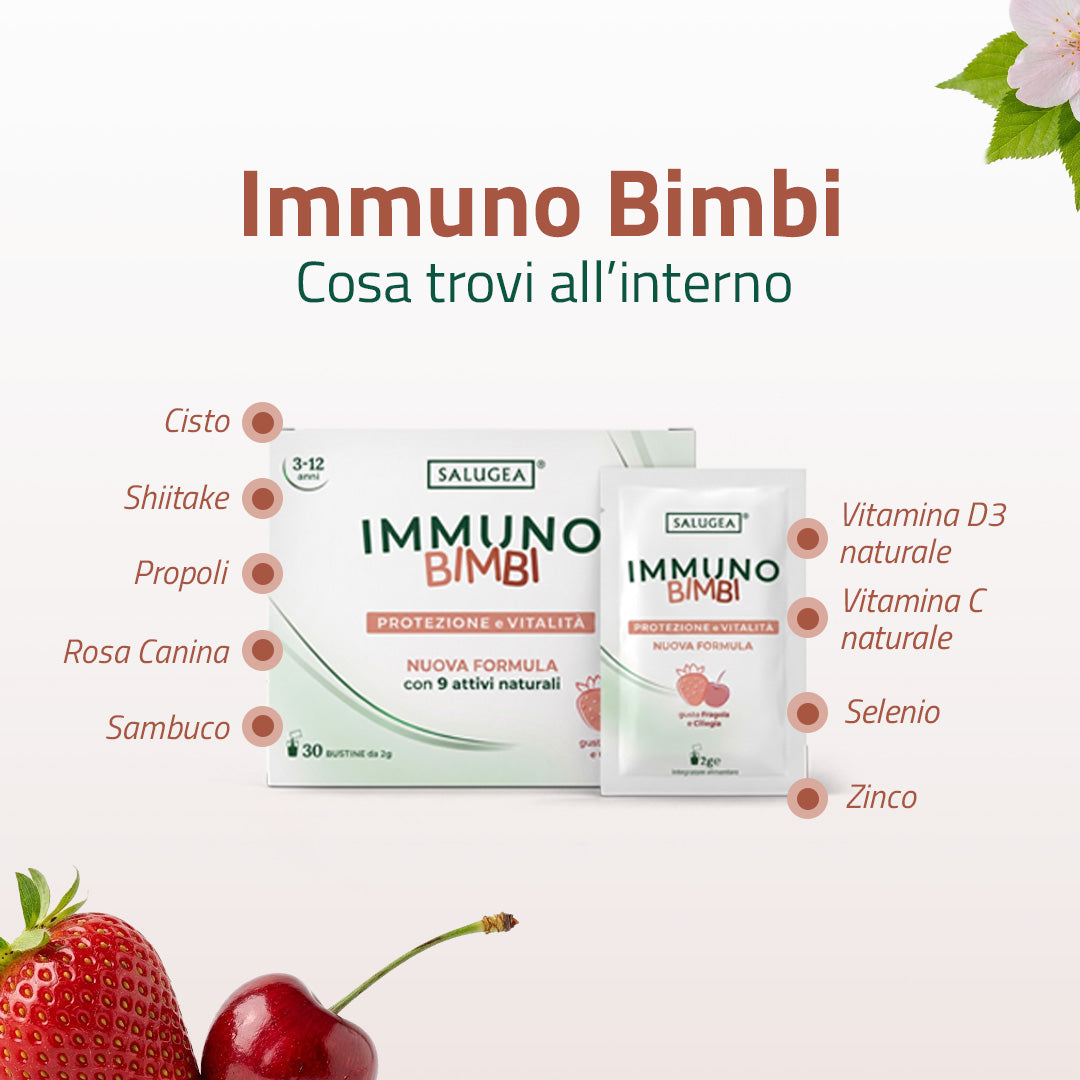
Cistus
- 1.Kalus U, Grigorov A, Kadecki O, Jansen JP, Kiesewetter H, Radtke H. Cistus incanus (CYSTUS052) for treating patients with infection of the upper respiratory tract. A prospective, randomised, placebo-controlled clinical study. Antiviral Res. 2009;84(3):267-271. doi:10.1016/j.antiviral.2009.10.001.
A double-blind, randomised, placebo-controlled study found that an aqueous extract of C. incanus is effective in reducing the severity and average duration of symptoms in patients with upper respiratory tract inflammation:
160 outpatients (aged 7-81) suffering from an upper respiratory tract infection with clinical signs were divided between the test group and the placebo group. The subjective cold symptom score decreased significantly during treatment with Cistus (by more than 50% at 7 days), while placebo treatment produced a less marked reduction in symptoms.
- 2.Droebner K, Ehrhardt C, Poetter A, Ludwig S, Planz O. CYSTUS052, a polyphenol-rich plant extract, exerts anti-influenza virus activity in mice. Antiviral Res. 2007;76(1):1-10. doi:10.1016/j.antiviral.2007.04.001.
Another study, carried out in vitro and in vivo in a mouse model, highlighted the activity of Cistus against the influenza A virus (H7N7).
In cultures of epithelial cells infected with the influenza virus, a 90% reduction in the infection rate was achieved in cells pre-incubated with the plant extract.
For the in vivo experiments, a monitoring system for influenza-infected mice was used, which allows the animals’ body temperature and general motor activity to be measured. The mice treated with Cistus extract did not develop the disease, showed no differences in body temperature or general motor activity and showed no histological changes in the epithelial cells of the pulmonary bronchioles: findings indicative of the specific protective action that Cistus exerts on the immune system.
Shiitake
- 1.Jesenak M, Majtan J, Rennerova Z, Kyselovic J, Banovcin P, Hrubisko M. Immunomodulatory effect of pleuran (β-glucan from Pleurotus ostreatus) in children with recurrent respiratory tract infections. Int Immunopharmacol. 2013;15(2):395-399. doi:10.1016/j.intimp.2012.11.020.
The study observed a group of 175 children (mean age 5.65 ± 2.39 years) who had had more than 5 respiratory infections during the 12 months before the start of the study. The children were randomised to an active group, treated with a fungal extract rich in β-glucans + vitamin C, or to a placebo group (vitamin C only). Over 3 visits during the following 12 months, clinical questionnaires were completed and immune parameters were examined in blood samples.
In the active group, 36% of the children did not suffer from respiratory infections during treatment, compared with 21% in the placebo group (p<0.05). Among the children who did fall ill, use of the fungal extract also significantly reduced both the frequency of flu and flu-like illnesses and the number of lower respiratory tract infections. The treatment therefore produced a statistically significant modulation of humoral and cellular immunity.
The results of this study show that mushroom-derived β-glucans are effective in preventing recurrent respiratory infections in children, also revealing a complex immunomodulating activity of these actives.
Propolis
- Immune's-boosting Agent: Immunomodulation Potentials of Propolis. J Family Community Med. Jan-Apr 2019;26(1):57-60. doi: 10.4103/jfcm.JFCM_46_18. Mohammed Al-Hariri
In this review, the researchers focused on the immunomodulating capacity of propolis.
The underlying premise is that immune/inflammatory problems have increased considerably in recent years, which is why having a well-prepared, strong immune system is essential for protecting your wellbeing.
Research has shown propolis to be a useful active ingredient because it stimulates the immune response and induces immunomodulation.
Research has shown that Propolis stimulates the immune response and induces immunomodulation.
Rosehip
- An Antiinflammatory Galactolipid From Rose Hip (Rosa Canina) That Inhibits Chemotaxis of Human Peripheral Blood Neutrophils in Vitro. J Nat Prod. 2003 Jul;66(7):994-5. doi: 1021/np0300636. Erik Larsen et Al.
This in vitro study shows how Rosehip is useful for the normal effectiveness of the immune system. In particular, it emerged that Rosehip has significant anti-inflammatory properties, with inhibitory effects on the chemotaxis of human peripheral blood neutrophils. This action modulates the inflammatory response to infections and promotes a more balanced healing process.
Elderberry
- Black Elderberry (Sambucus Nigra) Supplementation Effectively Treats Upper Respiratory Symptoms: A Meta-Analysis of Randomized, Controlled Clinical Trials. Complement Ther Med. 2019. Feb;42:361-365. doi: 10.1016/j.ctim.2018.12.004. Epub 2018 Dec 18. Jessie Hawkins et Al.
This meta-analysis, involving 180 participants, assesses the effects of elderberry supplementation on respiratory symptoms caused by colds and flu.
At the end of the assessment, the researchers found that elderberry supplementation substantially reduces the intensity and duration of upper respiratory symptoms. This remedy can therefore be used effectively in these cases.
Zinc
- Zinc Supplementation Augments TGF - 1-dependent Regulatory T Cell Induction. Mol Nutr Food Res. 2017 Mar;61(3). doi: 10.1002/mnfr. 201600493. Epub 2016 Nov 30. Martina Maywald et Al.
This study investigated the effect of zinc on the immune system. Supplementation with this active ingredient was shown to stimulate activation of the immune system, particularly with regard to T lymphocytes.
The researchers therefore suggest that zinc could be used as a beneficial element to increase the immune defences.
Selenium
- The Role of Selenium in Inflammation and Immunity: From Molecular Mechanisms to Therapeutic Opportunities Antioxid Redox Signal. 2012 Apr 1;16(7):705-43. doi: 10.1089/ars.2011.4145. Epub 2012 Jan 9. Zhi Huang et Al.
In this research, the scientists focused on the role of selenium in inflammation and immunity.
The researchers found that adequate levels of Selenium are important for supporting a proper immune response. Insufficient Selenium levels may be associated with poor immune responses, autoimmunity and chronic inflammation.
Vitamin D3
- Vitamin D Modulation of Innate Immune Responses to Respiratory Viral Infections Rev Med Virol. 2017 Jan;27(1). doi: 10.1002/rmv.1909. Epub 2016 Oct 7. Mihnea T Zdrenghea et Al.
The premise of this study is that people with respiratory problems are often deficient in vitamin D, so supplementing it should improve their condition.
It was found that monocytes/macrophages and the epithelial cells of the bronchial tree have vitamin D receptors. Vitamin D therefore probably acts through these receptors via a mechanism that supports protection against respiratory infections.
- The Association Between Vitamin D Status and Infectious Diseases of the Respiratory System in Infancy and Childhood Hormones (Athens). 2019 Dec;18(4):353-363. doi: 10.1007/s42000-019-00155-z. Epub 2019 Nov 25. Dimitra Zisi et Al.
This study analyses the link between vitamin D levels and infectious diseases of the respiratory system in childhood, using data that has emerged and been reported in the literature.
The literature search was carried out using the best-known databases, such as PubMed, Scopus and Google Scholar.
It emerged that several studies have identified links between inadequate plasma concentrations of vitamin D and the development of upper or lower respiratory tract infections in infants and young children. Ensuring normal levels of this vitamin may be useful both for preventing and for treating these conditions.
Bibliography
[1] Fang YL, Chen H, Wang CL, Liang L. Pathogenesis of non-alcoholic fatty liver disease in children and adolescence: From "two hit theory" to "multiple hit model". World J Gastroenterol. 2018;24(27):2974-2983. doi:10.3748/wjg.v24.i27.2974.
[2] Lustig RH, Mulligan K, Noworolski SM, et al. Isocaloric fructose restriction and metabolic improvement in children with obesity and metabolic syndrome. Obesity (Silver Spring). 2016;24(2):453-460. doi:10.1002/oby.21371.
[3] Aranow C. Vitamin D and the immune system. J Investig Med. 2011;59(6):881-886. doi:10.2310/JIM.0b013e31821b8755.
[4] Zdrojewicz Z, Winiarski J, Michalik T, Śmieszniak B, Popowicz E, Szyca M. Czystek – królowa herbat [Cistus - queen of teas]. Pol Merkur Lekarski. 2018;45(266):53-56.
[5] Gori A, Ferrini F, Marzano MC, Tattini M, Centritto M, Baratto MC, Pogni R, Brunetti C. Characterisation and Antioxidant Activity of Crude Extract and Polyphenolic Rich Fractions from C. incanus Leaves. Int J Mol Sci. 2016 Aug 17;17(8):1344. doi: 10.3390/ijms17081344. PMID: 27548139; PMCID: PMC5000740.
[6] Liang CJW, Woerdenbag HJ, Ekhart C, Vitalone A, van Hunsel FPAM. Safety Considerations for Natural Products with Adaptogenic and Immunomodulating Activities. Pharmaceuticals (Basel). 2025;18(8):1208. Published 2025 Aug 15. doi:10.3390/ph18081208.
[7] Murphy EJ, Masterson C, Rezoagli E, et al. β-Glucan extracts from the same edible shiitake mushroom Lentinus edodes produce differential in-vitro immunomodulatory and pulmonary cytoprotective effects - Implications for coronavirus disease (COVID-19) immunotherapies. Sci Total Environ. 2020;732:139330. doi:10.1016/j.scitotenv.2020.139330.
[8] Ożarowski M, Karpiński TM. The Effects of Propolis on Viral Respiratory Diseases. Molecules. 2023;28(1):359. Published 2023 Jan 1. doi:10.3390/molecules28010359.
[9] Galeotti F, Maccari F, Fachini A, Volpi N. Chemical Composition and Antioxidant Activity of Propolis Prepared in Different Forms and in Different Solvents Useful for Finished Products. Foods. 2018;7(3):41. Published 2018 Mar 19. doi:10.3390/foods7030041.
[10] Tanaka T, Takahashi R. Flavonoids and asthma. Nutrients. 2013;5(6):2128-2143. Published 2013 Jun 10. doi:10.3390/nu5062128.
[11] Baltaci, Abdulkerim Kasim & Mogulkoc, Rasim & Baltaci, Saltuk. (2019). Review: The role of zinc in the endocrine system. Pakistan journal of pharmaceutical sciences. 32. 231-239.
[12] Mal'tseva VN, Goltyaev MV, Turovsky EA, Varlamova EG. Immunomodulatory and Anti-Inflammatory Properties of Selenium-Containing Agents: Their Role in the Regulation of Defense Mechanisms against COVID-19. Int J Mol Sci. 2022;23(4):2360. Published 2022 Feb 21. doi:10.3390/ijms23042360.
[13] Dietary Selenium in Adjuvant Therapy of Viral and Bacterial Infections Adv Nutr. 2015 Jan 15;6(1):73-82. doi: 10.3945/an.114.007575. Print 2015 Jan. Holger Steinbrenner et Al.
[14] Franke HA. Toxic Stress: Effects, Prevention and Treatment. Children (Basel). 2014;1(3):390-402. Published 2014 Nov 3. doi:10.3390/children1030390.
Immuno Bimbi New Formula is a food supplement: read the warnings on the label. Supplements should not be used as a substitute for a varied, balanced diet and a healthy lifestyle. Our texts are for informational purposes only; they are not intended as guidance for the diagnosis or treatment of medical conditions and are in no way a substitute for your doctor’s advice.
Our texts are for information purposes only; they are not to be understood as an indication for the diagnosis and treatment of medical conditions and are in no way intended to replace the advice of a doctor.