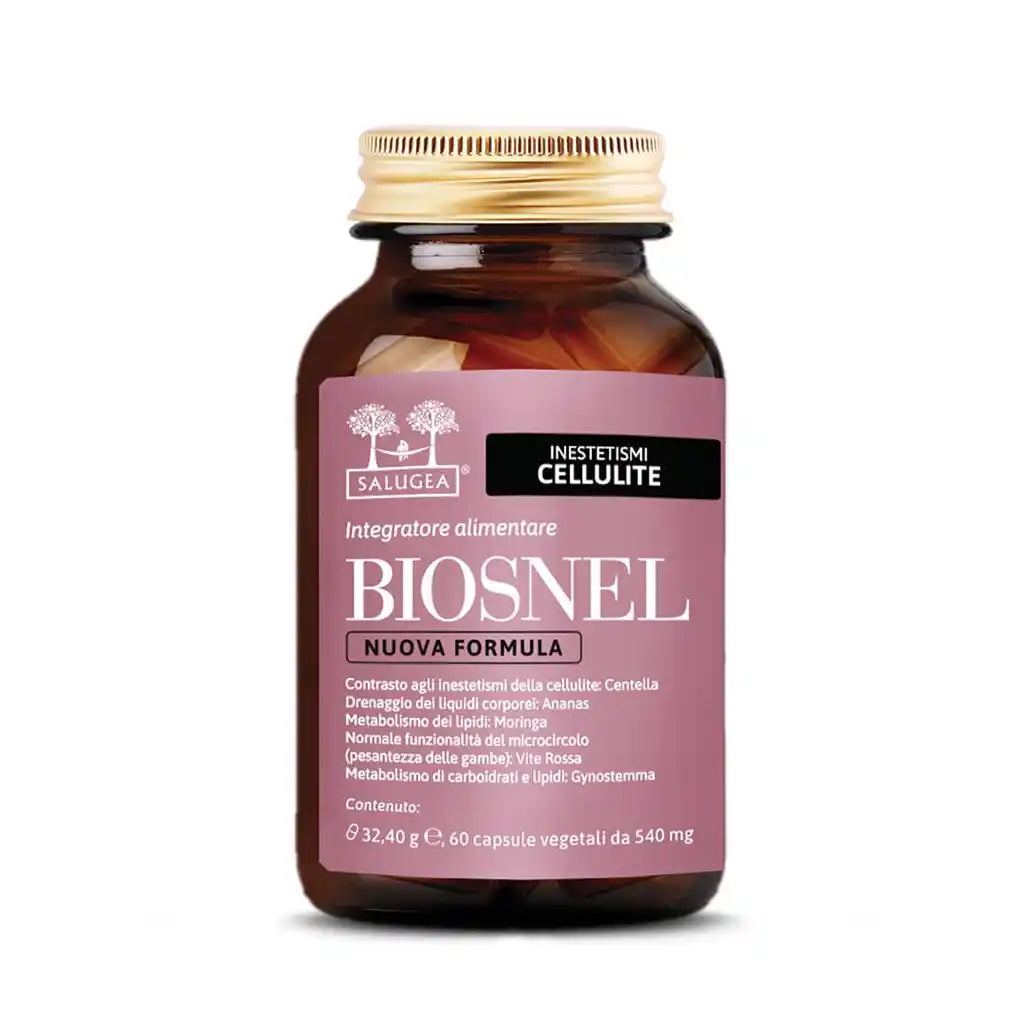
Cellulite blemishes are an extremely common concern. On average they affect 90%[11] of women, regardless of age, height and weight.
But how does cellulite develop?
Cellulite, also known as oedemato-fibro-sclerotic panniculopathy (PEFS)[12], is a complex condition characterised by fluid retention, alterations of the microcirculation and cellulitic adiposity, which affects the hypodermis, the layer that lies between the dermis and the muscular layer of the skin.
There are various predisposing causes, including a sedentary lifestyle, family history, hormonal changes and an unbalanced diet, as well as other individual factors.
We can picture this build-up as a big traffic jam in the capillary microcirculation.
The problem arises when the fat cells enlarge and obstruct the flow of blood in the subcutaneous capillaries, reducing the supply of nutrients and oxygen to the fibroblasts, the cells that produce collagen, which is fundamental to the structure of the connective tissue.
This also hinders the other basic function of the microcirculation, namely carrying waste and discarded elements (toxins) away from the tissue; these instead begin to accumulate between the fibroblasts, thereby altering their function.
The jam blocks circulation and feeds on itself. This slowing of the microcirculation means that the cells cannot eliminate metabolic waste and toxins and, at the same time, struggle to receive nutrients and oxygen, the elements that keep tissues efficient and vital.
At this point the fibroblasts are no longer able to produce collagen adequately. Over time, this leads to a decay of the structure of the connective tissue and to a degradation of the very membrane of the capillaries, which will tend to lose the optimal permeability it needs to exchange toxins and waste products for nutrients and oxygen.
This subcutaneous situation creates inflammation.
Here we come to the first important point. Before being an aesthetic problem, cellulite is a genuine inflammatory state[13].
It seems clear that treating cellulite only from the outside with creams or oils may, in many cases, not be enough[14].
For a truly functional approach you need to follow a diet and lifestyle suited to keeping the inflammatory state in check. At the same time, to act from within, phytotherapy can be a valuable support.
Over the years, in fact, phytotherapy has studied these conditions more and more, and there are several studies confirming the importance of a natural approach too.
In the next section we will look at some of them and understand how and why plant-based active ingredients can be useful in helping you counteract cellulite blemishes and orange-peel skin.
Experimental Phytotherapy
Pineapple
- Biomed Rep. 2016 Sep;5(3):283-288. doi: 10.3892/br.2016.720. Epub 2016 Jul 18.Potential role of bromelain in clinical and therapeutic applications Vidhya Rathnavelu, Noorjahan Banu Alitheen, Subramaniam Sohila, Samikannu Kanagesan, Rajendran Ramesh
This article highlights the anti-inflammatory, antithrombotic and fibrinolytic functions of bromelain, which are fundamental in helping to restore the physiological conditions of a connective tissue in which the function of the capillaries and that of the fibroblasts has been disturbed, leading to oedema and retention, conditions typical of cellulite.
- Evaluation of the anti-aging and antioxidant action of Ananas sativa and Moringa oleifera in a fruit fly model organism
This review, published in the Journal of Food Biochemistry, observed the antioxidant and anti-ageing activity of Ananas sativa and Moringa oleifera. The authors suggest that the bioactive compounds present in both extracts may help improve resistance to oxidative stress, a factor involved in cellular ageing processes, and delay some molecular markers of ageing.
Centella
- Pak J Pharm Sci. 2014 Mar;27(2):233-7. The effect of Centella asiatica, vitamins, glycolic acid and their mixtures preparations in stimulating collagen and fibronectin synthesis in cultured human skin fibroblast. Hashim P.
In this study the researchers focused on the specific effect of Centella asiatica, vitamins, glycolic acid and their mixtures in stimulating the synthesis of collagen in fibroblasts, in humans. The results showed that all the active ingredients significantly stimulate the synthesis of collagen and fibronectin in fibroblasts. A fundamental aspect in treating cellulite blemishes.
- Postepy Dermatol Alergol. 2013 Feb;30(1):46-9. doi: 10.5114/pdia.2013.33378. Epub 2013 Feb 20. Centella asiatica in cosmetology Wiesława Bylka 1, Paulina Znajdek- Awiżeń, Elżbieta Studzińska-Sroka, Małgorzata Brzezińska
This study analyses the active constituents of Centella and their possible uses. The researchers state that Centella, thanks to its composition rich in pentacyclic triterpenes, asiaticoside, madecassoside, and asiatic and madecassic acids, is useful for promoting the proliferation of fibroblasts and increasing collagen synthesis. All this translates into a significant intervention to inhibit inflammation and therefore counteract concerns such as cellulite, skin ageing and skin disorders in general.
- Centella asiatica and its metabolite asiatic acid: wound healing effects and therapeutic potential
The review analyses the available evidence on the effects of Centella asiatica and its main bioactive metabolite. The authors highlight its involvement in the renewal processes of the connective tissue, in collagen synthesis and in the modulation of inflammatory processes, attributable to a wound-healing activity.
Red Vine
- Eur J Vasc Endovasc Surg. 2011 Apr;41(4):540-7. doi: 10.1016/j.ejvs. 2010.12.003. Epub 2011 Jan 15. Efficacy and tolerability of a red-vine-leaf extract in patients suffering from chronic venous insufficiency--results of a double-blind placebo-controlled study. Rabe E, Stücker M, Espe- rester A, Schäfer E, Ottillinger B.
The aim of this study is to assess the effect of a red vine leaf extract on leg volume and on the clinical symptoms of people suffering from chronic venous insufficiency.
The study involved 248 people and was carried out as a double-blind, placebo-controlled trial over a period of 12 weeks.
At the end of the treatment, the group treated with the extract showed a 20 ml reduction in leg volume compared with the placebo group. This effect is very useful in typical cellulite conditions.
- Eur J Vasc Endovasc Surg. 2011 Apr;41(4):540-7. doi: 10.1016/j.ejvs. 2010.12.003. Epub 2011 Jan 15. Improvement of cutaneous microcirculation and oxygen supply inpatientswithchronicvenousinsufficiencybyorallyadministe- red extract of red vine leaves AS 195: a randomised, double-blind, placebo-controlled, crossover study. Kalus U, Koscielny J, Grigorov A, Schaefer E, Peil H, Kiesewetter H.
In this study too, the researchers analysed the effect of red vine leaf extract on the microcirculation, transcutaneous oxygen pressure and leg oedema in patients with chronic venous insufficiency.
The study was randomised, conducted double-blind, and involved 129 men and women. After 6 weeks of treatment, the group taking the Red Vine extract showed an improvement in microcirculation and in oxygen permeation, and leg circumference had also decreased. These are all factors that help against cellulite blemishes.
- Anti-inflammatory and anti-vascular leakage effects by combination of Centella asiatica and Vitis vinifera leaf extracts.
The study observed the role of Centella asiatica and Vitis vinifera in mechanisms linked to the inflammatory response and vascular permeability. The data indicate a contribution to maintaining the normal function of the microcirculation and to modulating inflammatory processes.
Moringa
- Jaja-Chimedza A., Graf B.L., Simmler C. et al. Biochemical characterization and anti-inflammatory properties of an isothiocyanate-enriched moringa (Moringa oleifera) seed extract. PLOS ONE. 2017;12(8):e0182658.
The study biochemically characterised a Moringa oleifera seed extract (MSE), focusing on its anti-inflammatory action.
In an experimental model of acute inflammation, the administration of MSE led to a reduction in oedema. It also showed a modulation of the inflammatory response, accompanied by an activation of the cellular detoxification systems.
These results support the interest in Moringa as a phytotherapeutic ingredient in contexts characterised by inflammation, a mechanism potentially involved in the processes underlying cellulite blemishes too.
- Ezzat S.M., El Bishbishy M.H., Aborehab N.M. et al. Upregulation of MC4R and PPAR-α expression mediates the anti-obesity activity of Moringa oleifera Lam. in high-fat diet-induced obesity in rats. Journal of Ethnopharmacology. 2020;251:112541.
The study analysed the mechanisms through which a Moringa oleifera extract can support body weight control, highlighting the involvement of two key receptors: MC4R and PPAR-α.
These two receptors play crucial roles in regulating energy metabolism, appetite and energy expenditure. They can be compared to cellular switches: when activated, they regulate specific functions of the body, such as how much energy is taken in, used or stored.
Overall, the study suggests a potential action of Moringa in supporting the metabolism and weight management, aspects that are also relevant to the mechanisms involved in cellulite blemishes.
Gynostemma
- Obesity (Silver Spring). 2014 Jan;22(1):63-71. doi: 10.1002/oby.20539. Epub 2013 Sep 5. Antiobesity effect of Gynostemma pentaphyllum extract (actiponin): a randomized, double-blind, placebo-controlled trial. Park SH, Huh TL, Kim SY, Oh MR, Tirupathi Pichiah PB, Chae SW, Cha YS.
This study focused on assessing the effects of actiponin, extracted from Gynostemma, on body weight, fat loss and metabolic markers.
A double-blind, placebo-controlled study lasting 12 weeks was carried out on 80 overweight men and women. During the actiponin supplementation period, total abdominal fat area, body weight, body fat mass, body fat percentage and BMI decreased significantly in the actiponin group compared with the placebo group. The researchers conclude that actiponin is a powerful anti-obesity element that does not produce significant adverse effects.
- Cell Death Dis. 2020 Sep 17;11(9):770. doi: 10.1038/s41419-020-02974-0. The triterpenoid sapogenin (2α-OH-Protopanoxadiol) ameliorates metabolic syndrome via the intestinal FXR/GLP-1 axis through gut microbiota remodeling Zhifu Xie, Haowen Jiang, Wei Liu, Xinwen Zhang, Dakai Chen, Shuimei Sun, Chendong Zhou, Jia Liu, Sheng Bao, Xiachang Wang, Yinan Zhang, Jia Li, Lihong Hu, Jingya Li
This study carried out on mice showed that the administration of Gynostemma protected the mice from obesity induced by a high-fat diet and improved glucose tolerance by improving the function of intestinal L cells. These results show how Gynostemma can be useful in cases of metabolic syndrome, which can often underlie a cellulite condition.
Bibliography
[1] Rathnavelu V, Alitheen NB, Sohila S, Kanagesan S, Ramesh R. Potential role of bromelain in clinical and therapeutic applications. Biomed Rep. 2016 Sep;5(3):283-288. doi: 10.3892/br.2016.720. Epub 2016 Jul 18. PMID: 27602208; PMCID: PMC4998156.
[2] Pavan R, Jain S, Shraddha, Kumar A. Properties and therapeutic application of bromelain: a review. Biotechnol Res Int. 2012;2012:976203. doi: 10.1155/2012/976203. Epub 2012 Dec 10. PMID: 23304525; PMCID: PMC3529416.
[3] Mamalis A, Jagdeo J. The Combination of Resveratrol and High-Fluence Light Emitting Diode-Red Light Produces Synergistic Photobotanical Inhibition of Fibroblast Proliferation and Collagen Synthesis: A Novel Treatment for Skin Fibrosis. Dermatol Surg. 2017 Jan;43(1):81-86. doi: 10.1097/DSS.0000000000000921. PMID: 28027199.
[4] Jaja-Chimedza A, Graf BL, Simmler C, Kim Y, Kuhn P, Pauli GF, Raskin I. Biochemical characterization and anti-inflammatory properties of an isothiocyanate-enriched moringa (Moringa oleifera) seed extract. PLoS One. 2017 Aug 8;12(8):e0182658. doi: 10.1371/journal.pone.0182658. PMID: 28792522; PMCID: PMC5549737.
[5] Nurhayati T, Ridho MF, Santoso PTR, Setiawan S, Goenawan H, Tarawan VM. Effects of Moringa oleifera Leaf Extract on Liver Histopathology: A Systematic Review. J Nutr Metab. 2024 Jul 4;2024:6815993. doi: 10.1155/2024/6815993. PMID: 38993633; PMCID: PMC11239234.
[6] Sowunmi BO, Gonzo M. The effect of Moringa oleifera crude extract on liver cell line, HepG2. BMC Complement Med Ther. 2023 Oct 26;23(1):380. doi: 10.1186/s12906-023-04181-8. PMID: 37884920; PMCID: PMC10601157.
[7] Al-Ghanayem AA, Alhussaini MS, Asad M, Joseph B. Moringa oleifera Leaf Extract Promotes Healing of Infected Wounds in Diabetic Rats: Evidence of Antimicrobial, Antioxidant and Proliferative Properties. Pharmaceuticals (Basel). 2022 Apr 25;15(5):528. doi: 10.3390/ph15050528. PMID: 35631354; PMCID: PMC9147243.
[8] Nova E, Redondo-Useros N, Martínez-García RM, Gómez-Martínez S, Díaz-Prieto LE, Marcos A. Potential of Moringa oleifera to Improve Glucose Control for the Prevention of Diabetes and Related Metabolic Alterations: A Systematic Review of Animal and Human Studies. Nutrients. 2020 Jul 10;12(7):2050. doi: 10.3390/nu12072050. PMID: 32664295; PMCID: PMC7400864.
[9] Ezzat SM, El Bishbishy MH, Aborehab NM, Salama MM, Hasheesh A, Motaal AA, Rashad H, Metwally FM. Upregulation of MC4R and PPAR-α expression mediates the anti-obesity activity of Moringa oleifera Lam. in high-fat diet-induced obesity in rats. J Ethnopharmacol. 2020 Apr 6;251:112541. doi: 10.1016/j.jep.2020.112541. Epub 2020 Jan 3. PMID: 31911179.
[10] Lee HS, Lim SM, Jung JI, Kim SM, Lee JK, Kim YH, Cha KM, Oh TK, Moon JM, Kim TY, Kim EJ. Gynostemma Pentaphyllum Extract Ameliorates High-Fat Diet-Induced Obesity in C57BL/6N Mice by Upregulating SIRT1. Nutrients. 2019 Oct 15;11(10):2475. doi: 10.3390/nu11102475. PMID: 31618980; PMCID: PMC6835433.
[11] Gabriel A, Chan V, Caldarella M, Wayne T, O'Rorke E. Cellulite: Current Understanding and Treatment. Aesthet Surg J Open Forum. 2023 Jun 21;5:ojad050. doi: 10.1093/asjof/ojad050. PMID: 37424836; PMCID: PMC10324940.
[12] IRCCS Humanitas Research Hospital – Cellulite.
[13] Enzo Emanuele, Cellulite: Advances in treatment: Facts and controversies, Clinics in Dermatology, Volume 31, Issue 6, 2013, Pages 725-730, ISSN 0738-081X, https://doi.org/10.1016/j.clindermatol.2013.05.009.
[14] Luebberding, S., Krueger, N. & Sadick, N.S. Cellulite: An Evidence-Based Review. Am J Clin Dermatol 16, 243–256 (2015). https://doi.org/10.1007/s40257-015-0129-5.
Our texts are for information purposes only; they are not to be understood as an indication for the diagnosis and treatment of medical conditions and are in no way intended to replace the advice of a doctor.